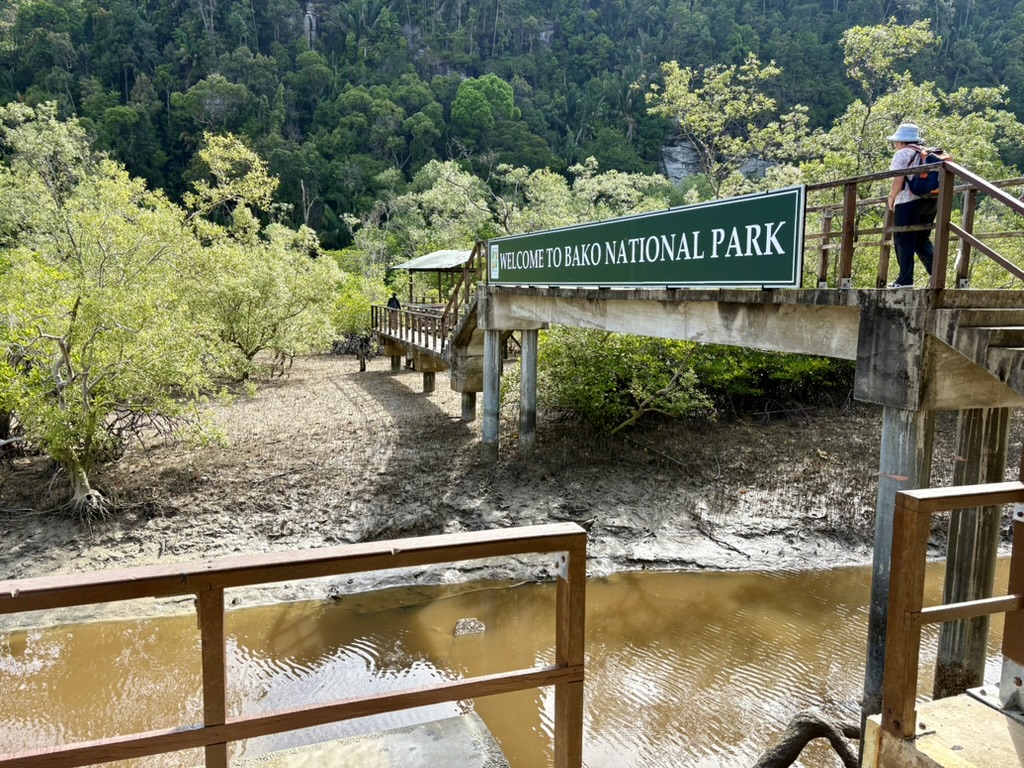
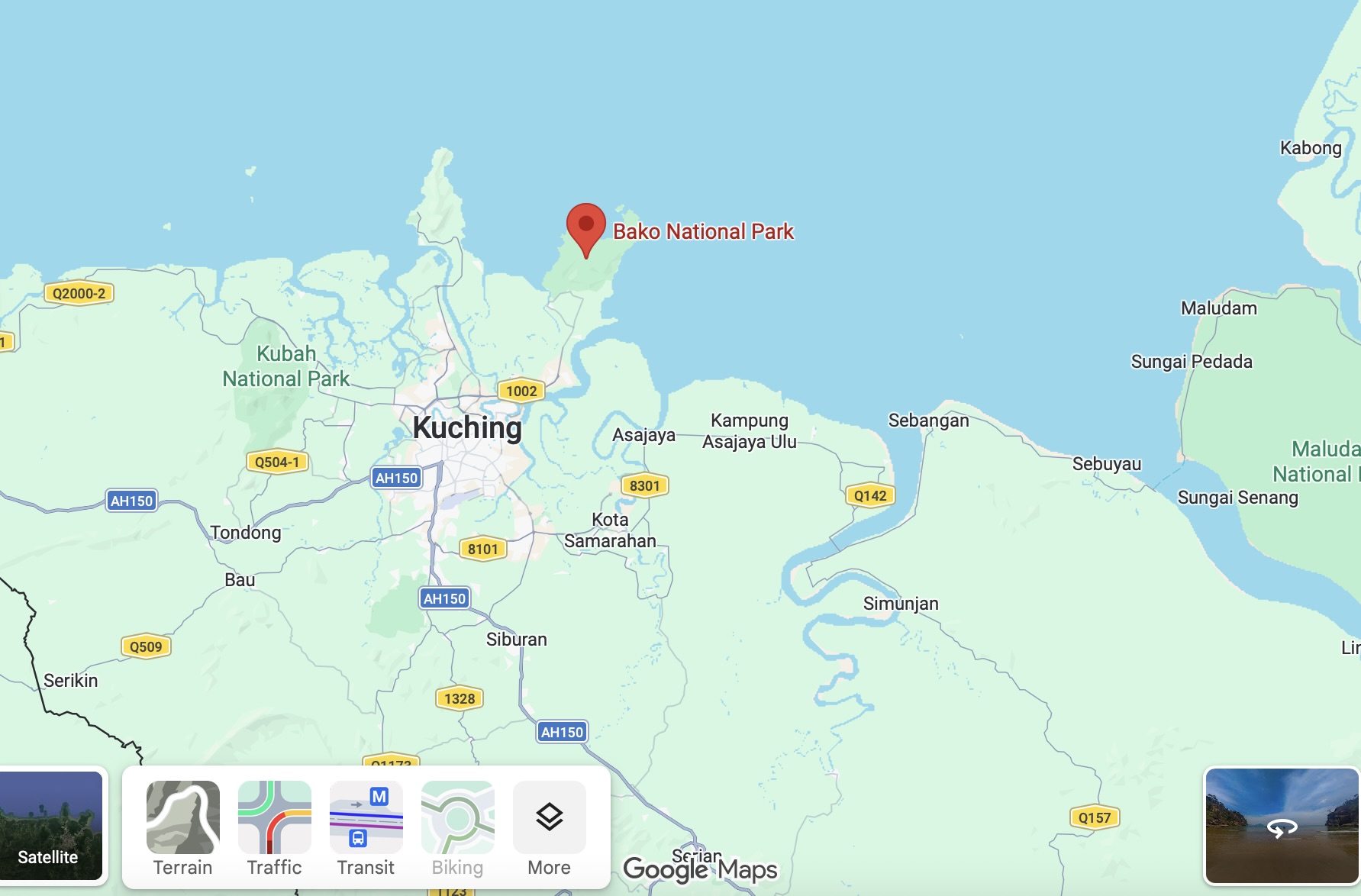
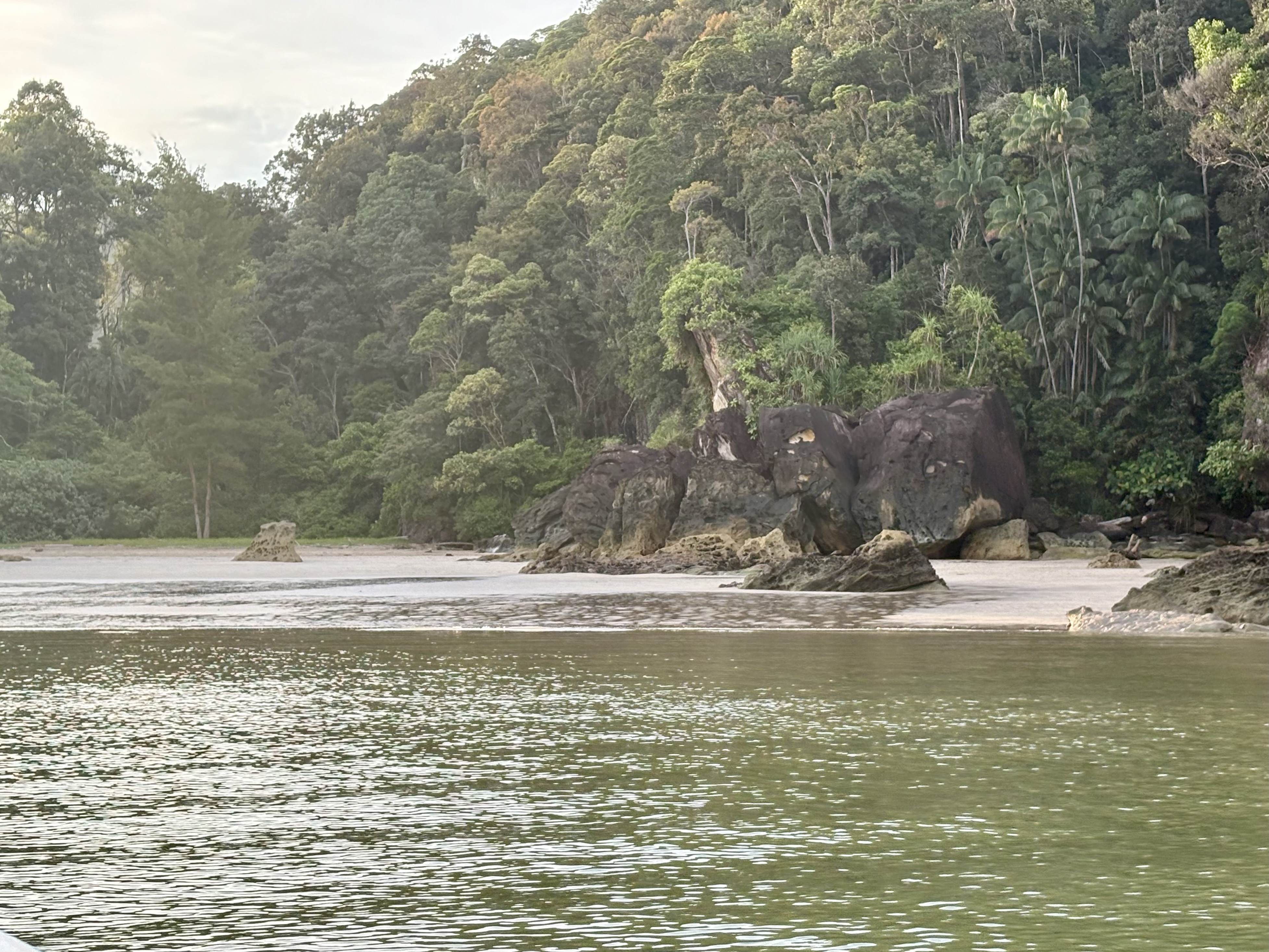
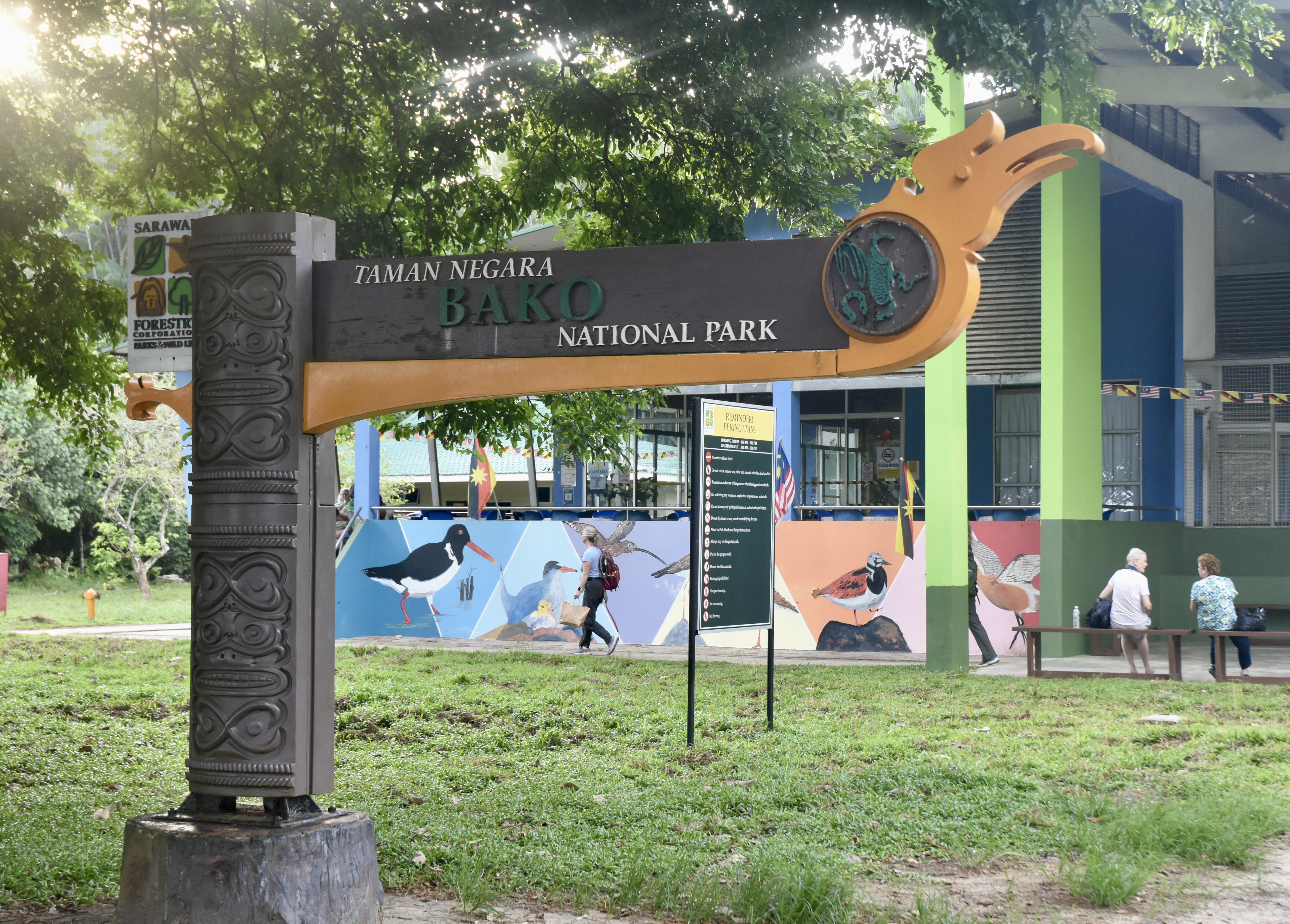
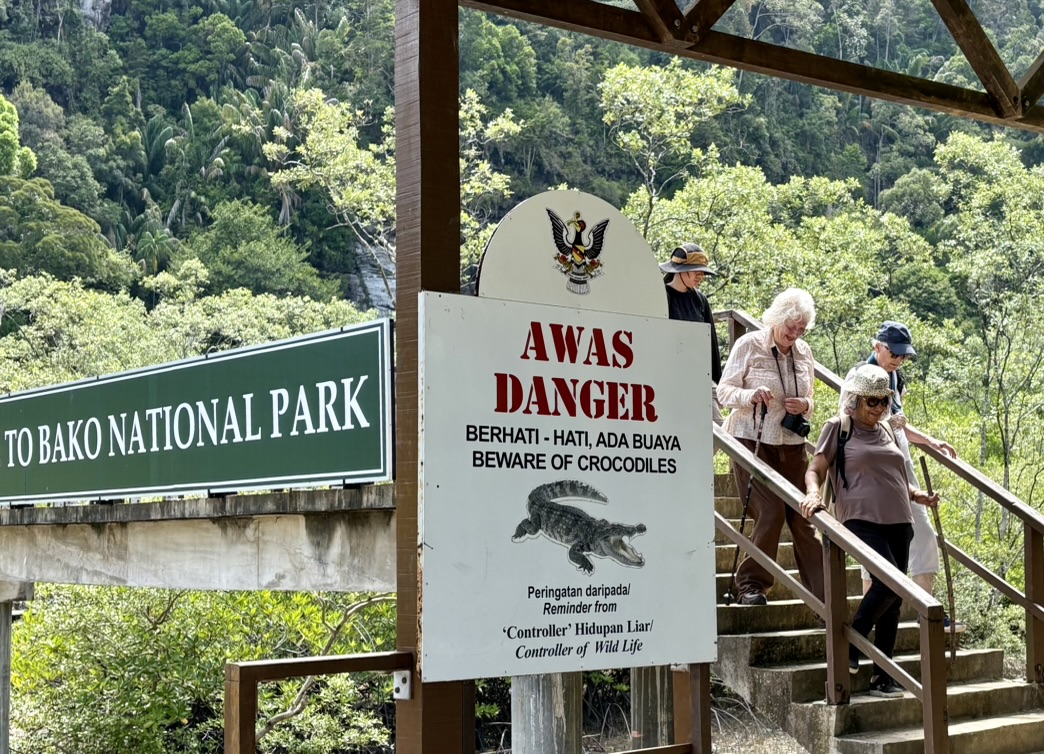
Bako National Park is one of the best places in Sarawak to see rainforest animals in their natural habitat. The park touches the ocean and is famous for its spectacular coastal scenery, only 37 km away from downtown Kuching. Established in 1957, Bako is the oldest national park in Sarawak covering an area of 2,742 hectares. It is famous for its unique rock formations, lush mangroves, rainforests, and proboscis monkeys. The park offers a wide variety of habitats, from beaches to jungle trails. Bako’s extensive trail system is made up of 18 colour-coded jungle trails which offer a range of walking and hiking options. The treks are of varying difficulty, with some being over boardwalks and others up and down more uneven surfaces. The longest trek is 1 and a half hours each way. Tickets to Bako National Park cost 20 RM per person.
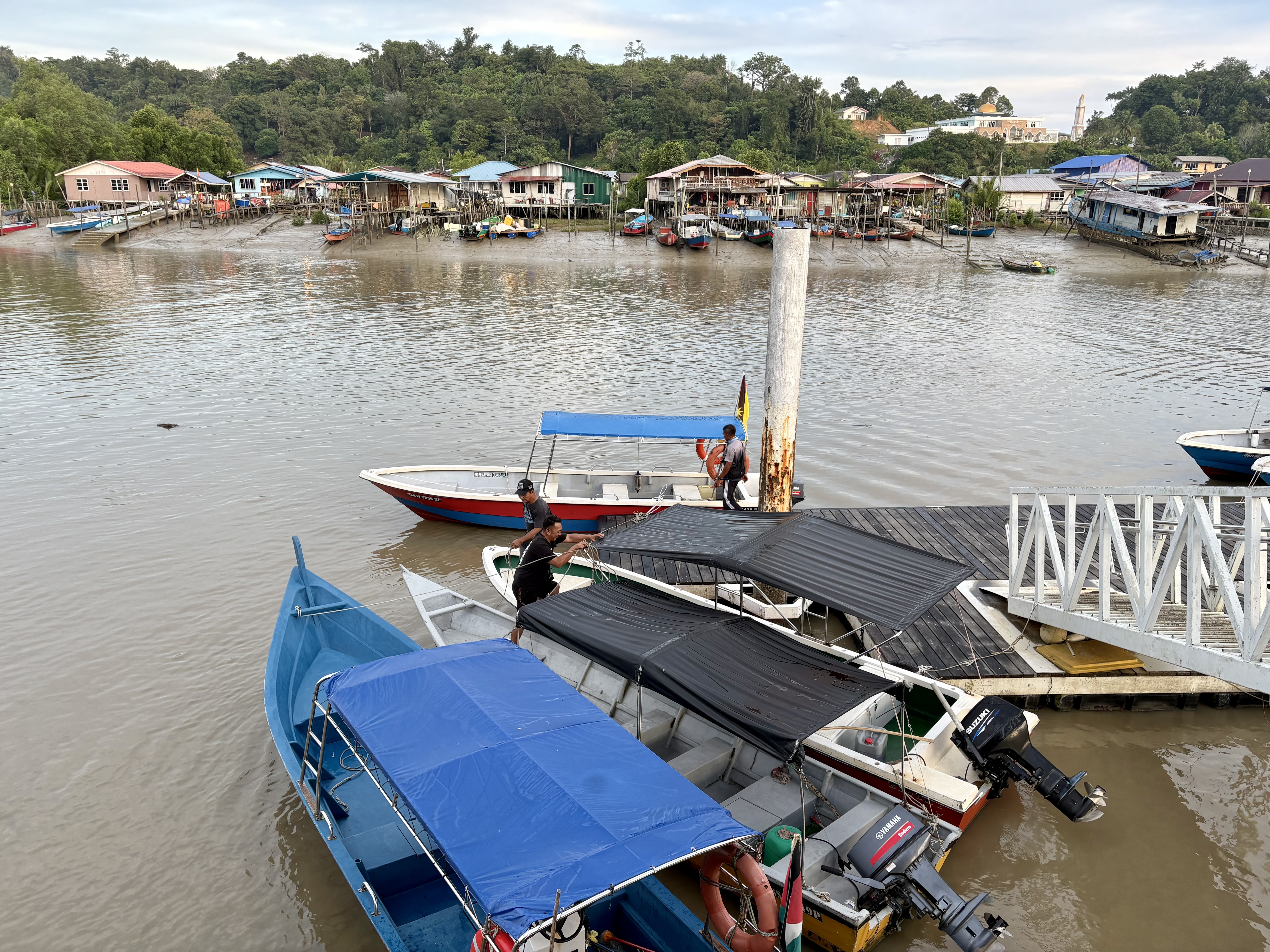
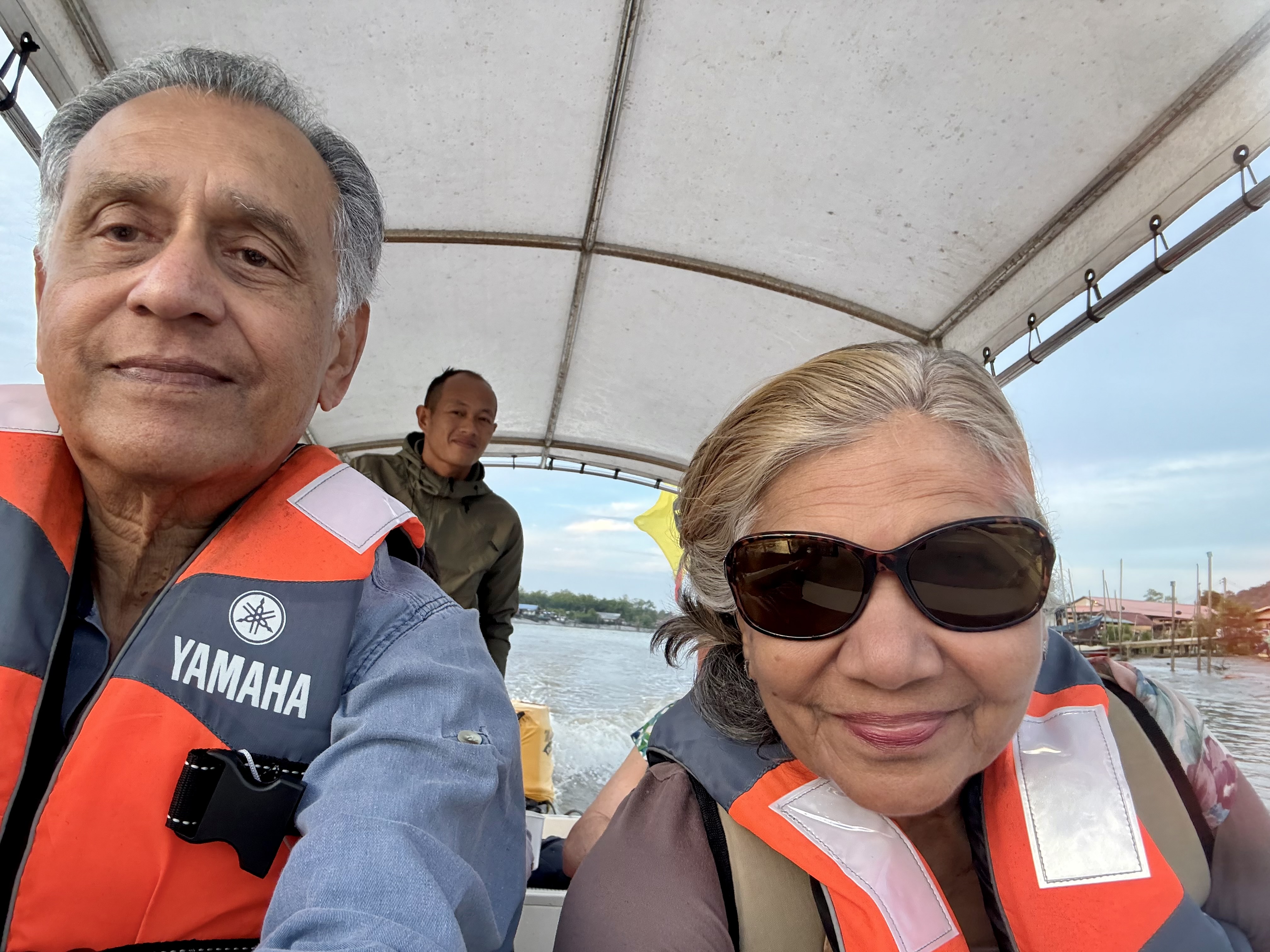
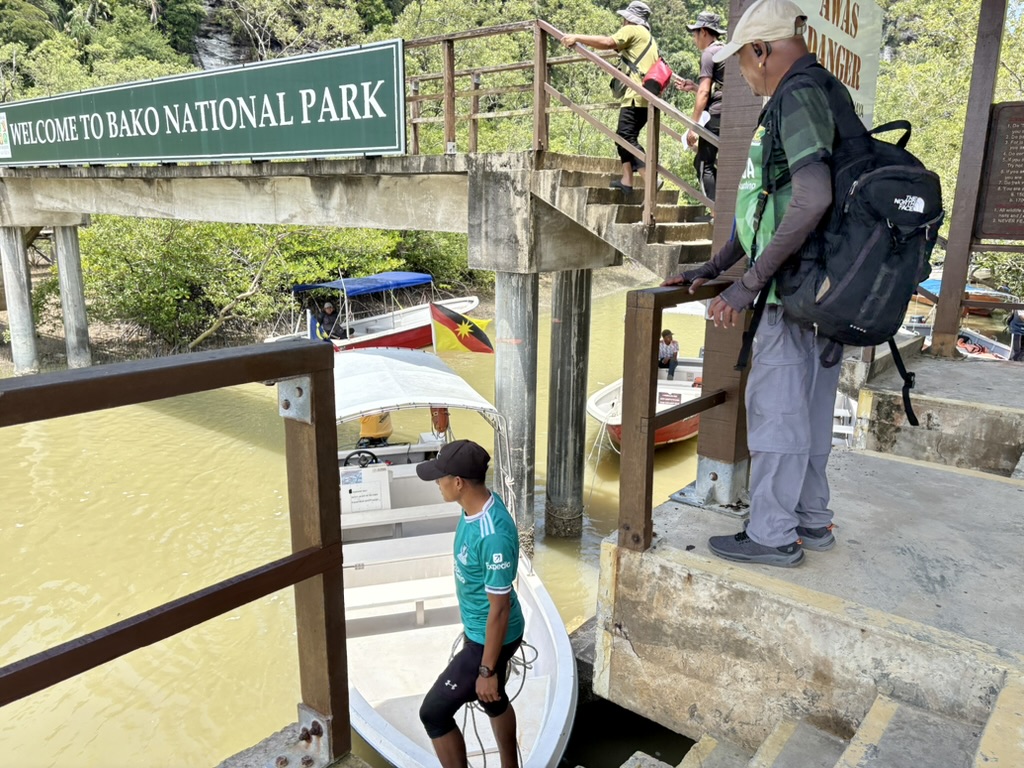
From the Waterfront Hotel in Kuching, we drove for about 40 minutes to the small Malay fishing village of Bako, which serves as the main gateway to Bako National Park. We boarded a small boat at the jetty to sail to Bako National Park’s headquarters at Telok Assam on the peninsula, 20 minutes across the water. Boat tickets cost 200 RM per boat return.
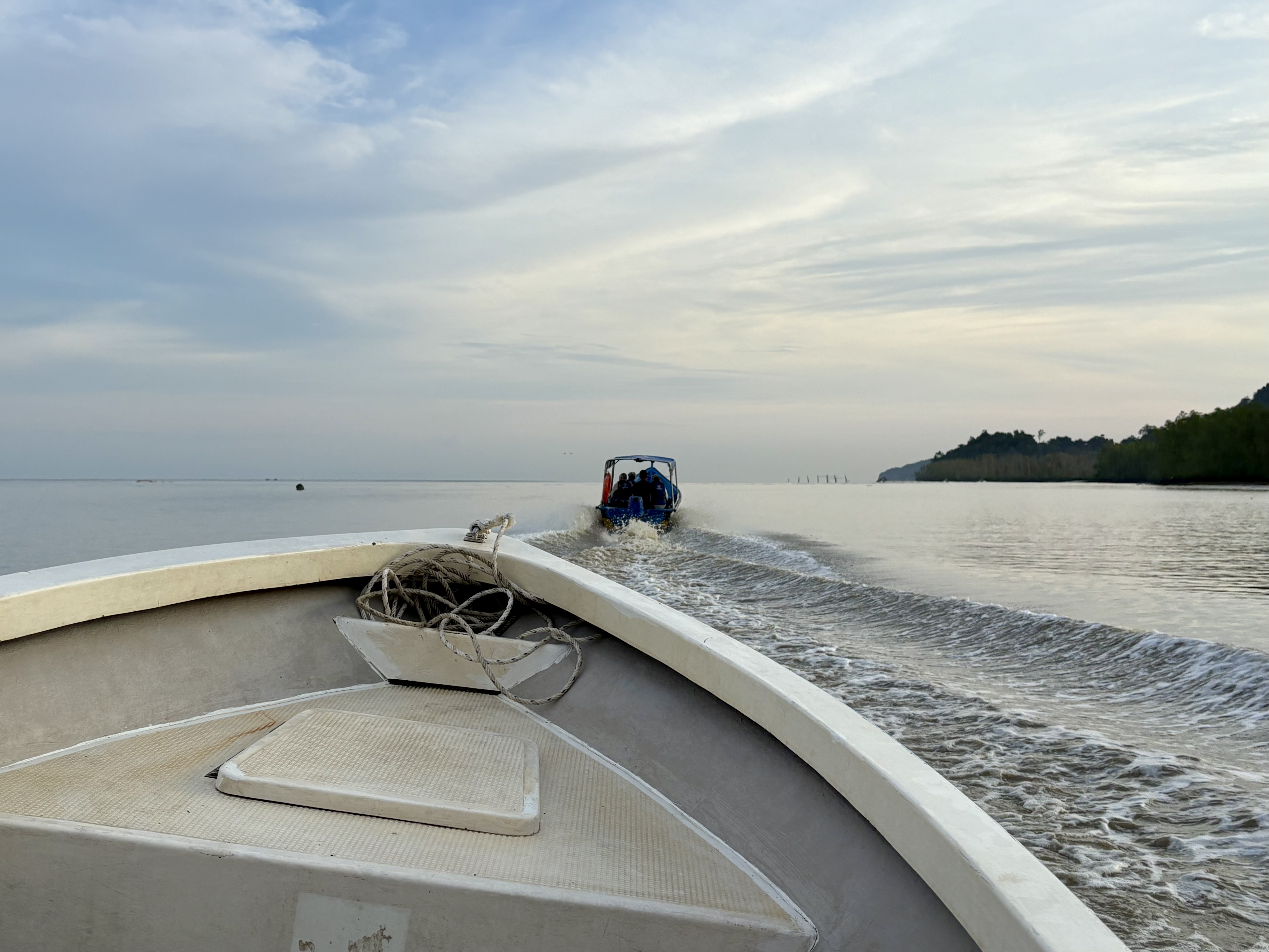
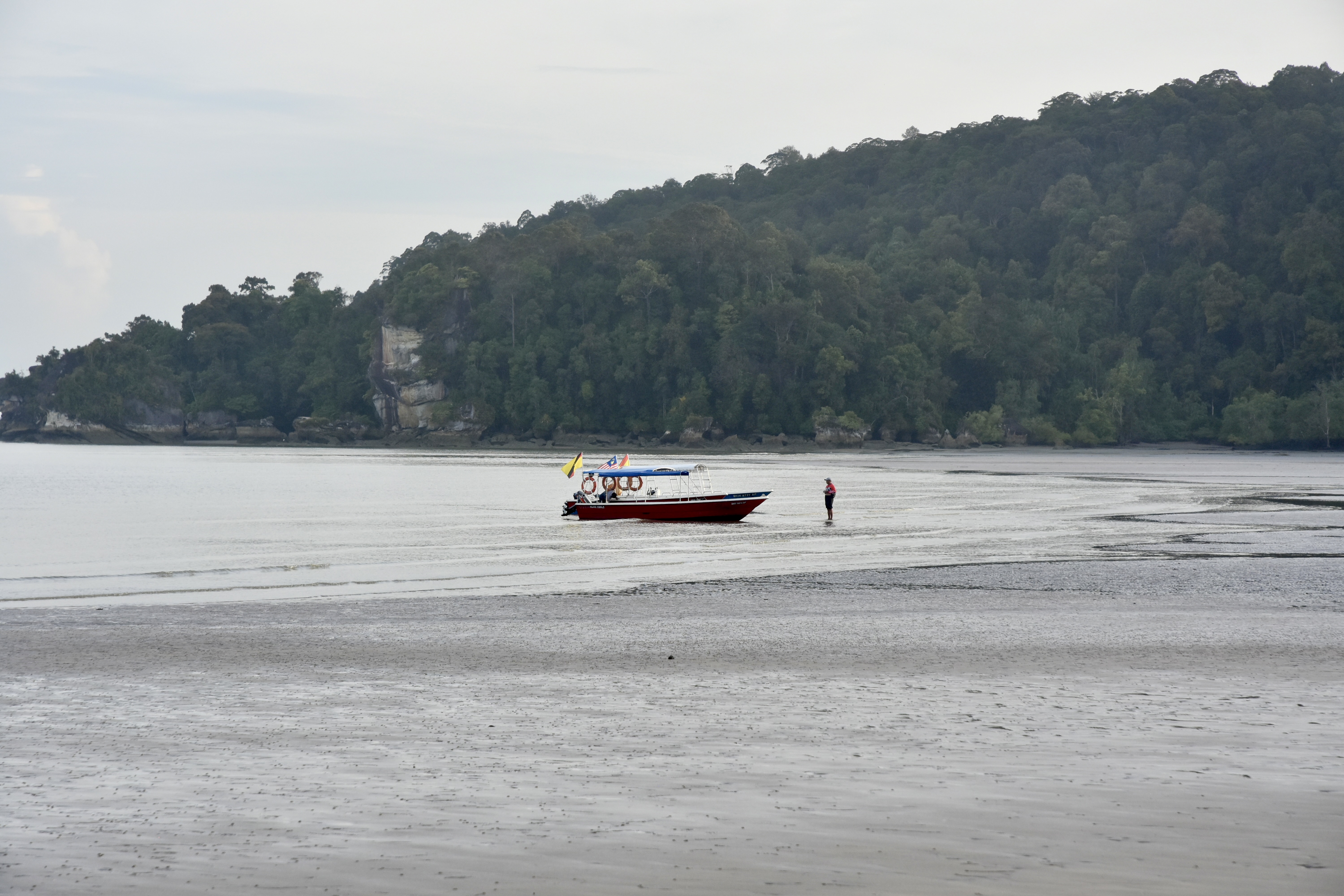
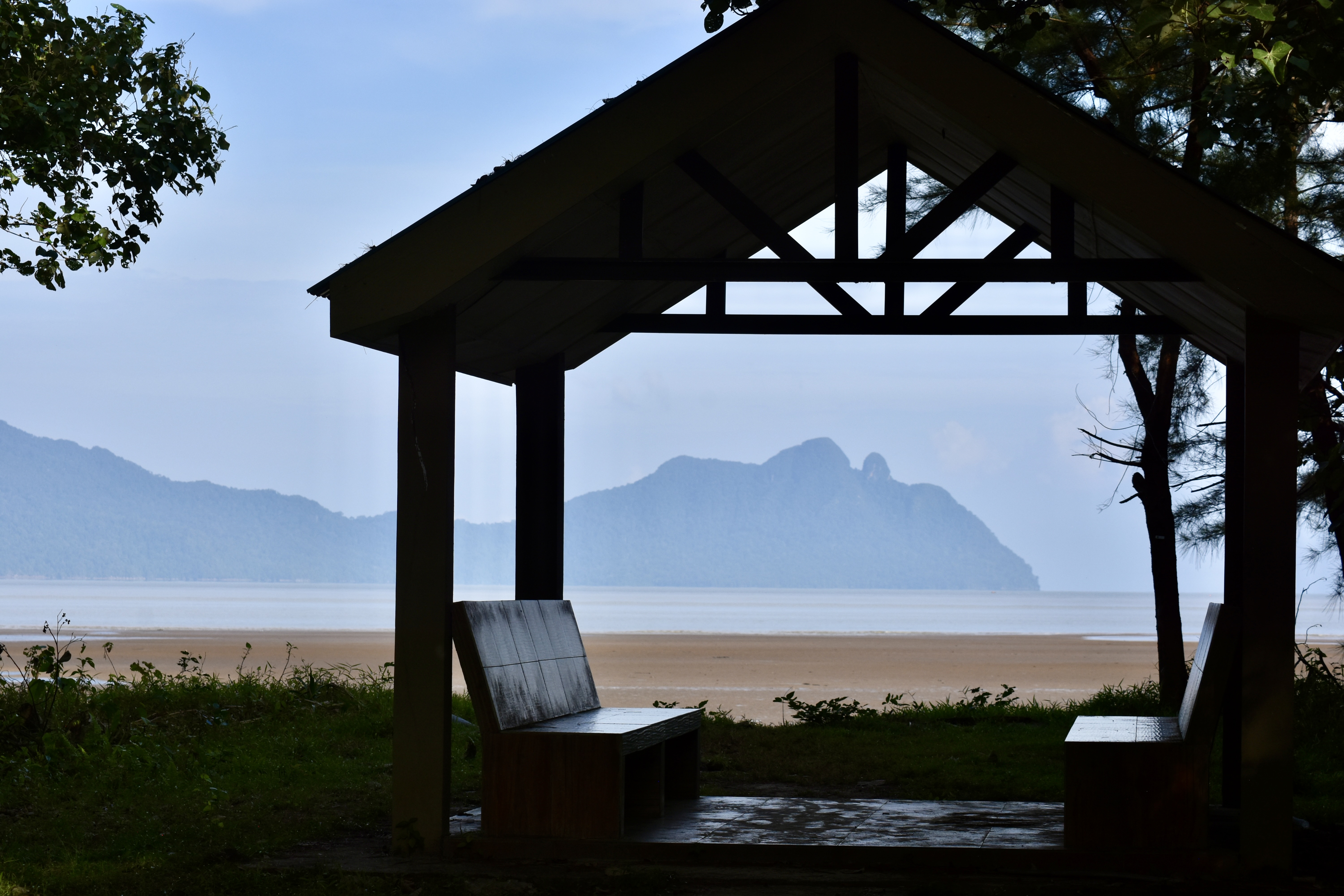
At the park, the boat stopped a short distance from the spectacular sandy shore. We removed shoes, rolled up trouser legs and waded across.
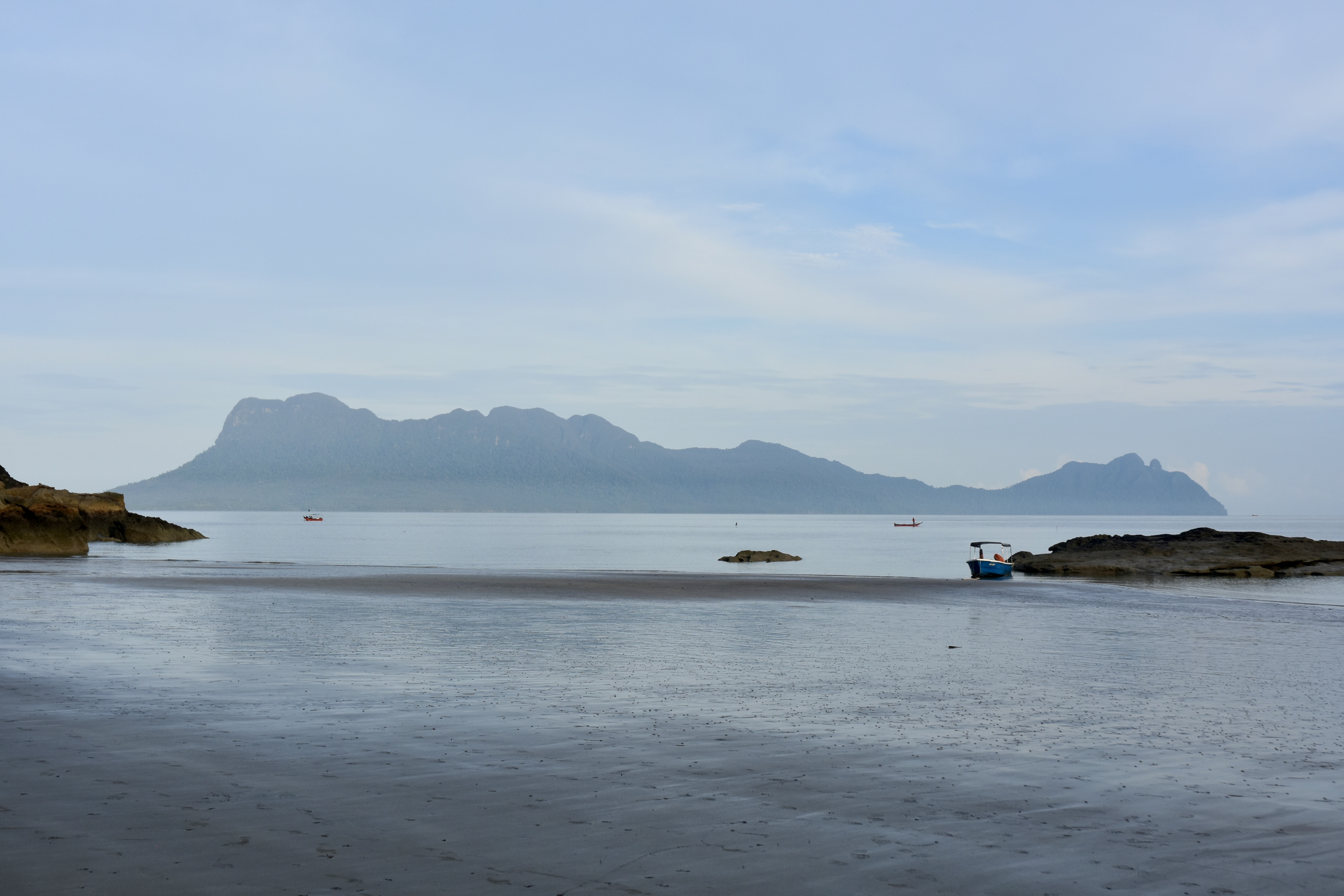
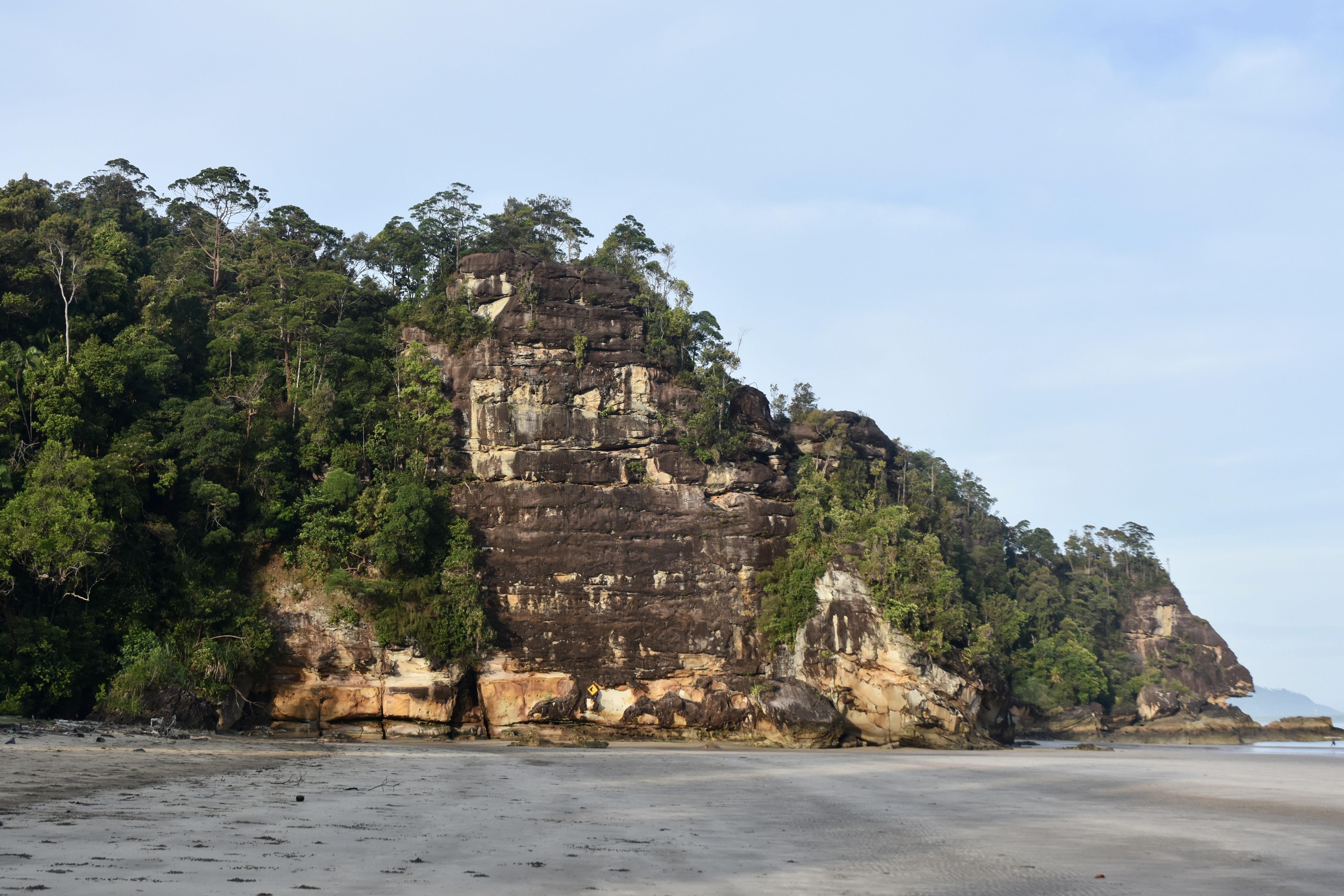
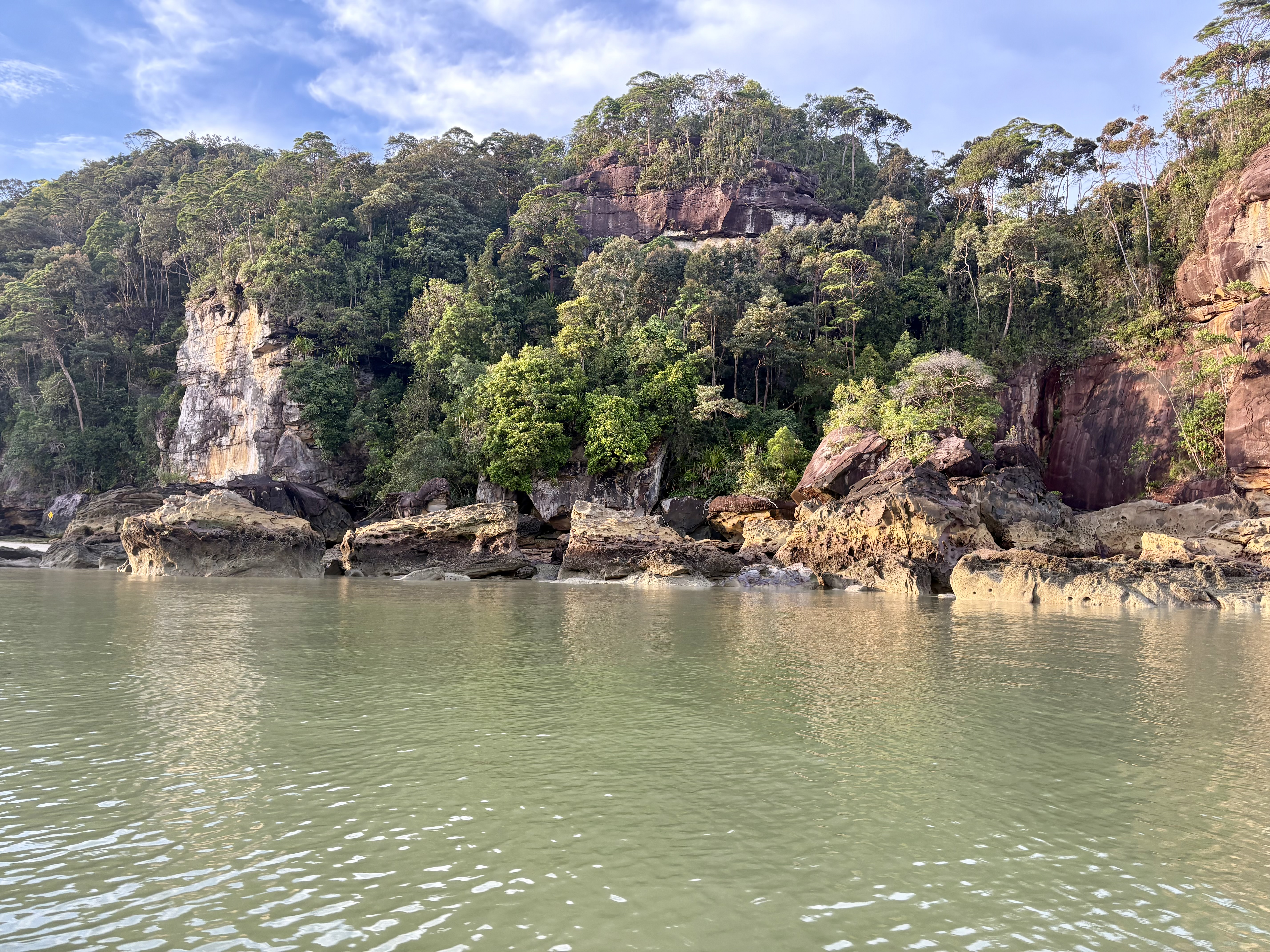
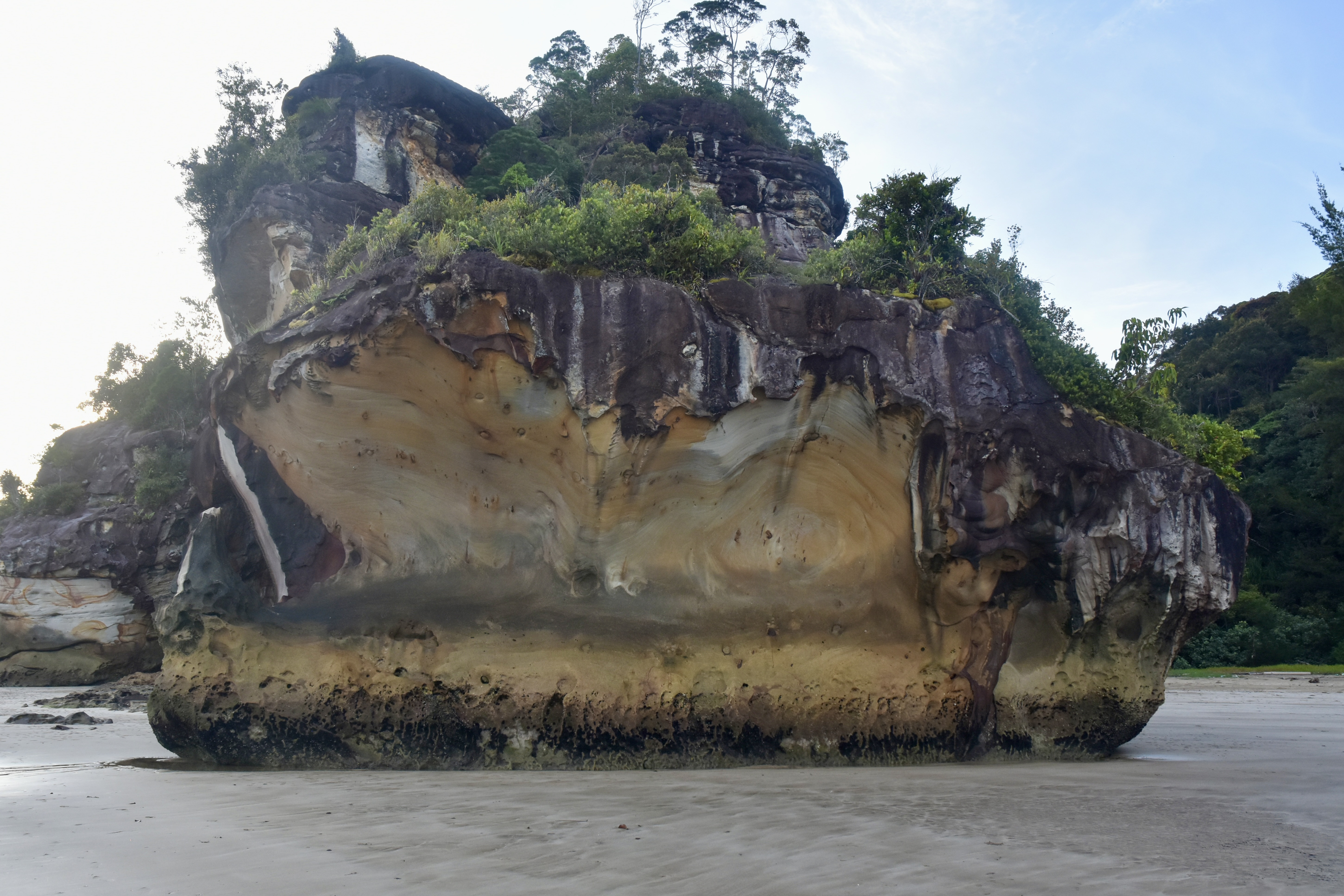
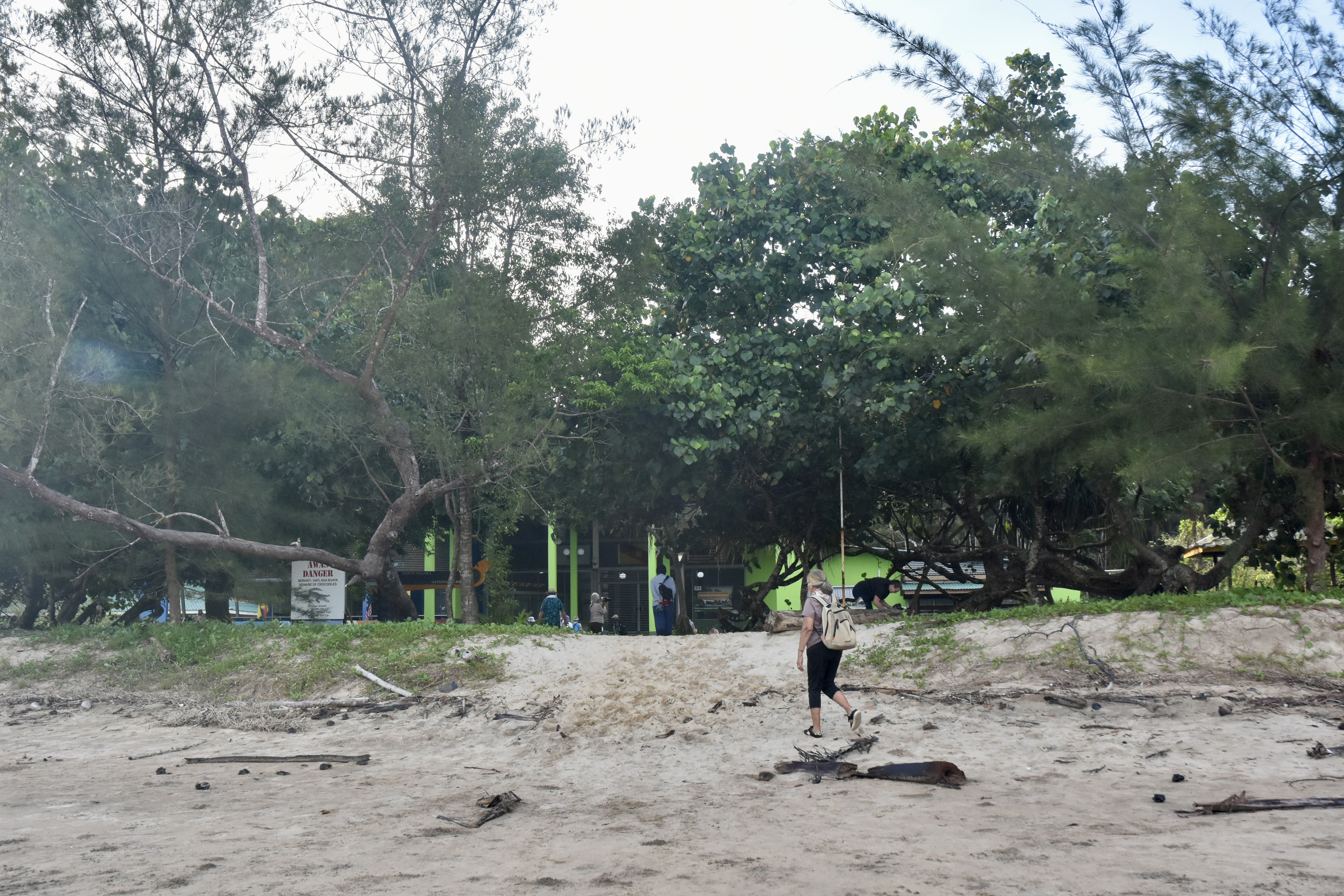
It was a short walk along the beach to the National Park Headquarters where we could wash and dry our feet and put on shoes again.
The first primates we saw in Bako were a group of Long-tailed Macaques (Macaca fascicularis) in a tree near the park headquarters. Long-tailed Macaques, also called Crab-eating macaques, live in groups ranging from 10 to 85 individuals. It is the only old-world monkey known to use stone tools in their daily foraging. Its tail is the length of its head and body combined. They feed on leaves fruit and insects.
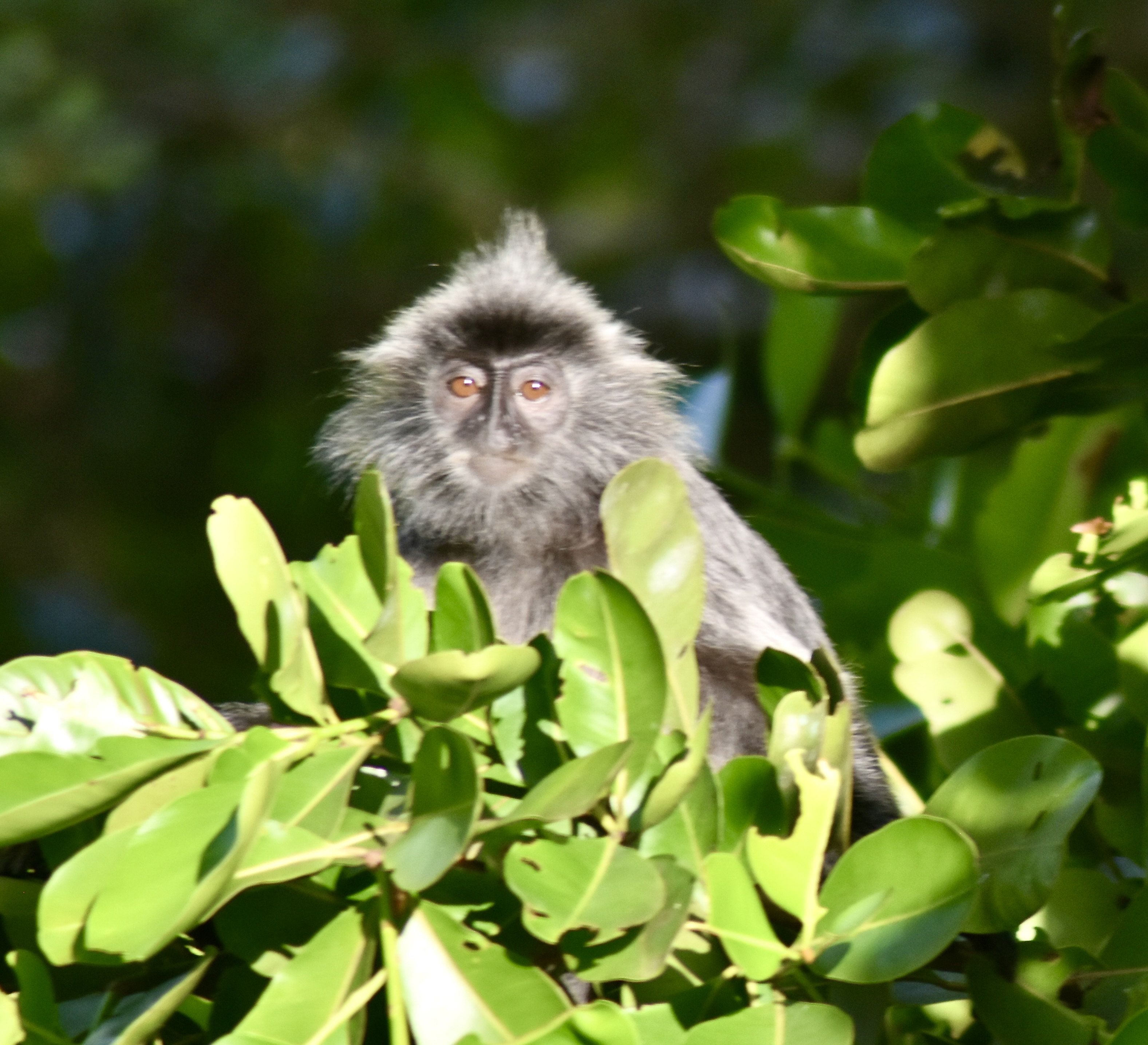
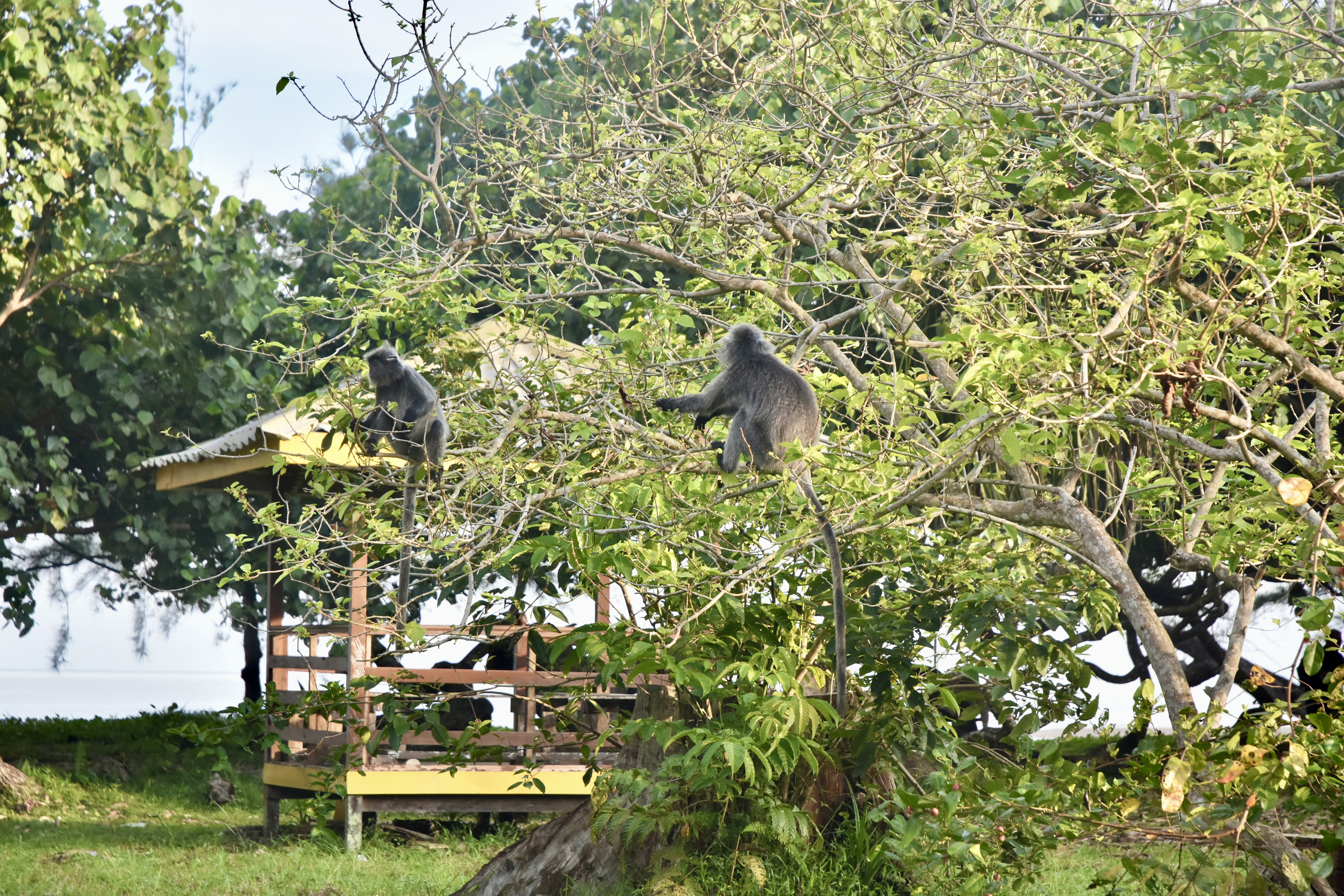
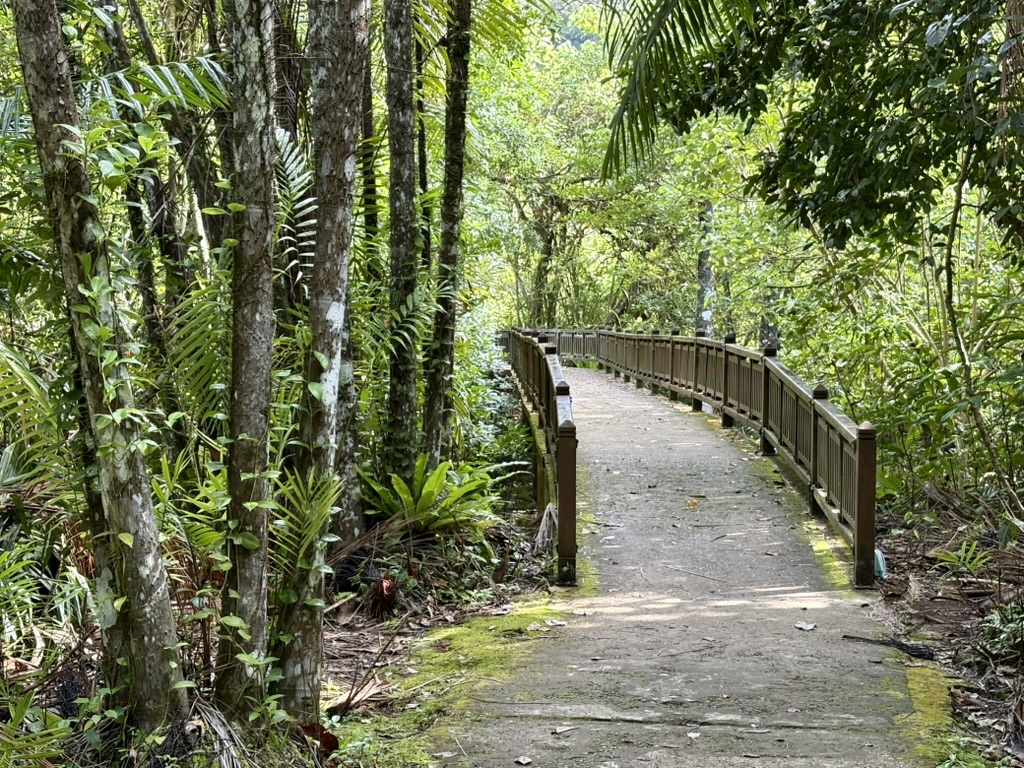
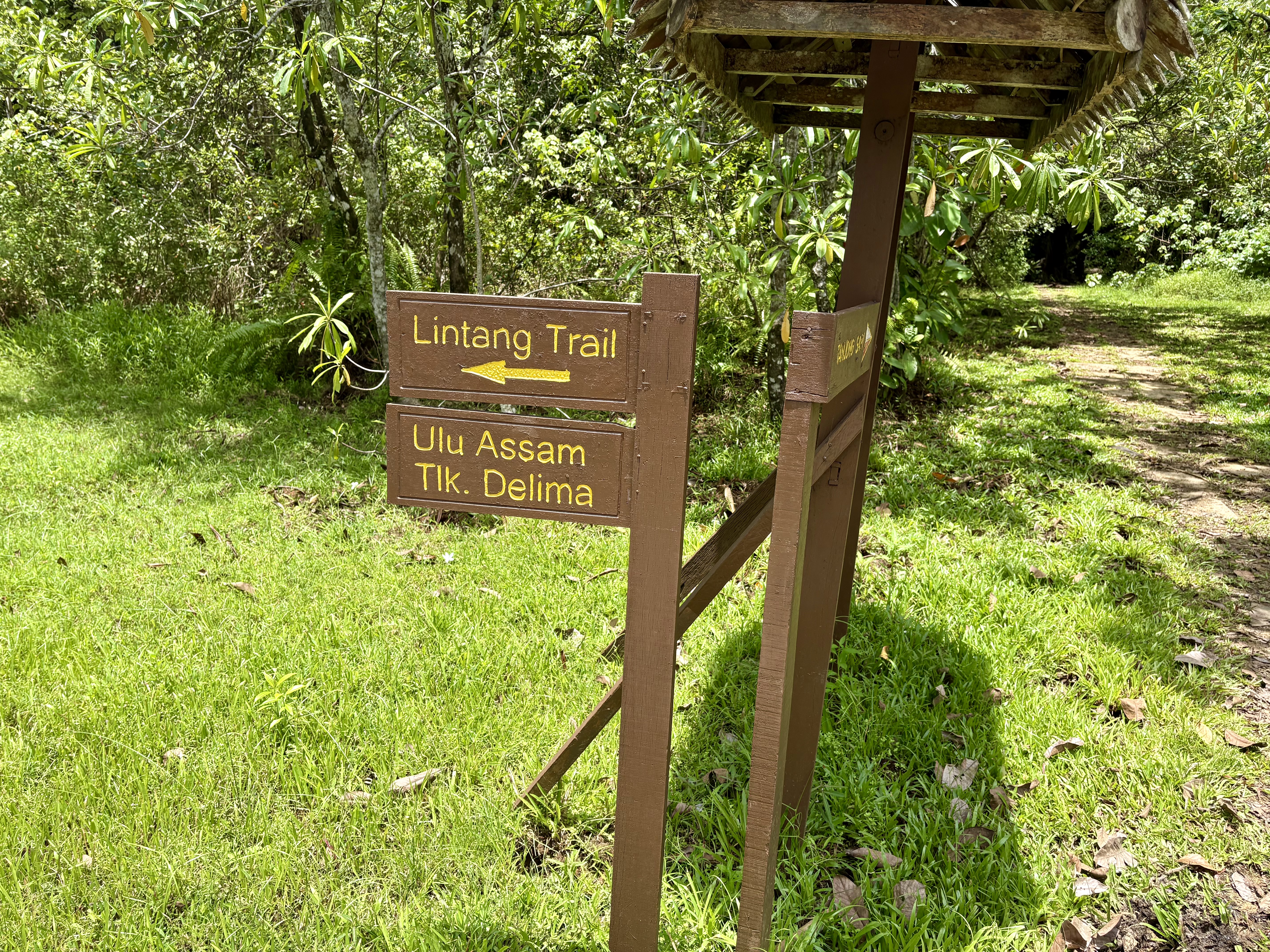
Bako National Park’s trails rang from 0.5 km to 5.8 km, offering diverse jungle, mangrove, and coastal scenery. Key trails include the 3.5-hour Lintang Loop for habitat variety, Telok Pandan Kecil for sea stack views, and Telok Paku for spotting proboscis monkeys. Trails are well-marked, ranging from easy boardwalks to challenging, muddy forest trekking.
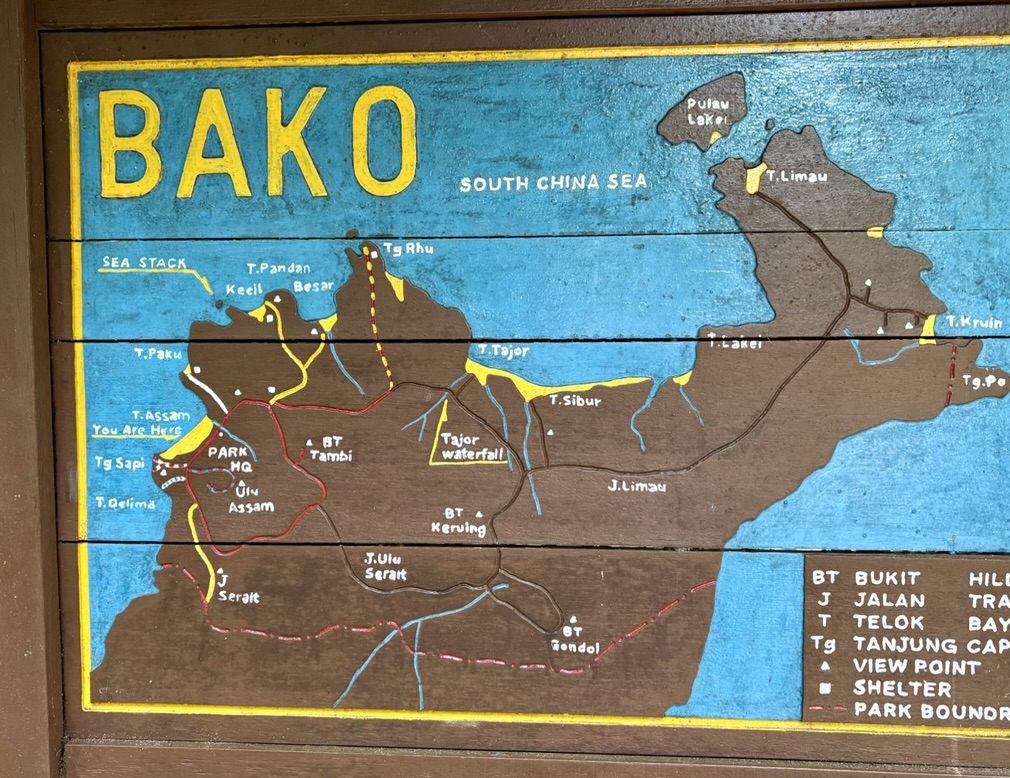
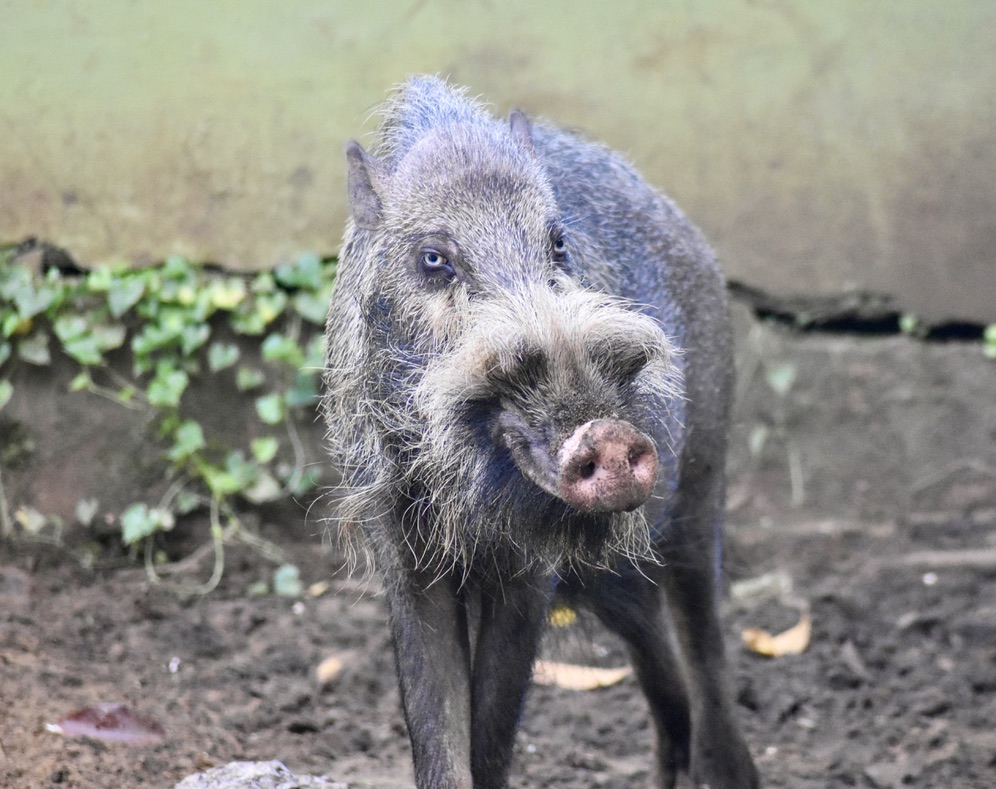
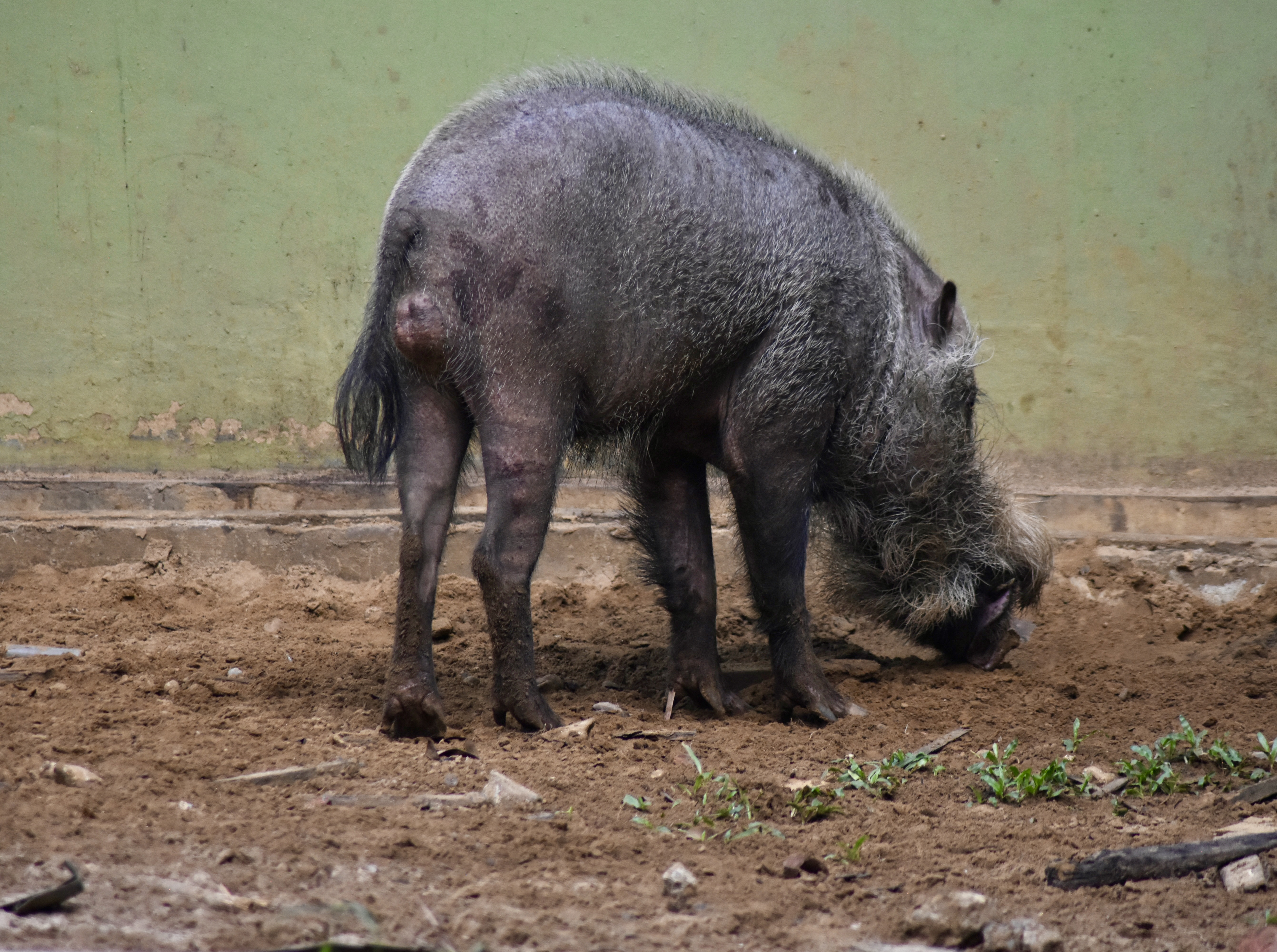
We walked two trails from the park headquarters, both starting with comfortable broad walks. On the first one going towards the little park jetty, we came across Bornean Bearded Pigs (Sus barbatus) a distinct wild boar species with prominent facial hair and long, narrow snout. Endemic to Borneo, Sumatra, and the Malay Peninsula, these social, diurnal mammals weigh up to 300 lbs and are known for large-scale, long-distance migrations and ecological roles as seed dispersers.
We saw Proboscis Monkeys on a tall tree by the trail. Also called Long-nosed Monkey it is an arboreal Old World monkey with an unusually large nose, a reddish-brown skin colour and a long tail. It is endemic to Borneo and is found mostly in mangrove forests and on the coastal areas of the island. They are known as one of the most aquatic primates, capable of swimming underwater for up to 20 meters. This adaptation helps them navigate their dense, water-rich habitats and evade predators like crocodiles.
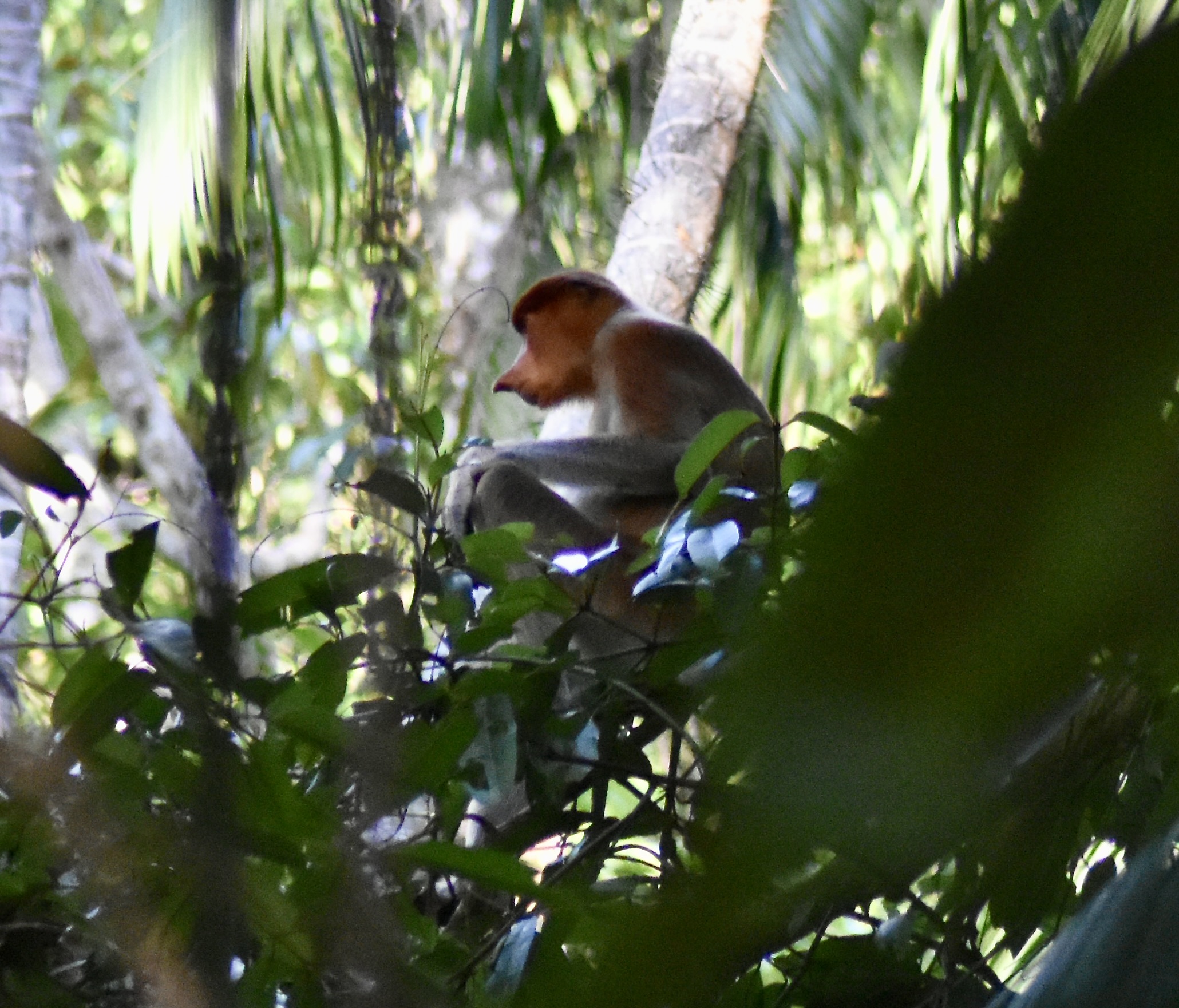
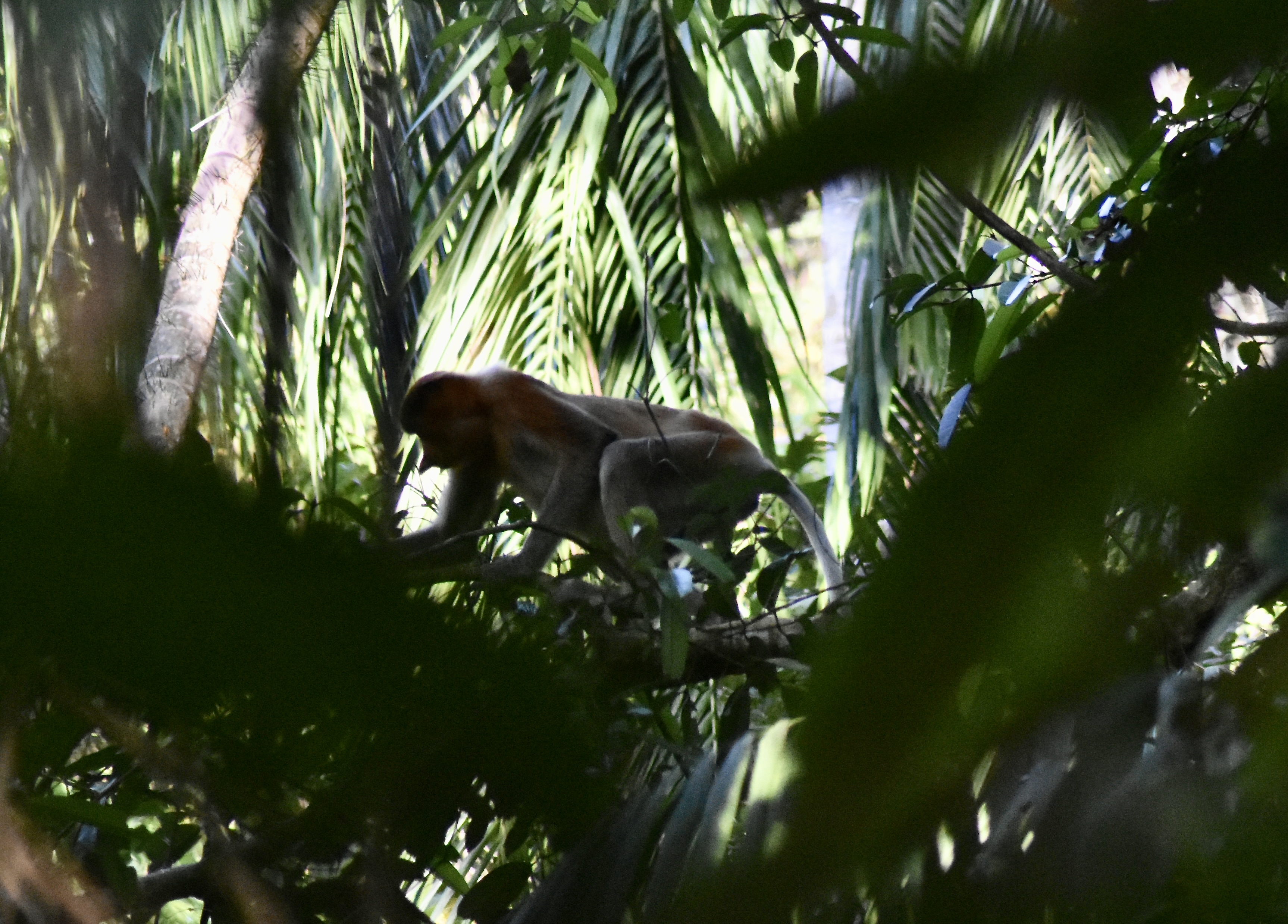
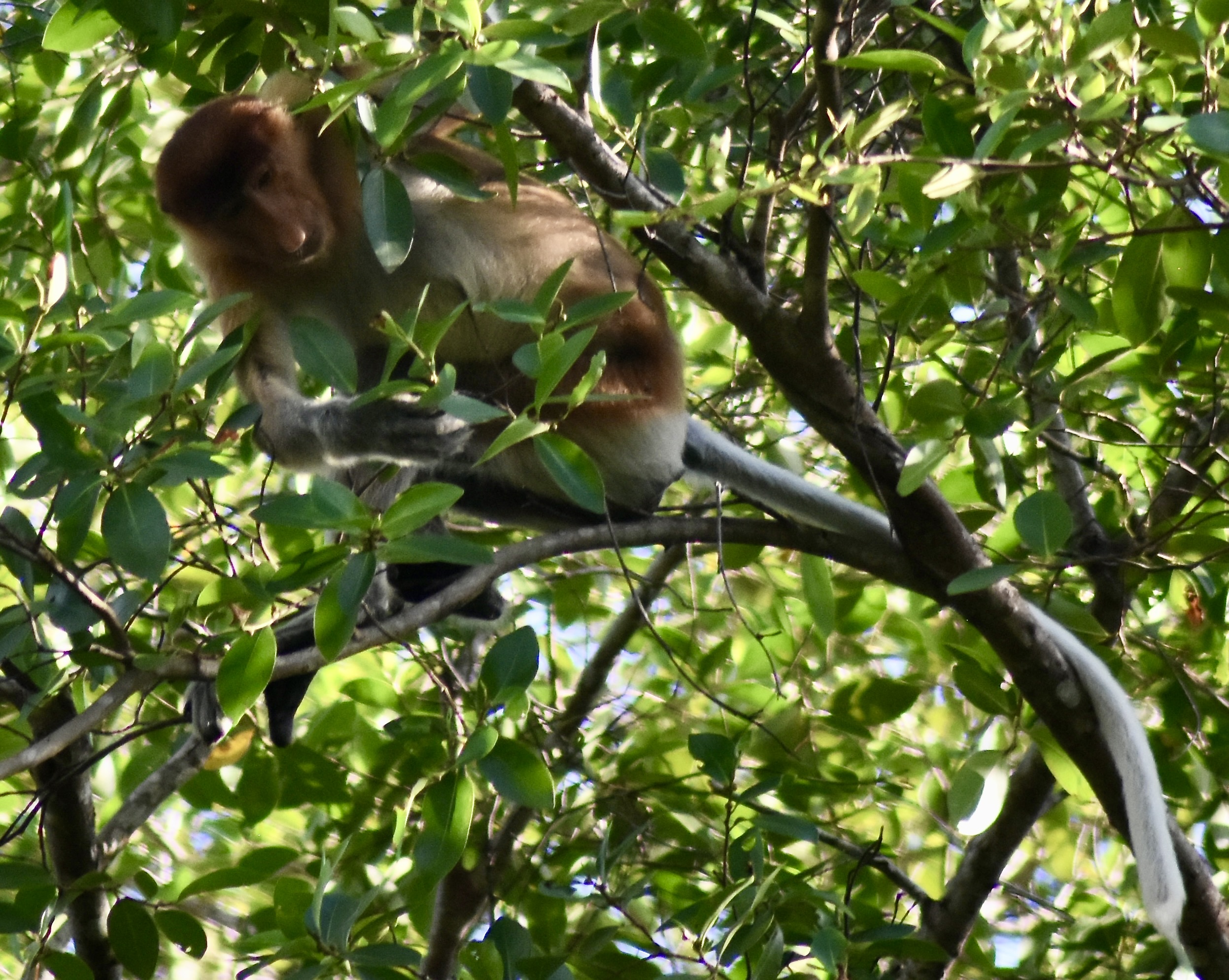
At a beachfront shelter by a stream, we watched more Long-tailed Monkeys, tiny, brightly coloured Fidler Crabs with a single oversized claw, and many bird species.
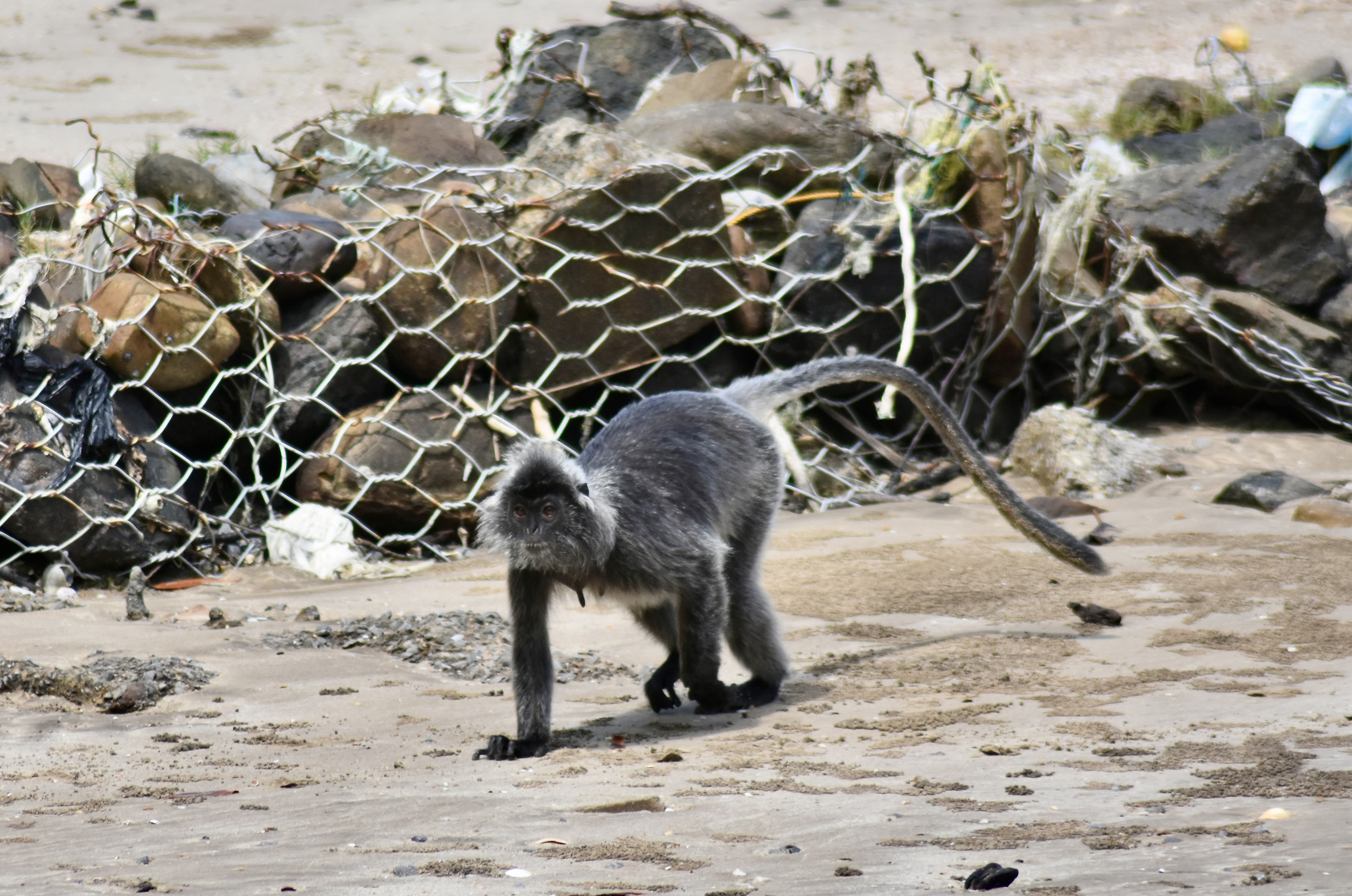
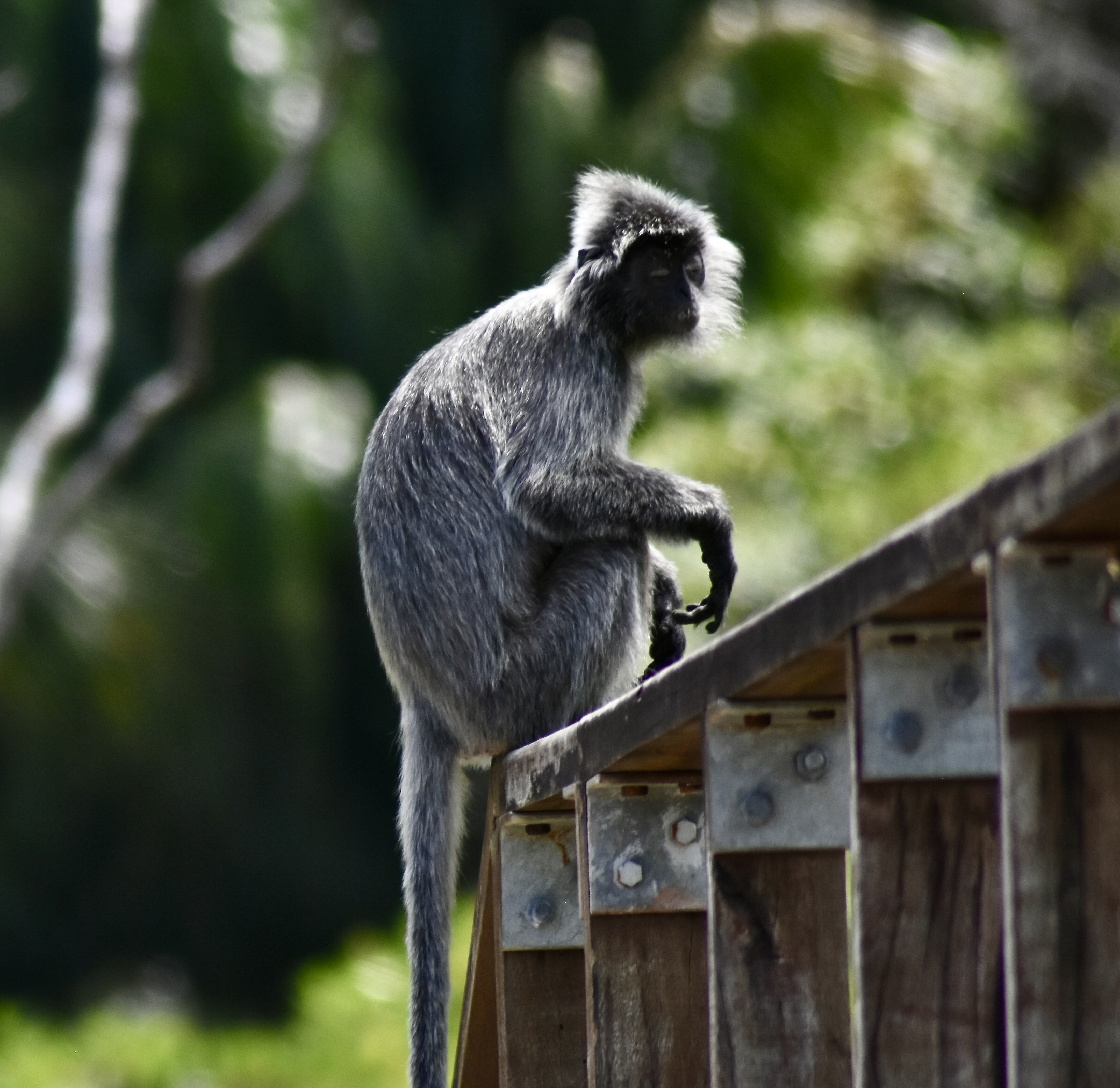
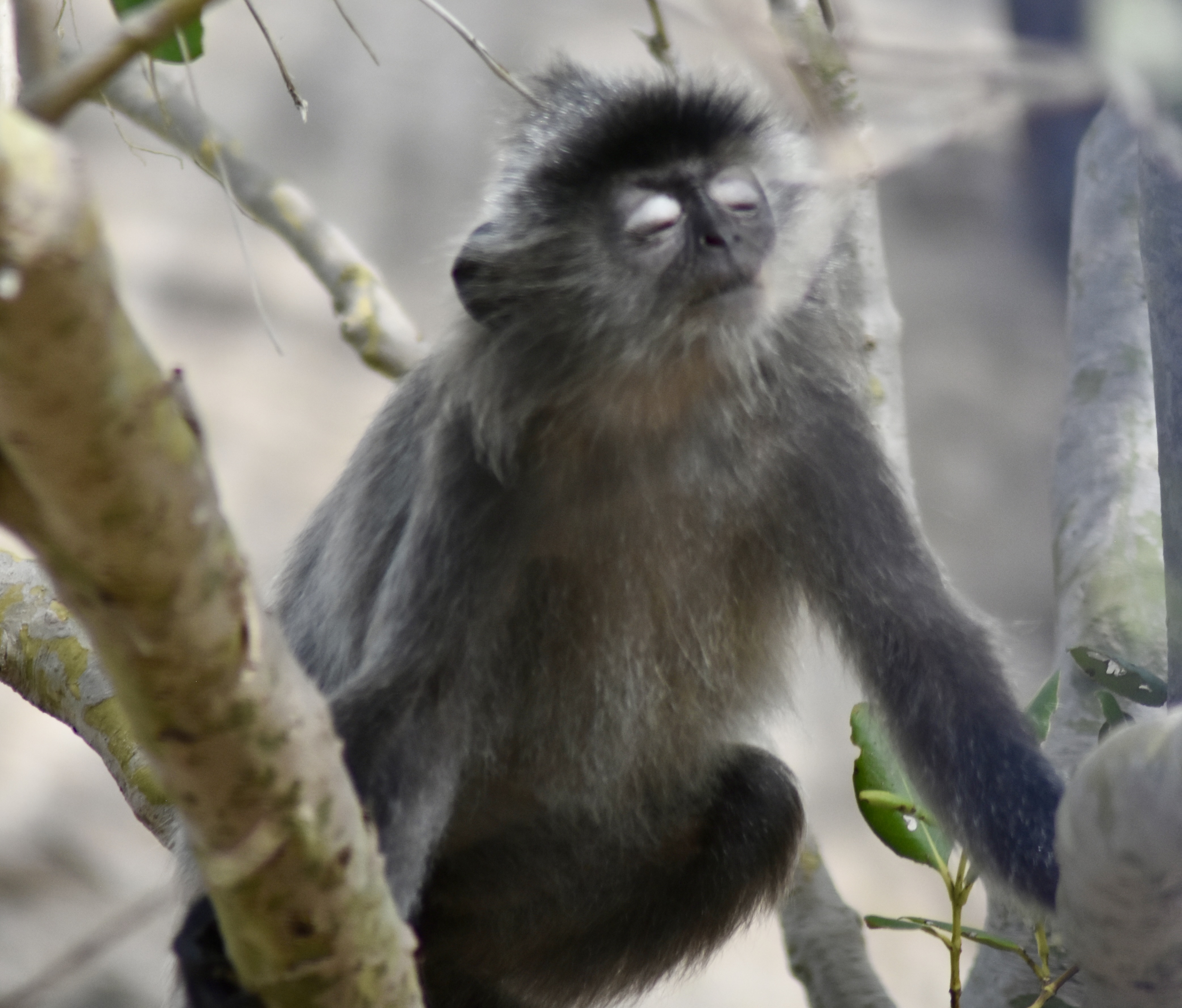
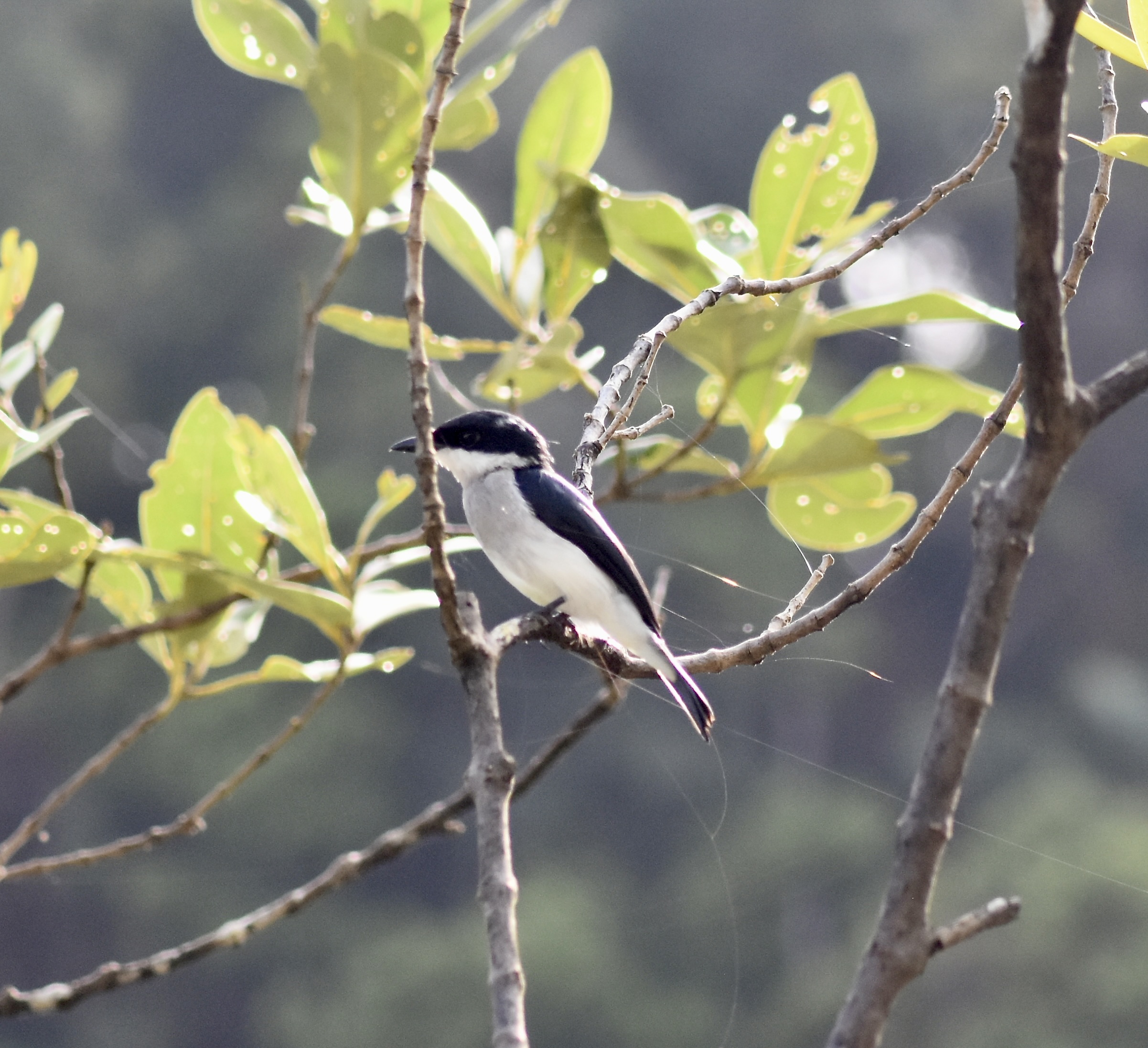
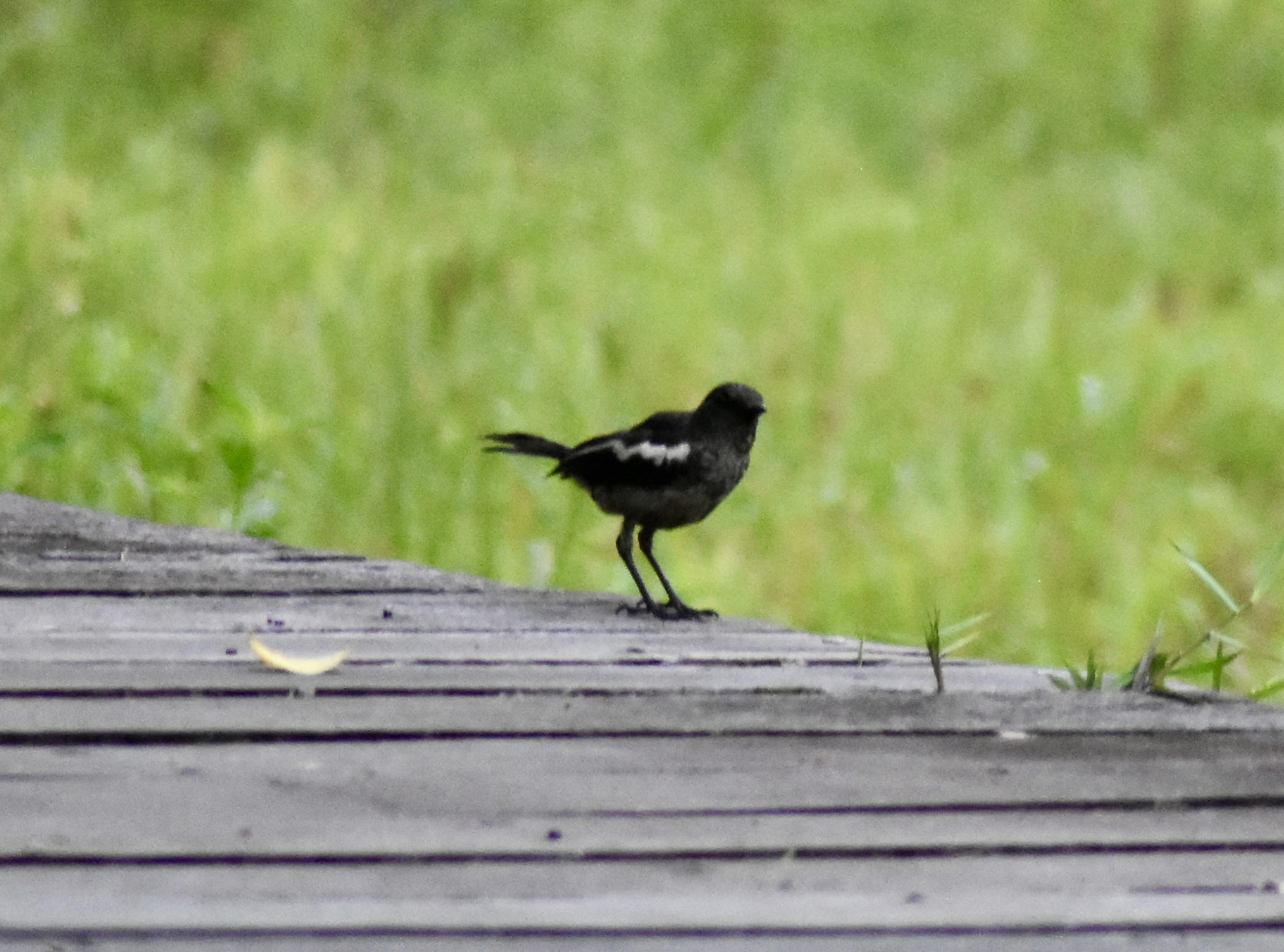
The trail became more and more difficult. The broad walk ended and a steep rough footpath led up a hill.
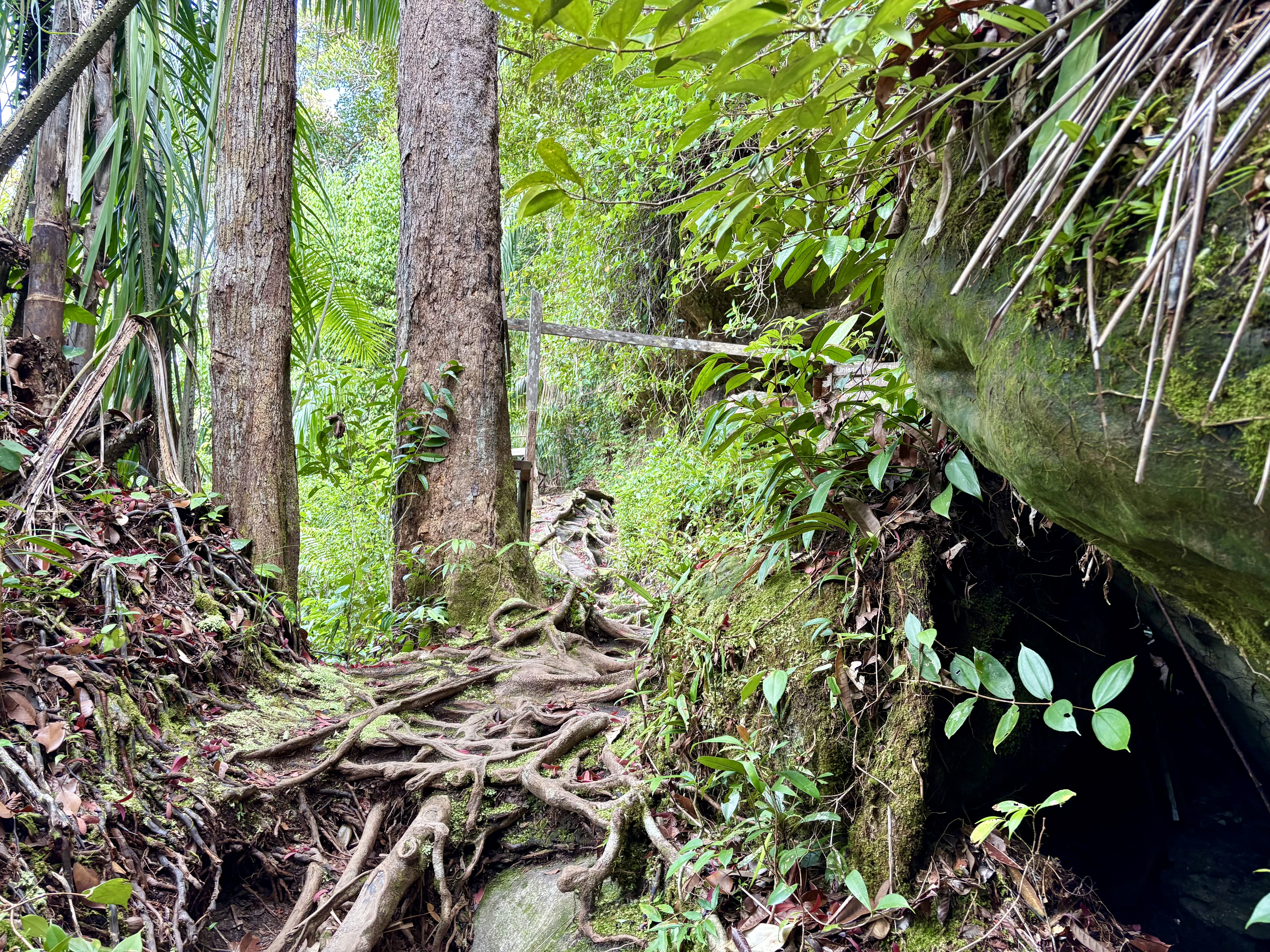
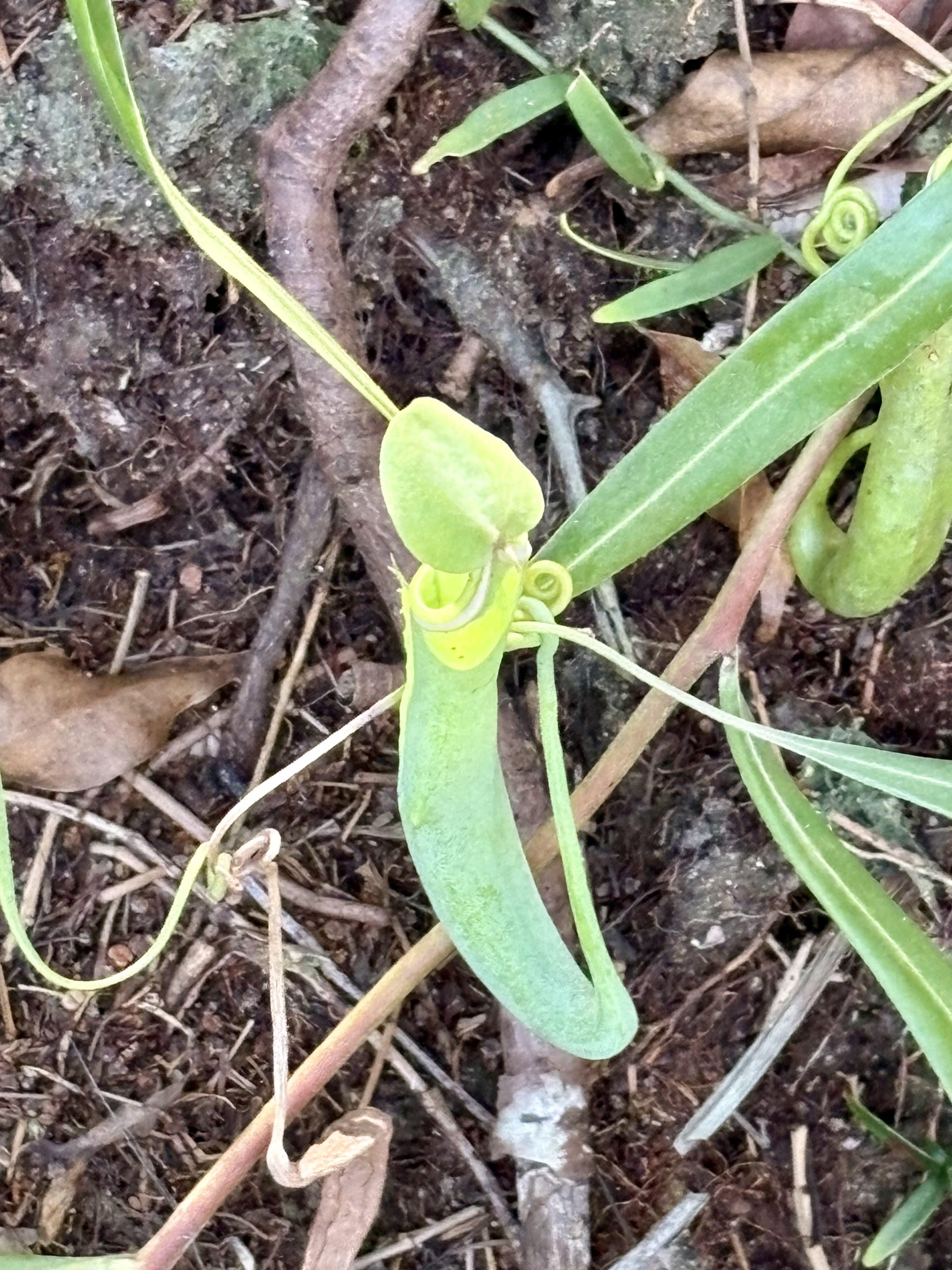
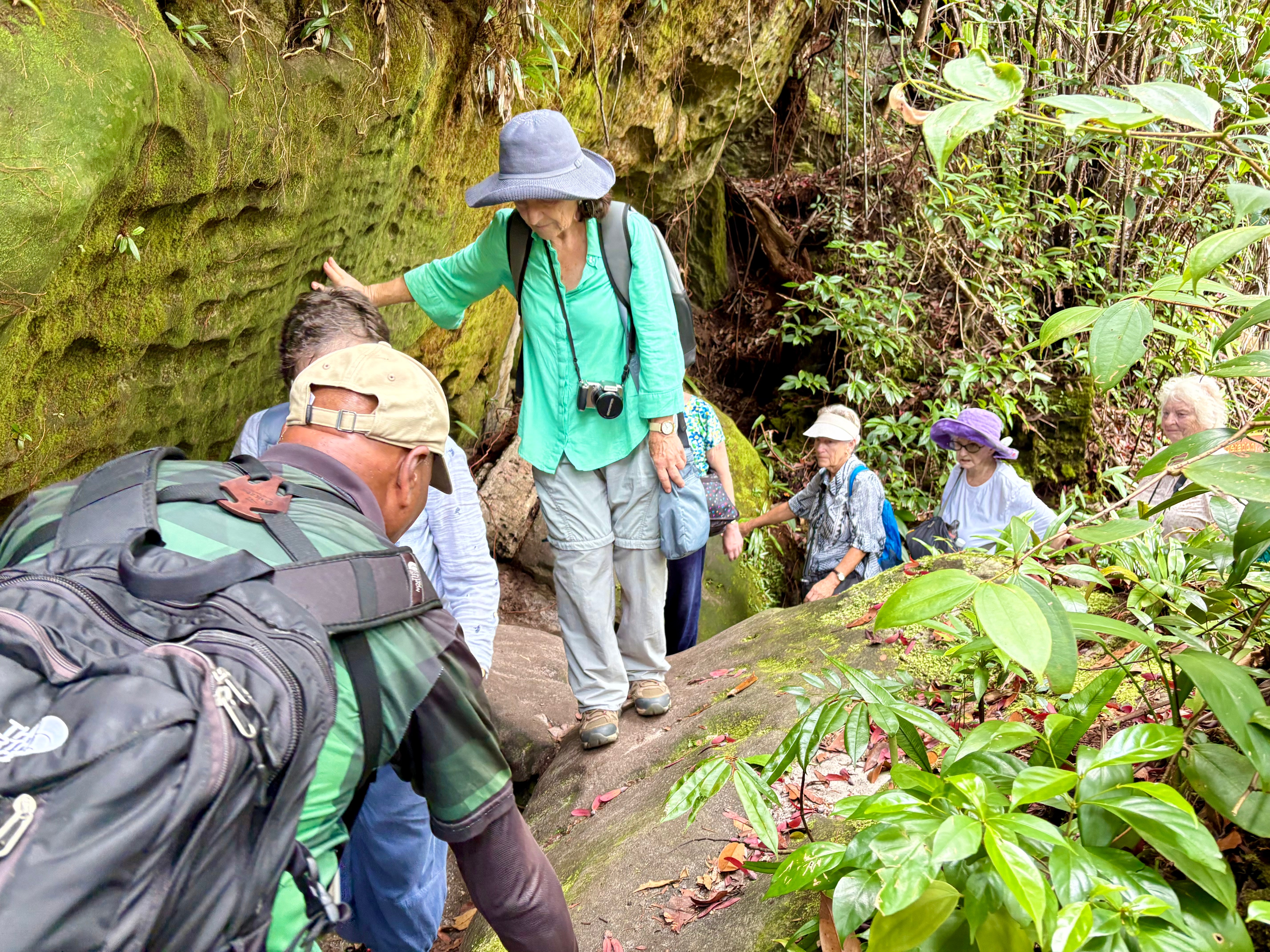
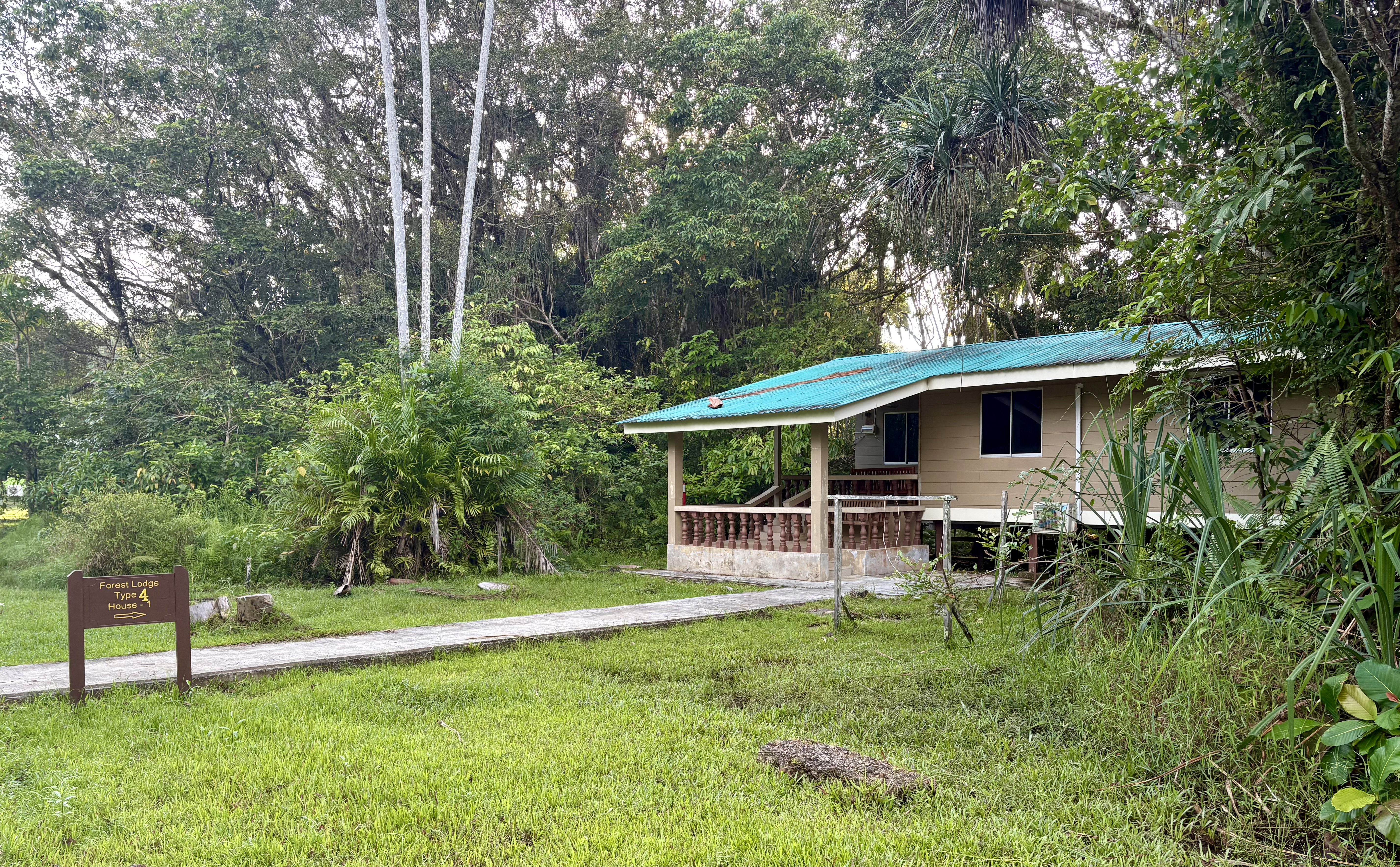
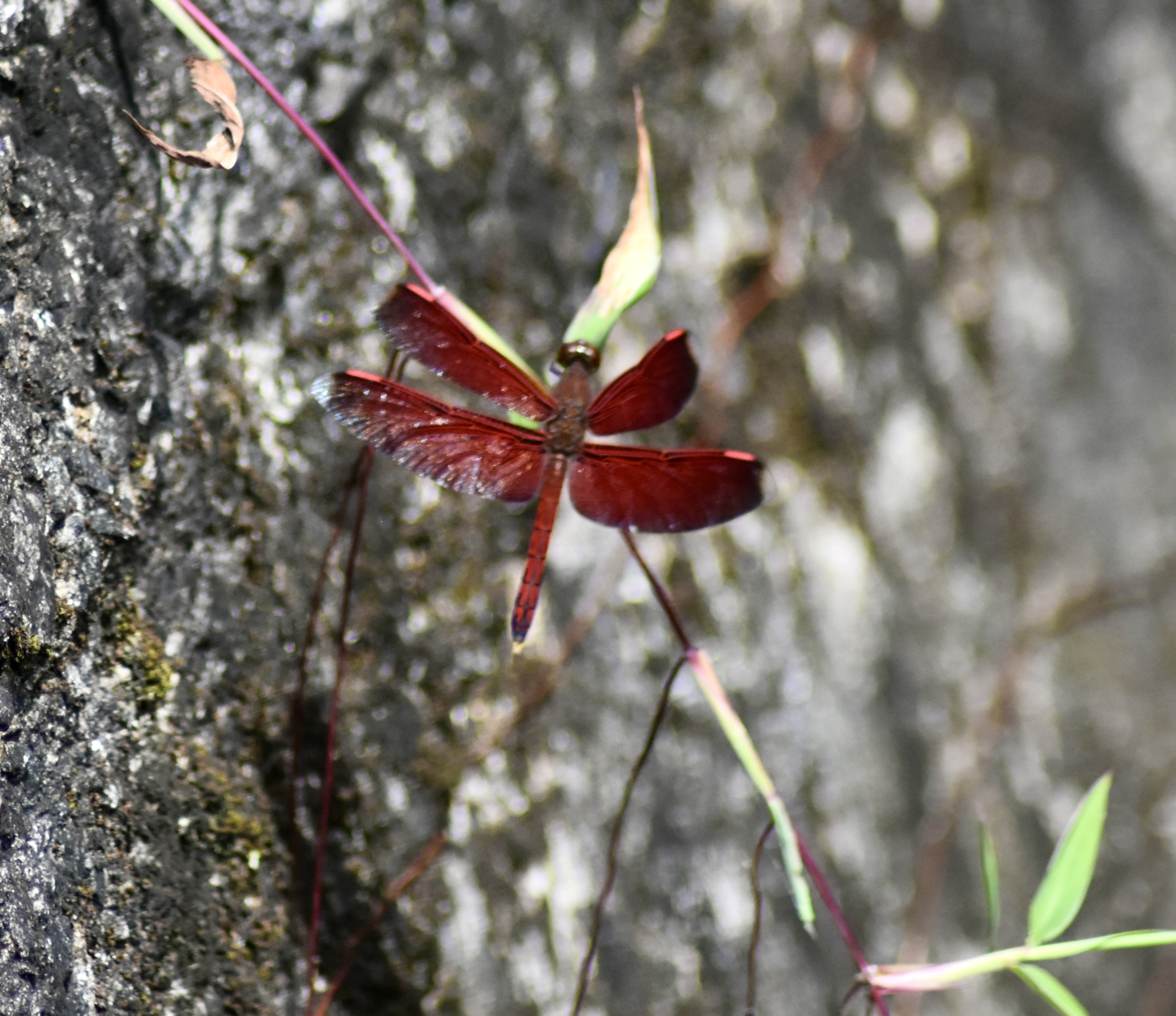
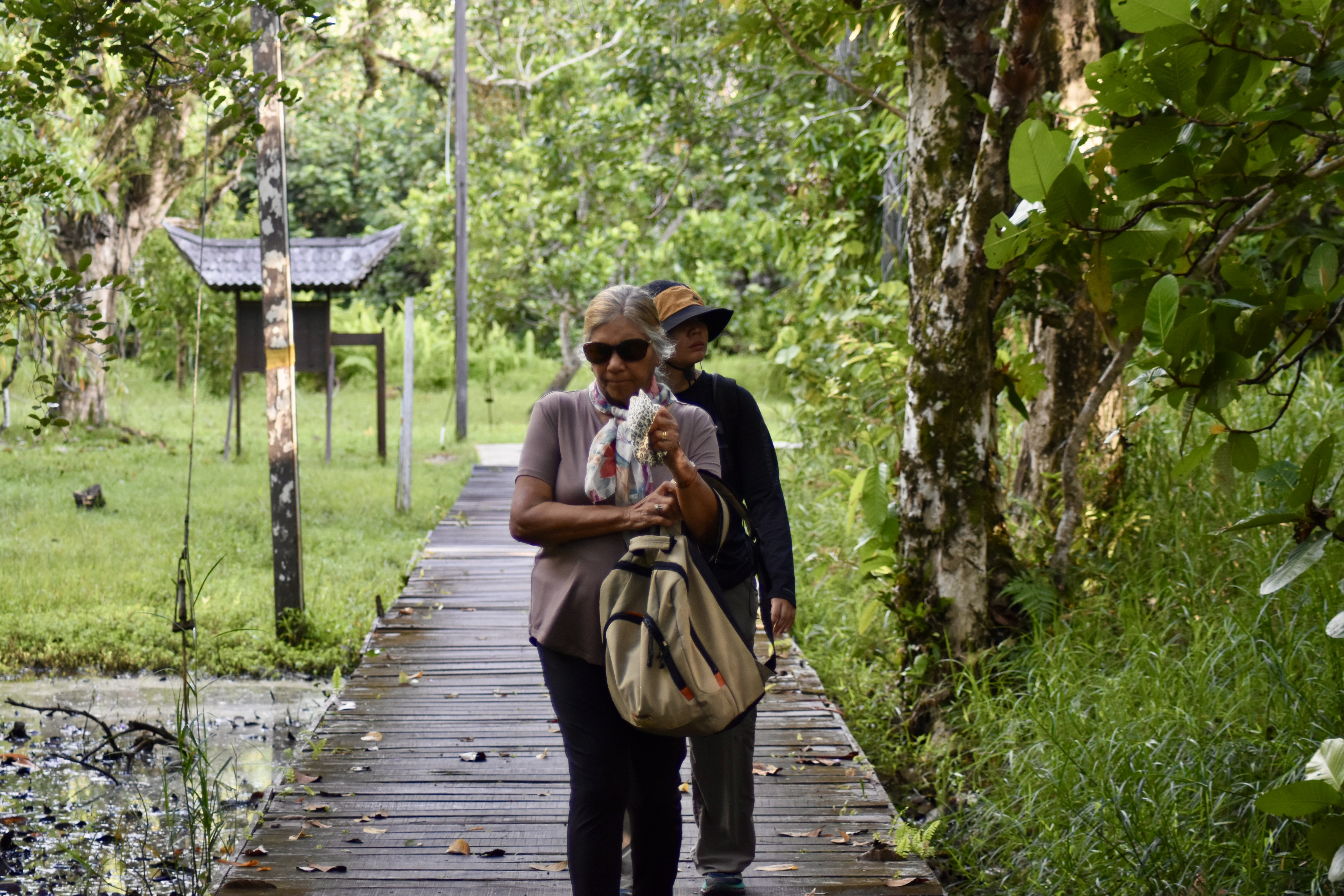
Walking back was equally tough. We made it back to the park headquarters and walked the much easier and shorter Lintang Trail past park accommodation – 3-bedroom Chalets, 2-bedroom Lodges, 4-bedroom Hostels and a camping ground, and watched more Long-tailed Monkeys and brightly coloured Dragonflies.
We had a light lunch at the park cafe and took the boat from the little jetty near the park headquarters back to Bako village. The coach took us back to the comfortable Waterfront Hotel in bustling Kuching.
Published 22 April 2024. Post views 45

