On the final day of our stay at the Abai Jungle Lodge, we had a pre-breakfast Kinabatagan River Safari, visited an Oxbow Lake, had breakfast in the rain forest, lunch with a Malay family in a local village and a memorable Evening River Safari.
Pre-breakfast River Safari
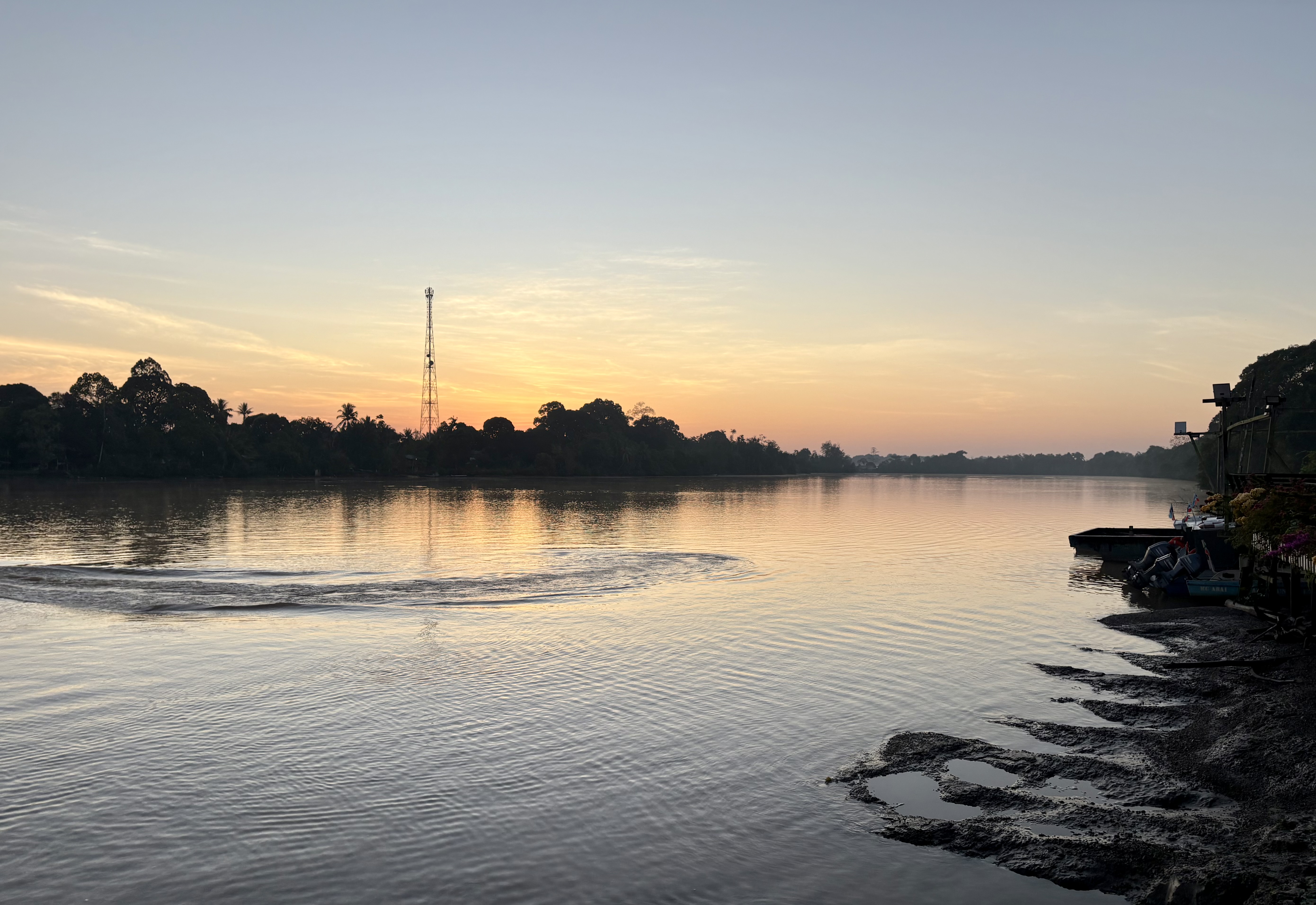
The early morning cruise upriver was ideal for seeing birds we did not see the previous day and to listen to their melodious calls.
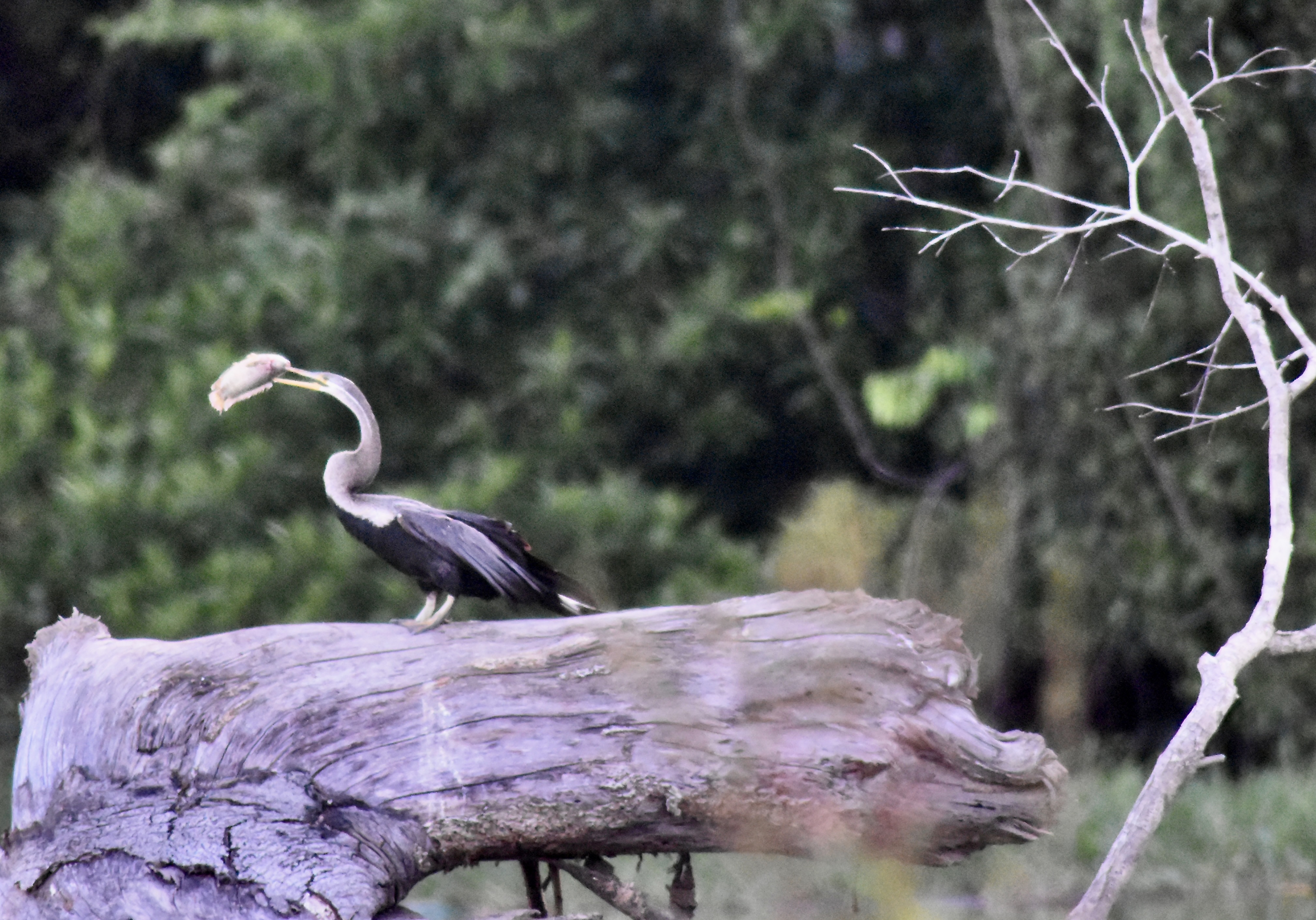
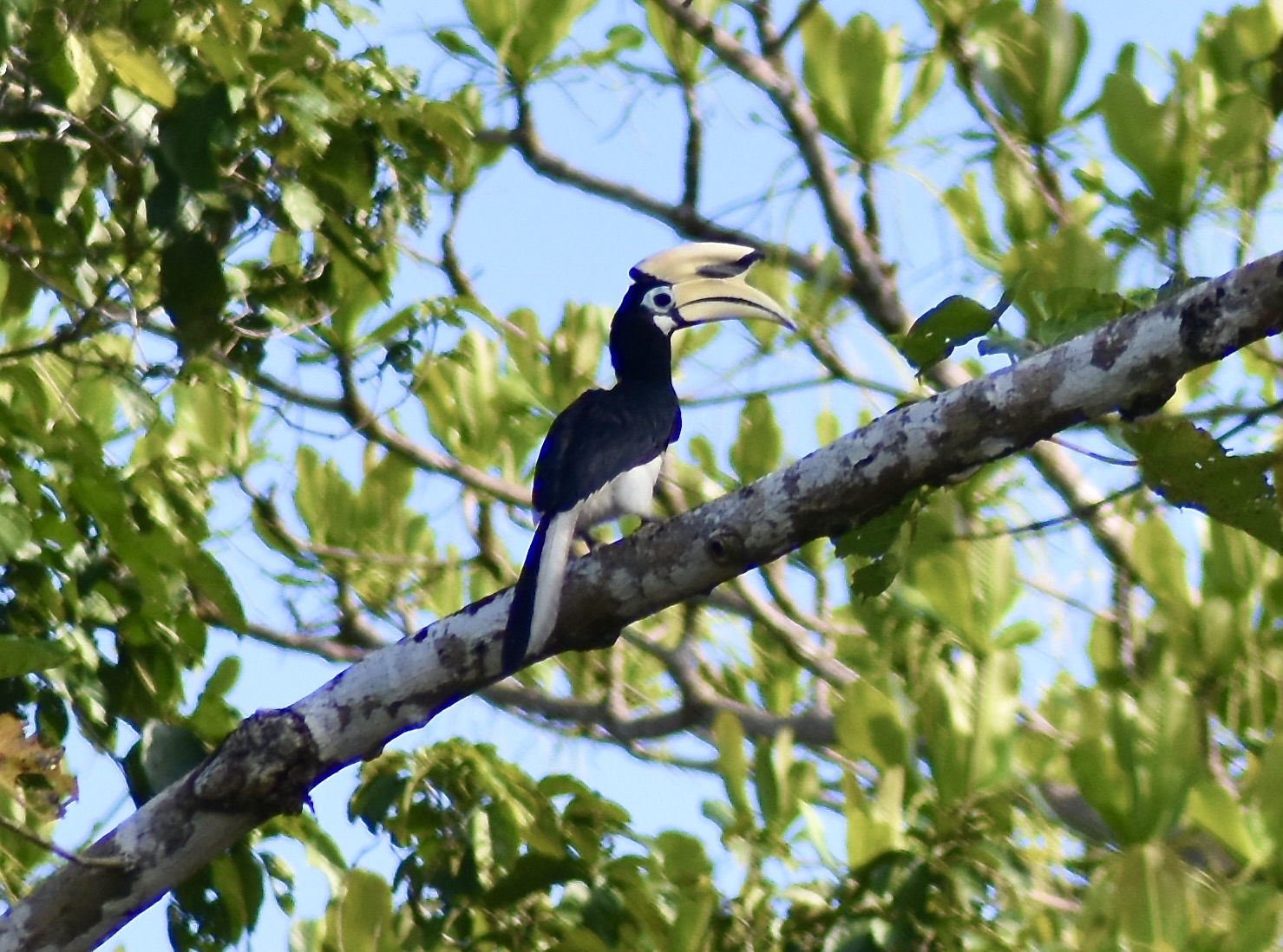
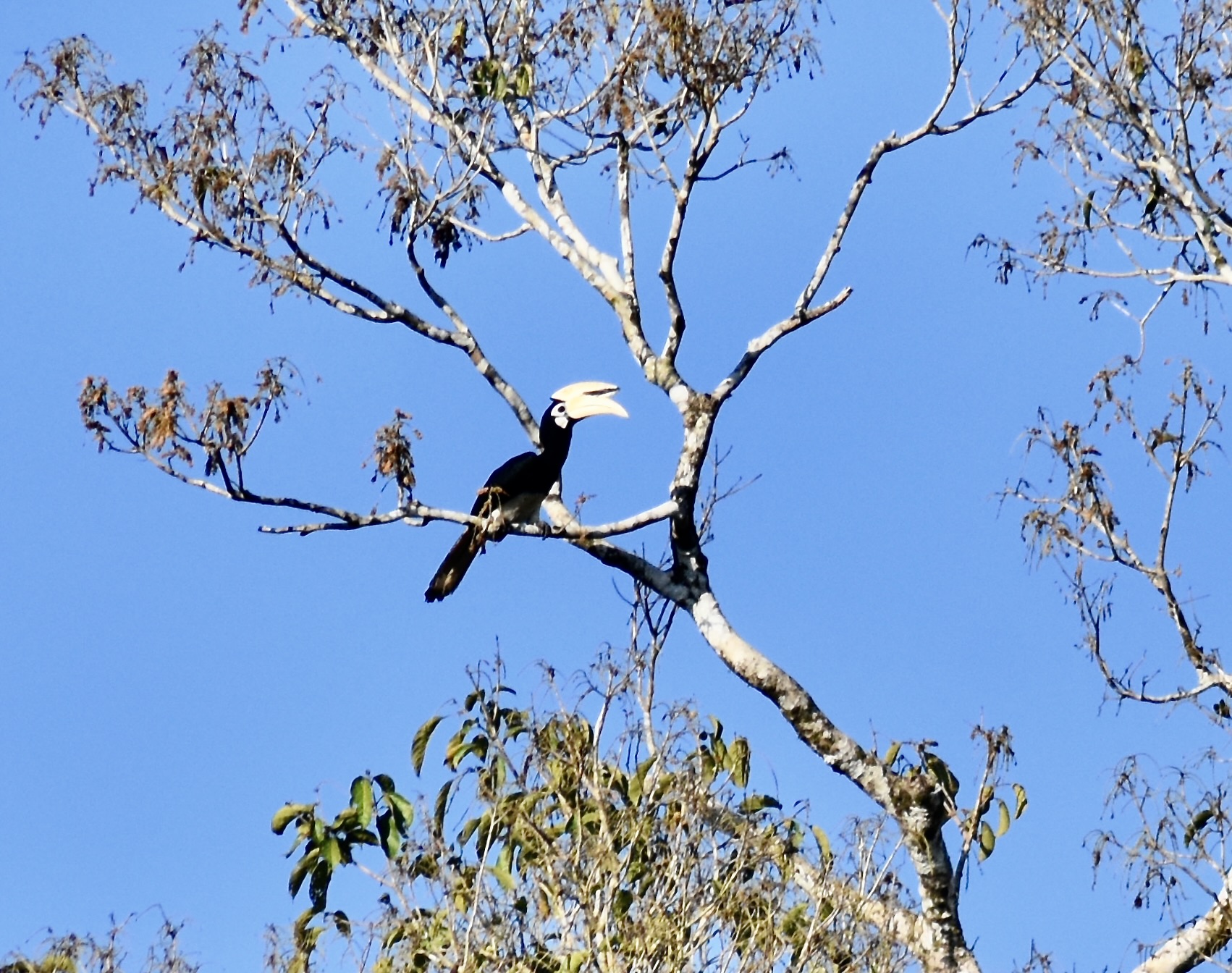
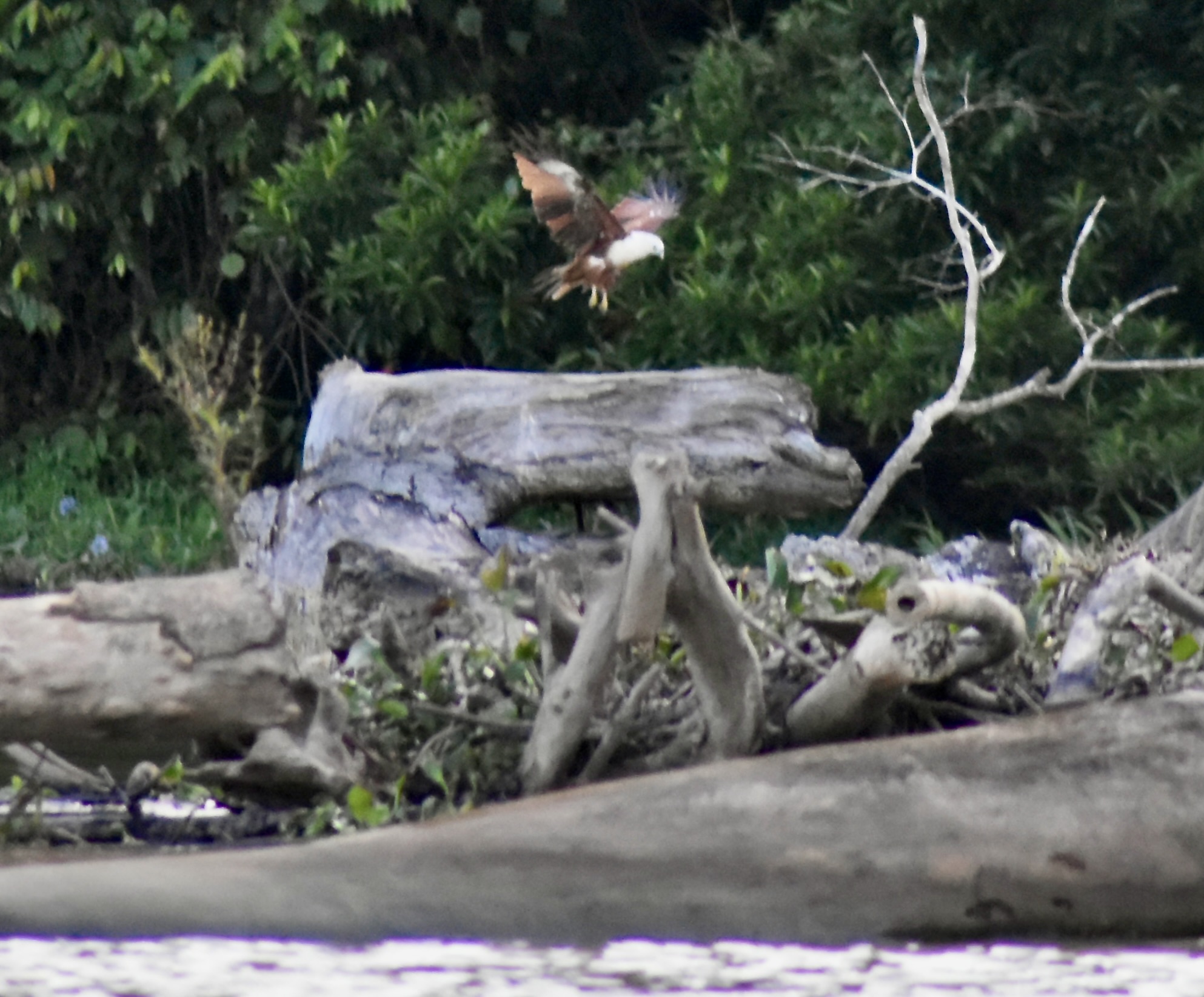
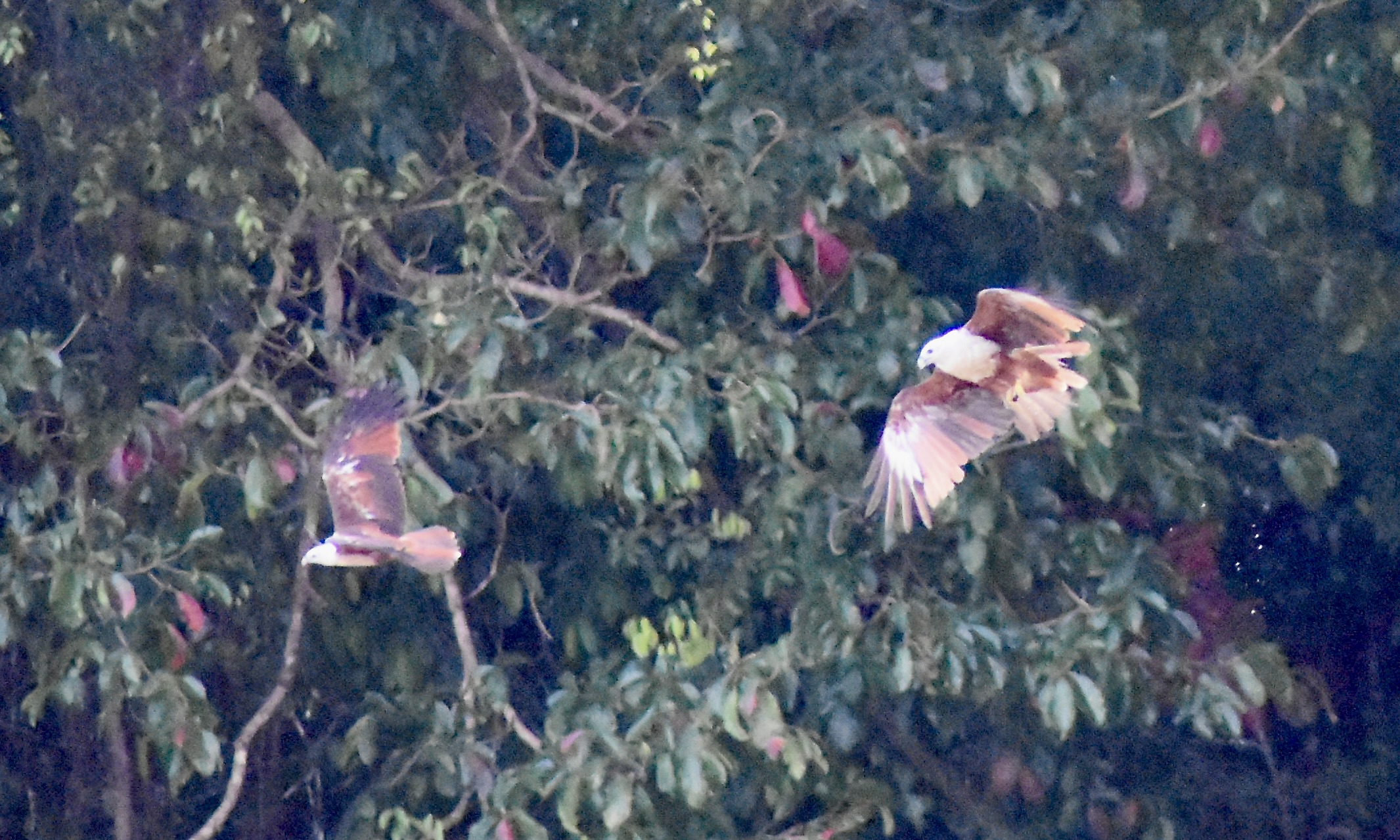
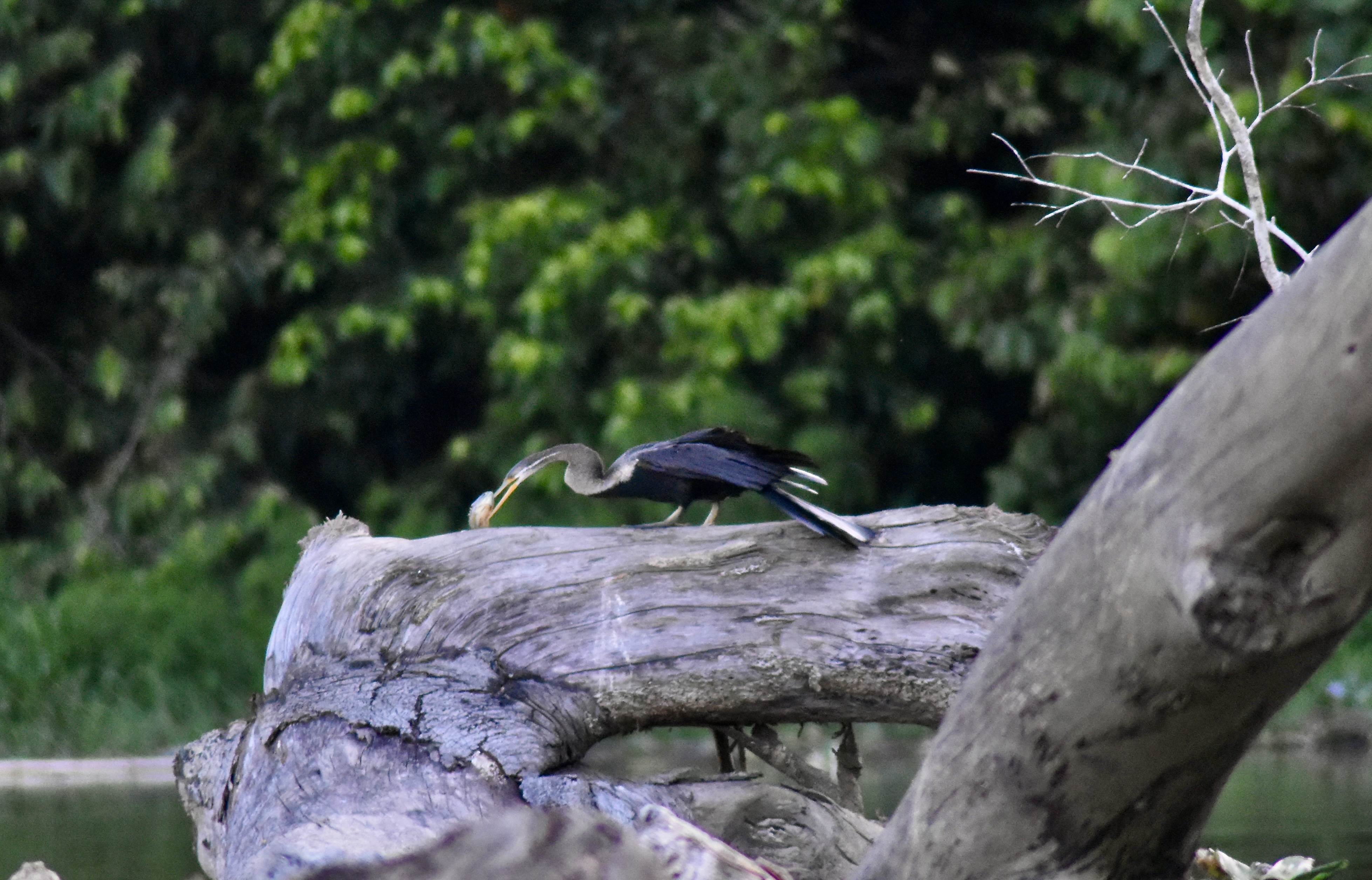
There were good, clear views of roosting Oriental Pied Hornbills (Anthracoceros albirostris), Brahminy Kites (Haliastur indus) circling just above water and Indian Darters (Anhinga melanogaster) diving for fish and swallowing them whole.
The Oriental Pied Hornbill is a large canopy-dwelling bird. It feeds on fruit, insects, shellfish, small reptiles and small mammals and birds including their eggs. Sadly, the Rhinoceros Hornbill, the bird I wanted to see most in Borneo, was elusive.
Early European ornithologists in India noted the crisp white head, neck, and breast, contrasting with the rust-colored body of the Brahminy Kite. To them, the clean white plumage symbolized nobility and purity, leading them to associate its name with the Hindu Brahmin caste. Hindus consider the bird sacred and view it as the earthly representation of “Garuda” – the mount of Hindu god Vishnu.
Indian Darter is also called “Snakebird“ as it frequently swims with its entire body submerged and only its long, slender neck and head visible above water, resembling a swimming snake. It hunts by completely submerging and harpooning fish with its sharp, pointed beak. It then brings the fish to the surface, tossing and juggling it in the air before swallowing it whole, head-first. Like cormorants, darters do not have waterproof feathers. After fishing, they frequently perch on waterside rocks or trees for extended periods with their wings fully outstretched to dry them.
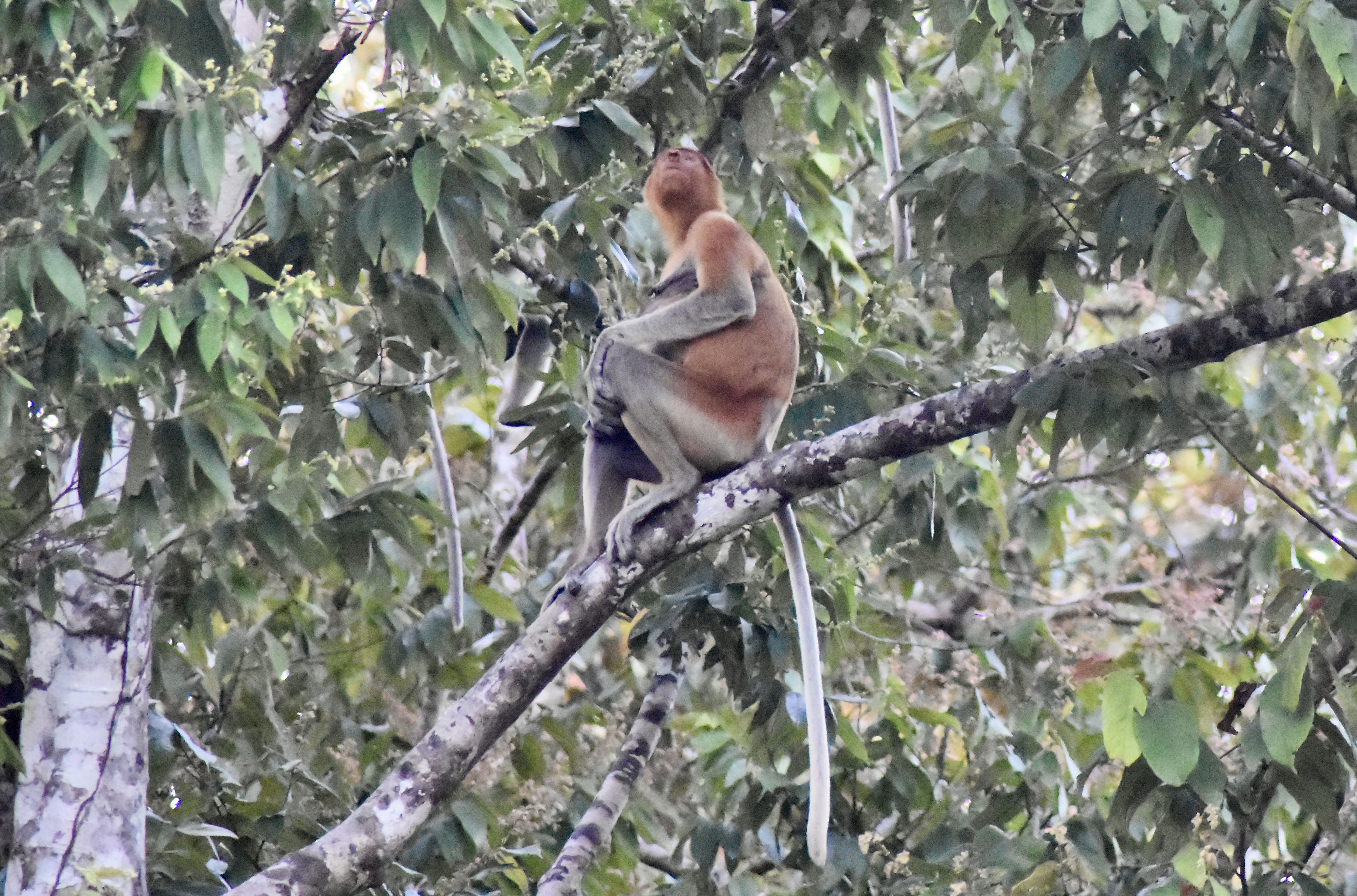
There were more Proboscis Monkeys to admire.
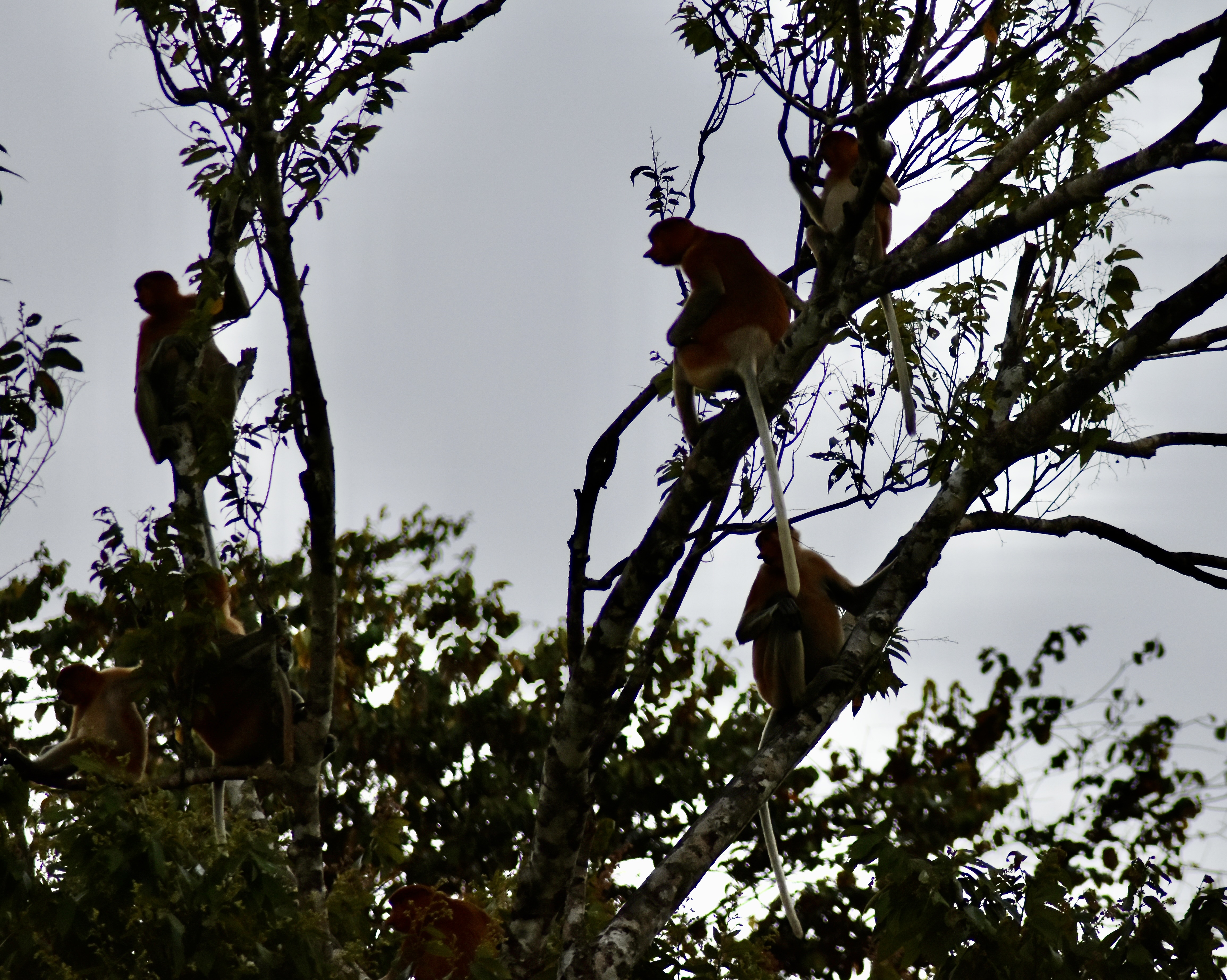
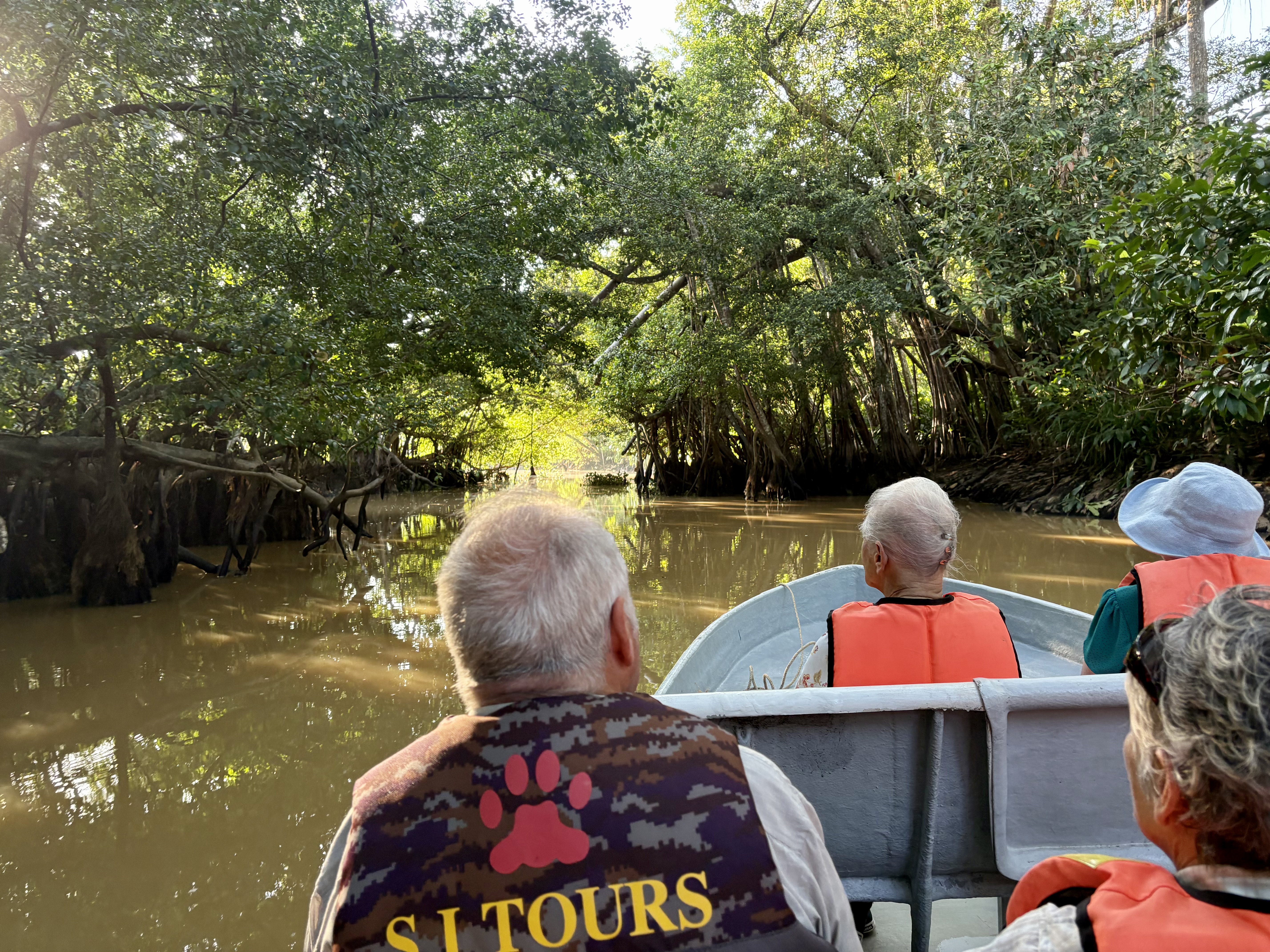
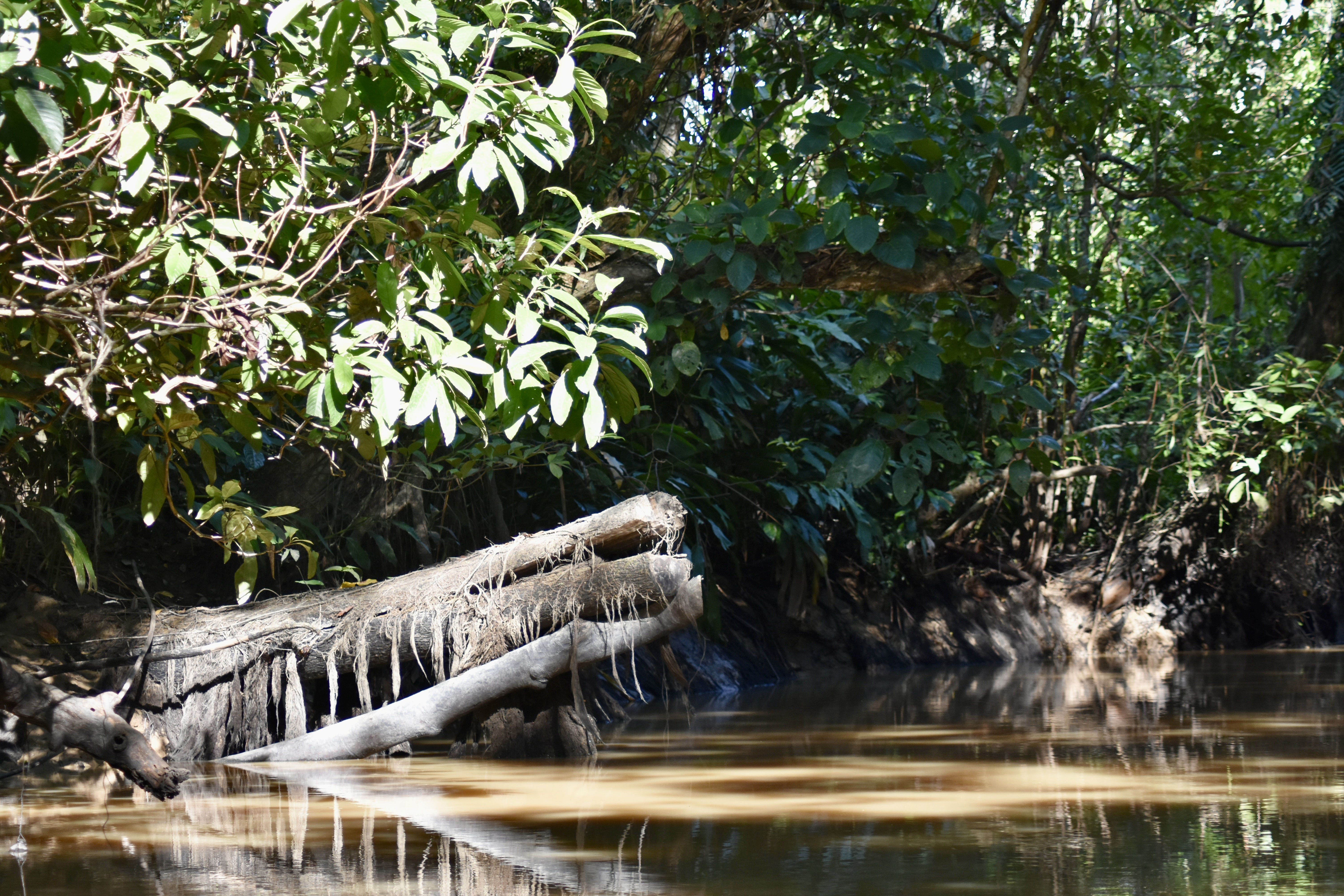
The Pitas Oxbow Lake off Kinabatagan River was breathtaking. This ancient, crescent-shaped body of water formed when the river’s meander cut itself off. This calm, isolated habitat is a premier wildlife hotspot, supporting Bornean Pygmy Elephants, Orangutans, Proboscis Monkeys, and diverse birdlife. The entrance to the lake was narrow and shallow and it opened up to reveal an enormous extent of water with various reeds and flowering plants at the edge.
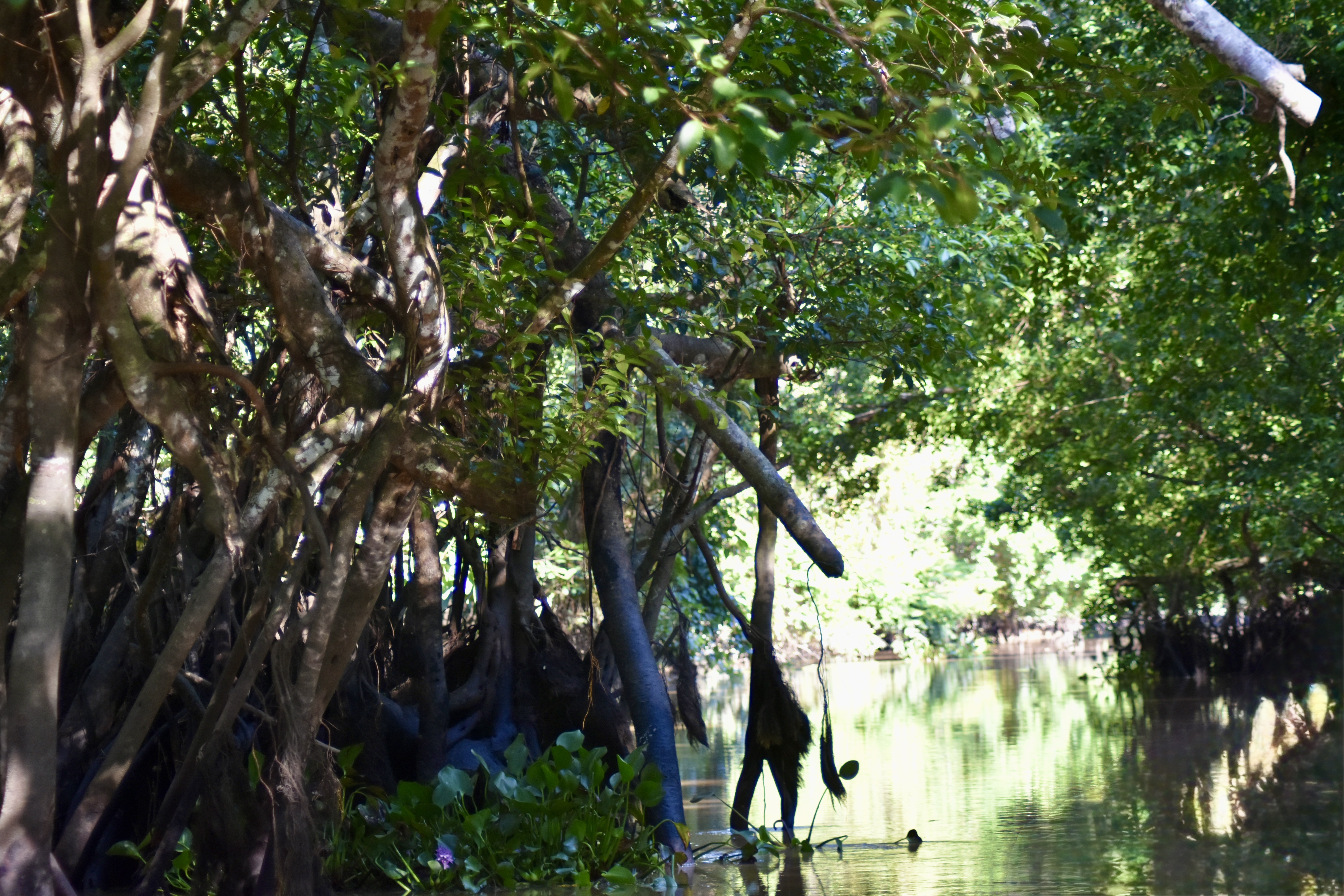
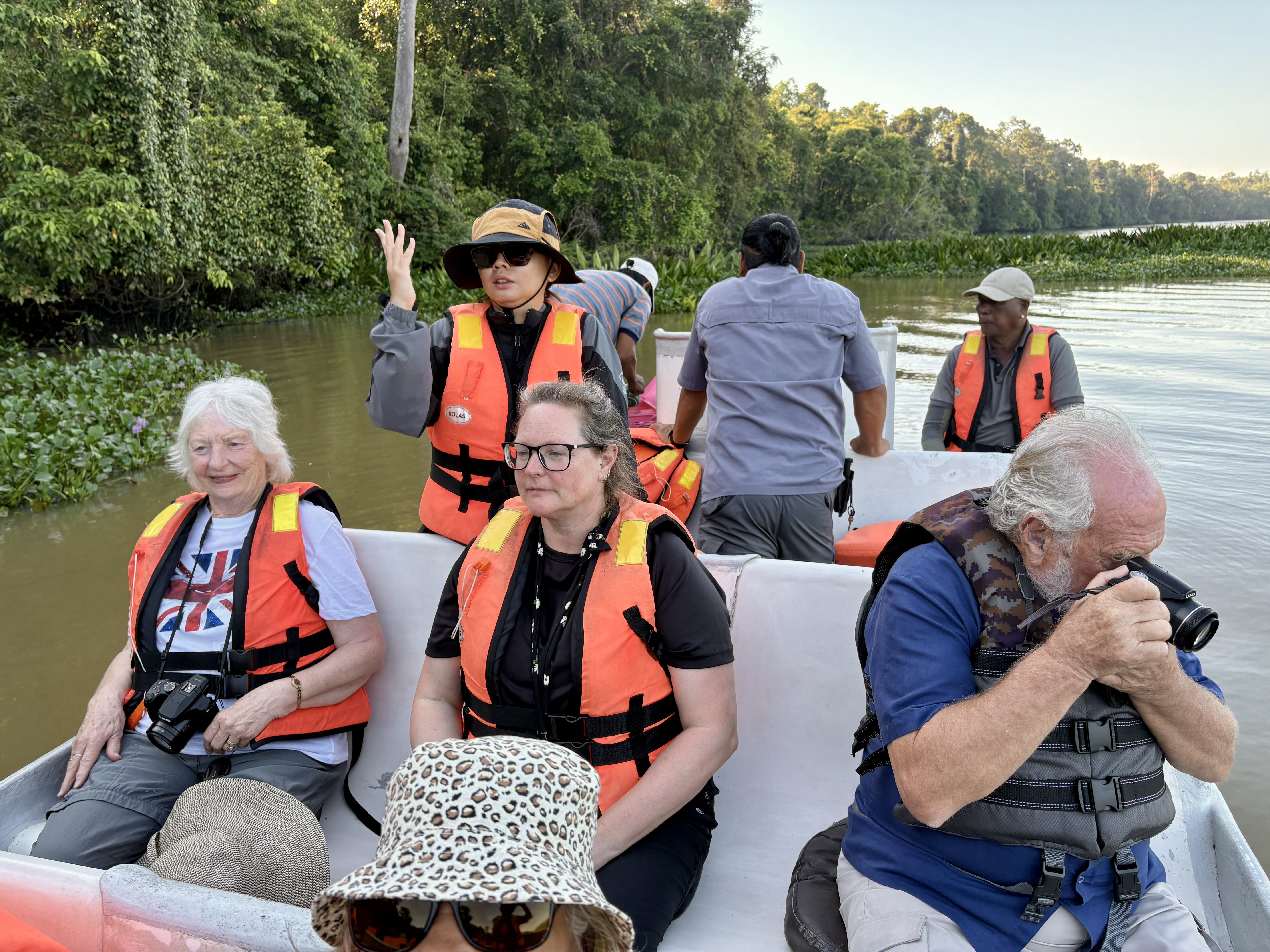
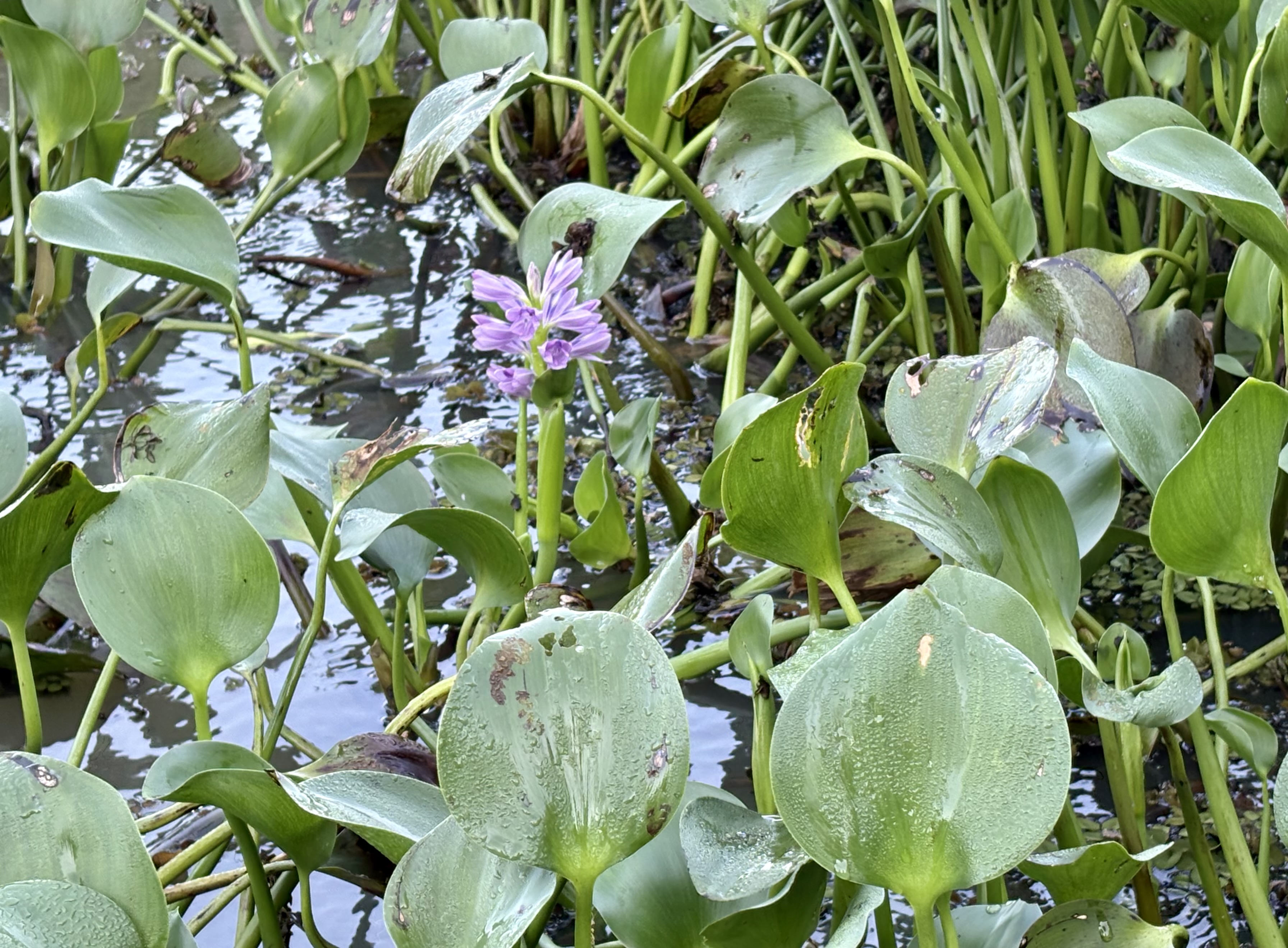
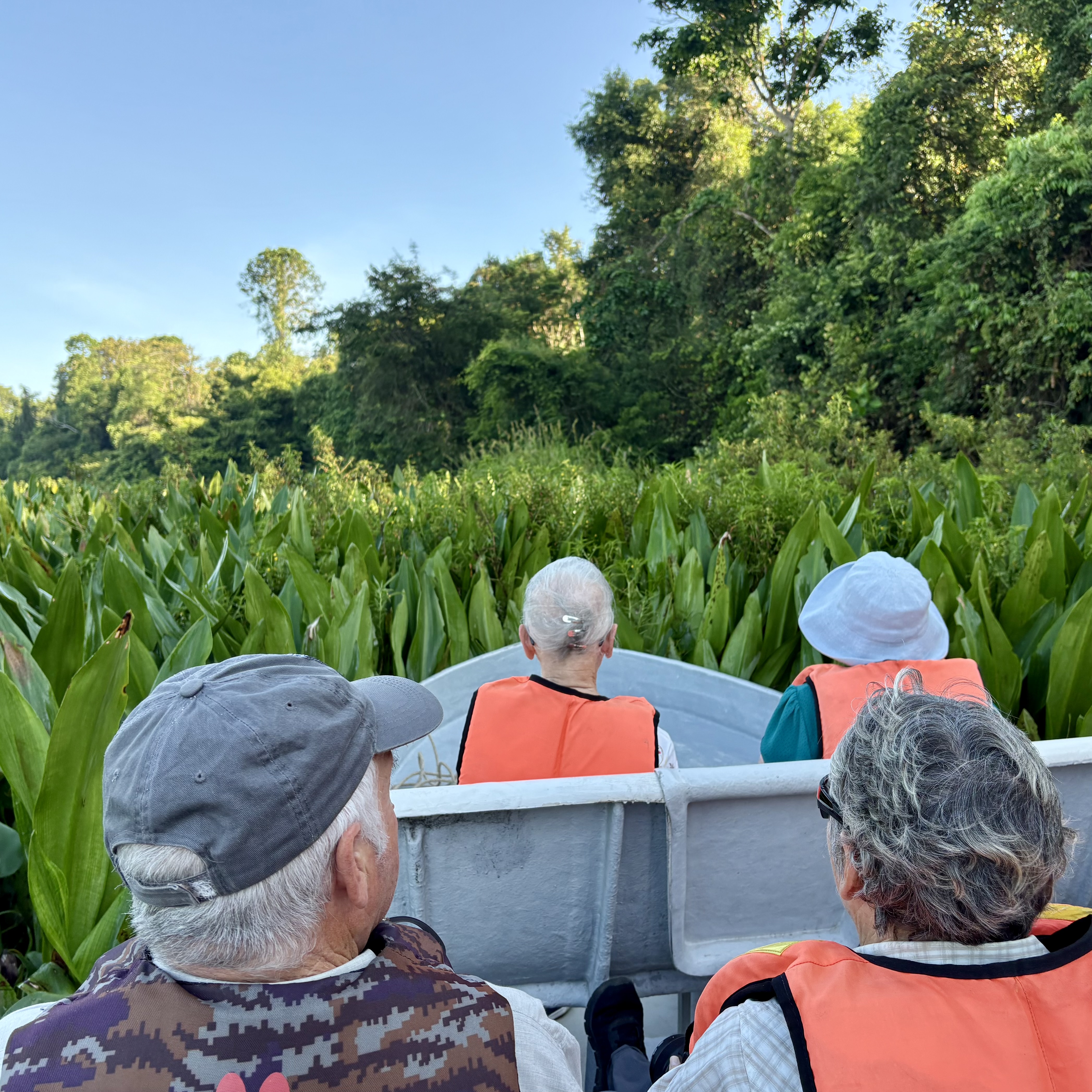
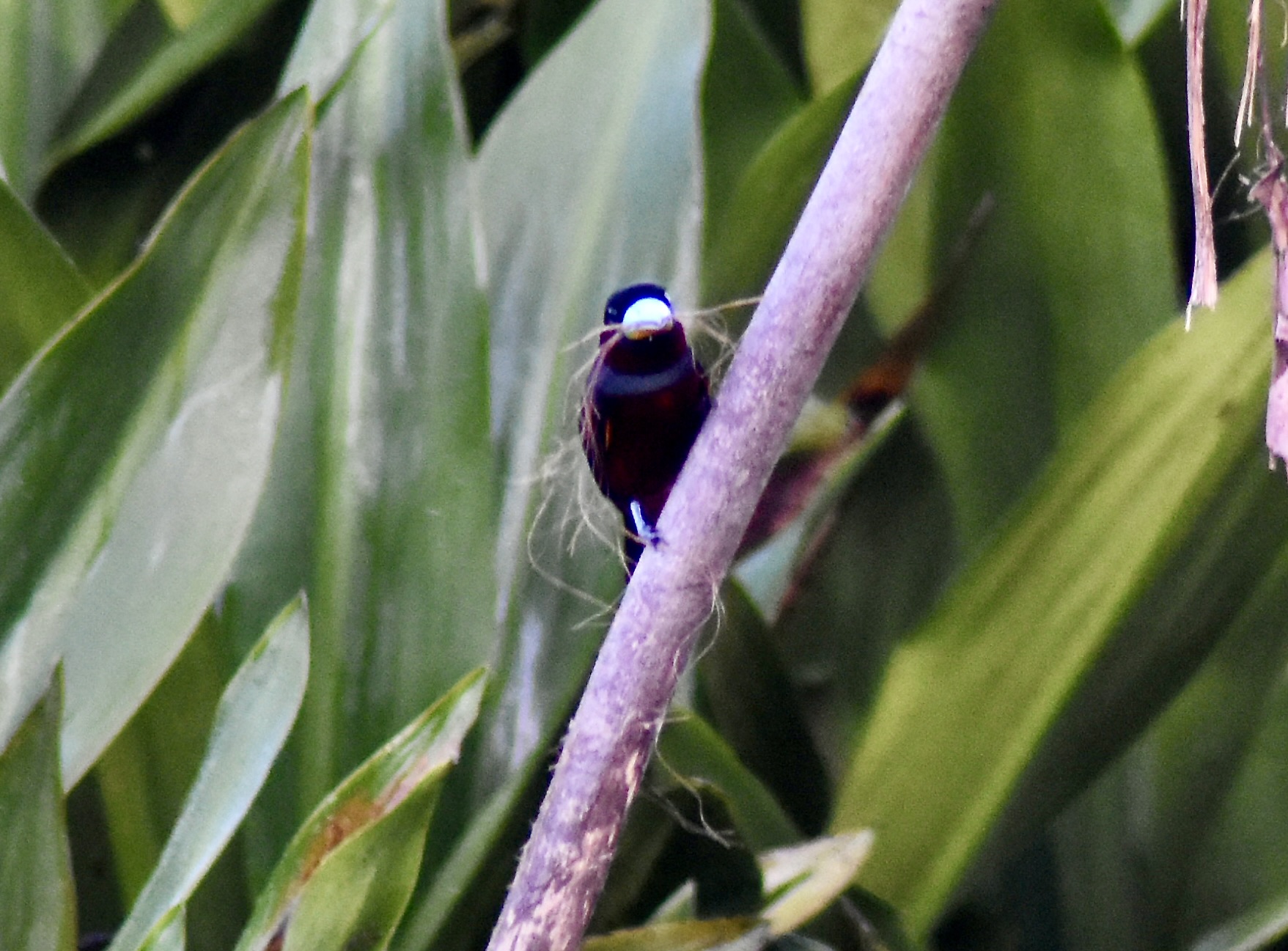
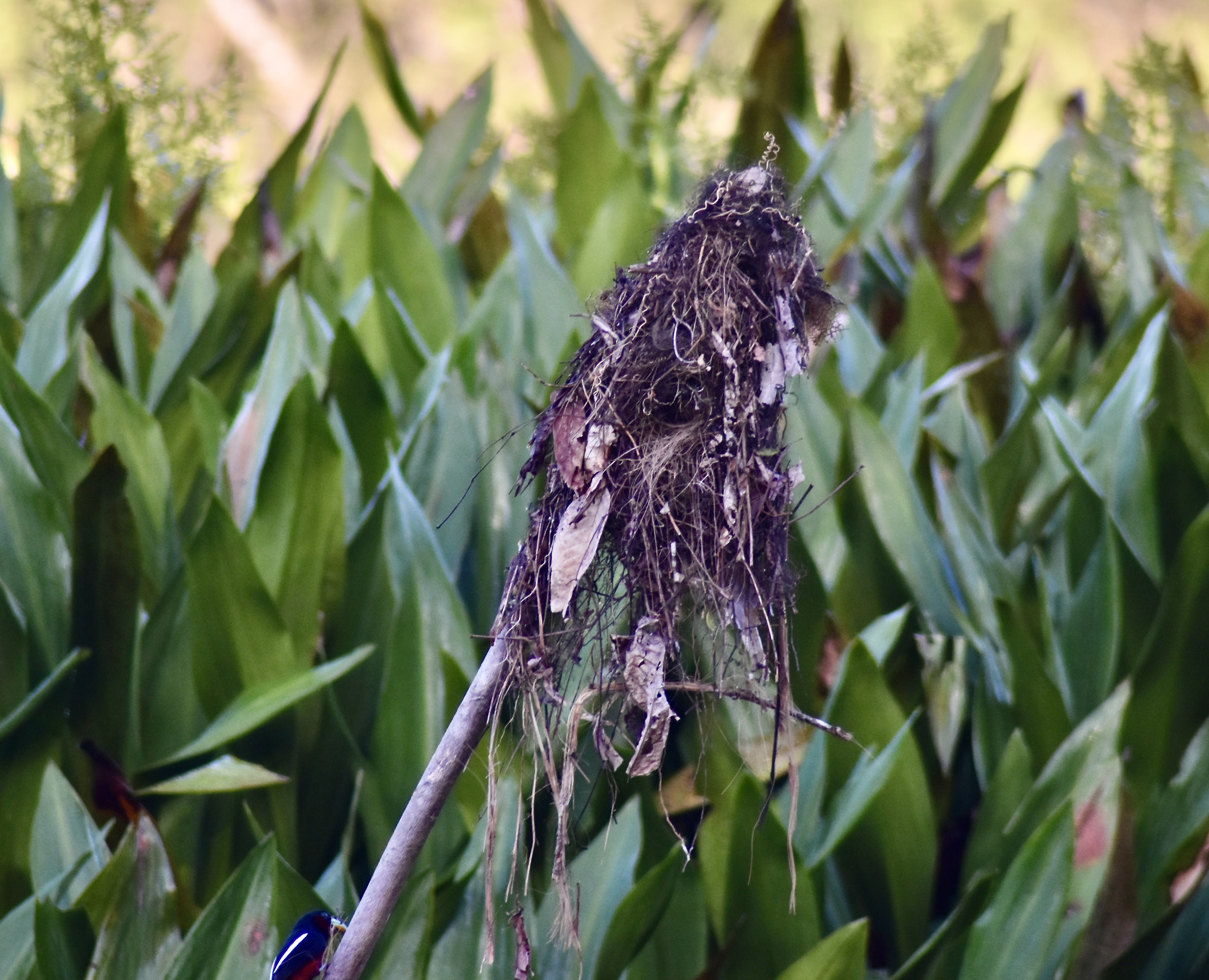
We watched a Black & Red Broadbill building a nest. It is an unmistakable inhabitant of waterside and riverine lowland evergreen forests and mangroves. The midnight black bird has long white slashes on each wing, wine-red underparts, and a black chinstrap. The bulbous bill is powder-blue with tinges of orange and greenish-yellow. During the breeding season, the pendulous nests of this species can be seen, as we did, hanging over waterways. It’s voice is nasal and generally unpleasant-sounding, consisting of odd low mechanical rasps.
This was my first sighting of a Black & Red Broadbill.
We sped back to the Lodge where a rainforest breakfast awaited.
Breakfast In The Rain Forest
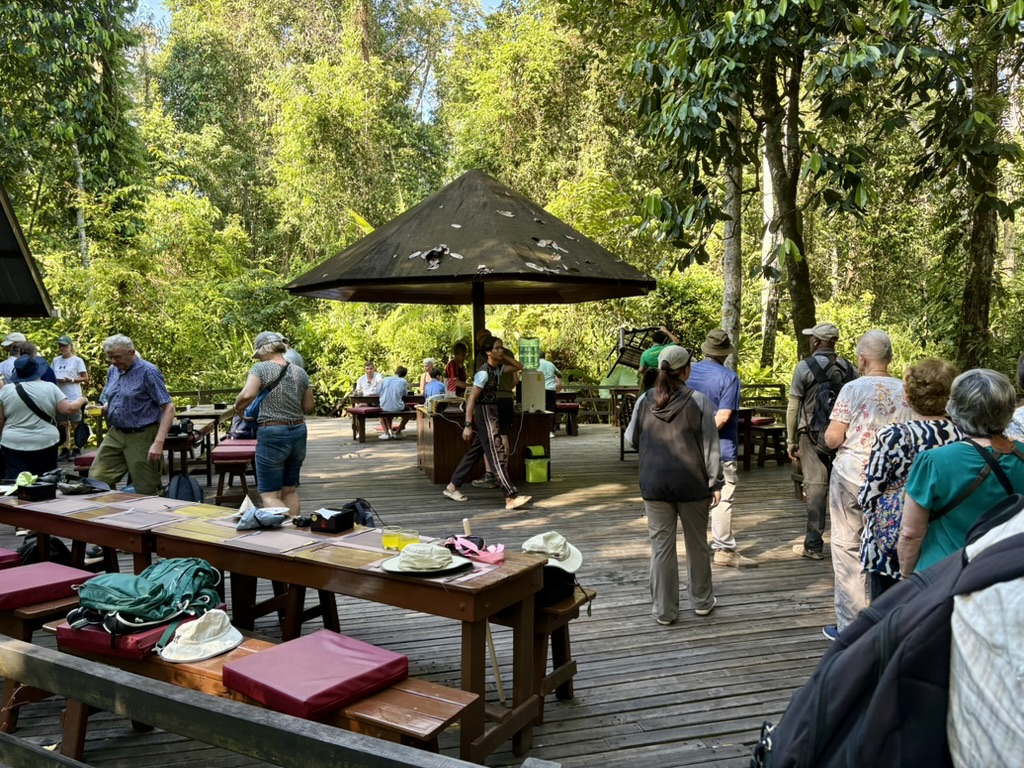
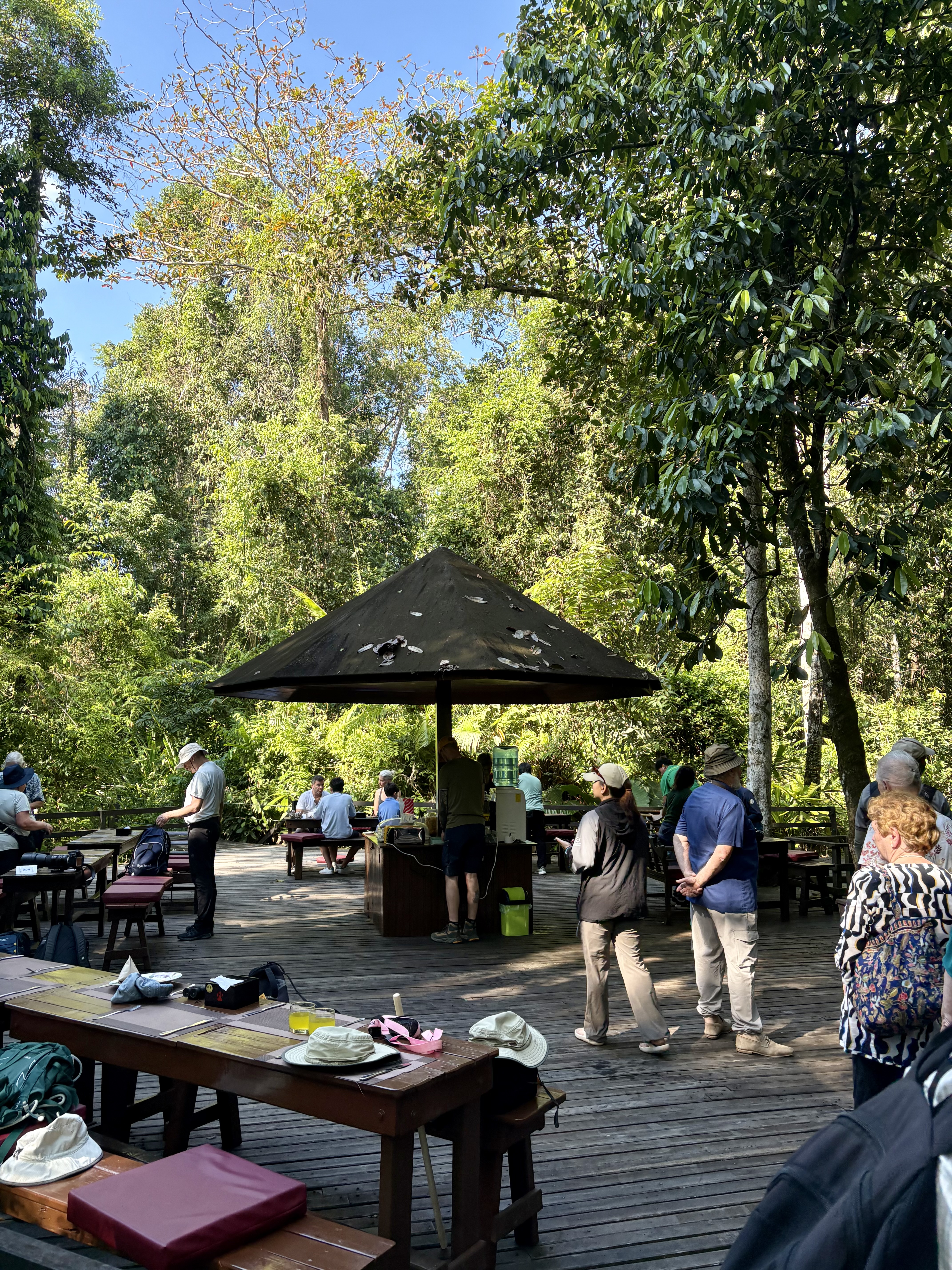
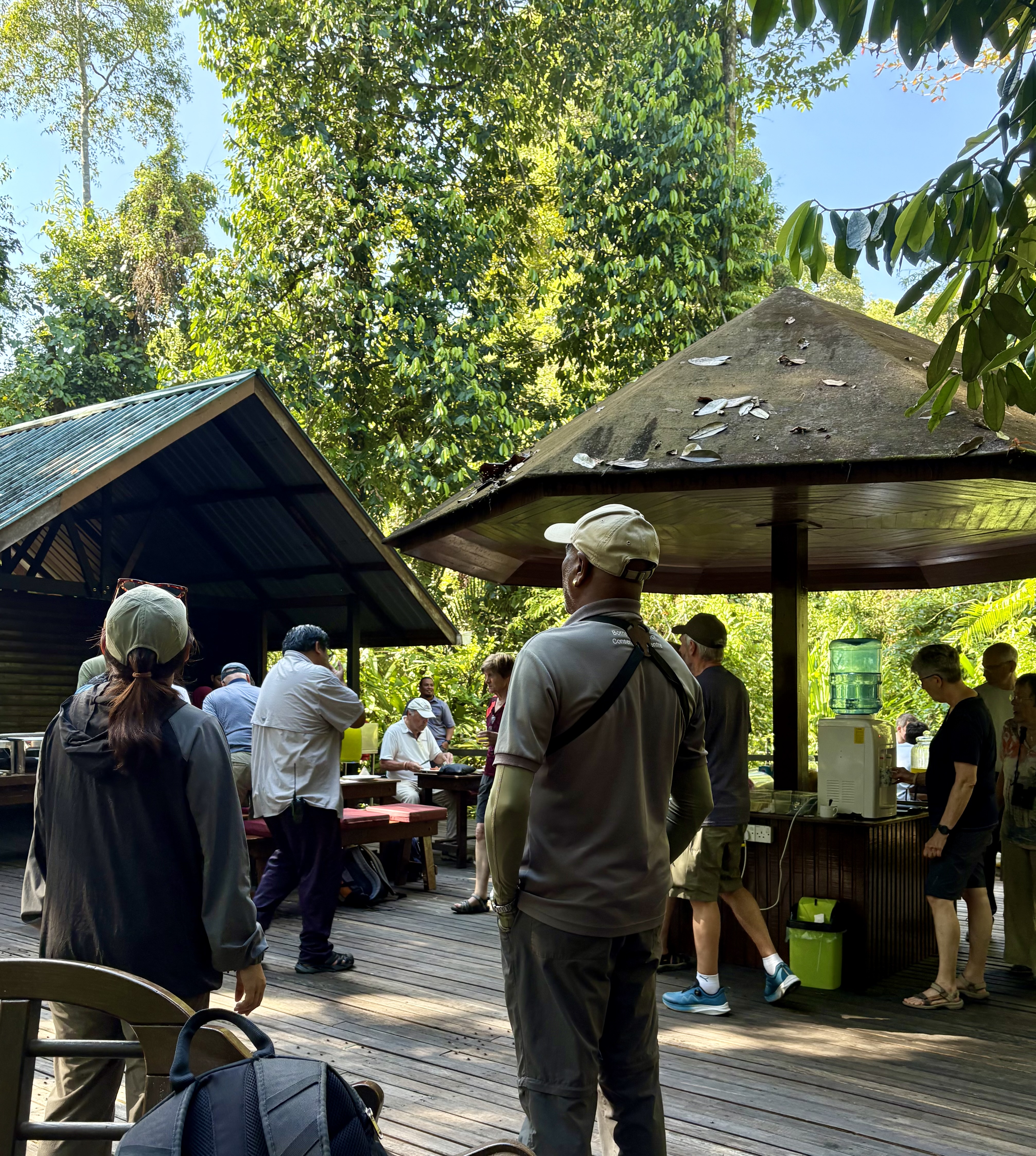
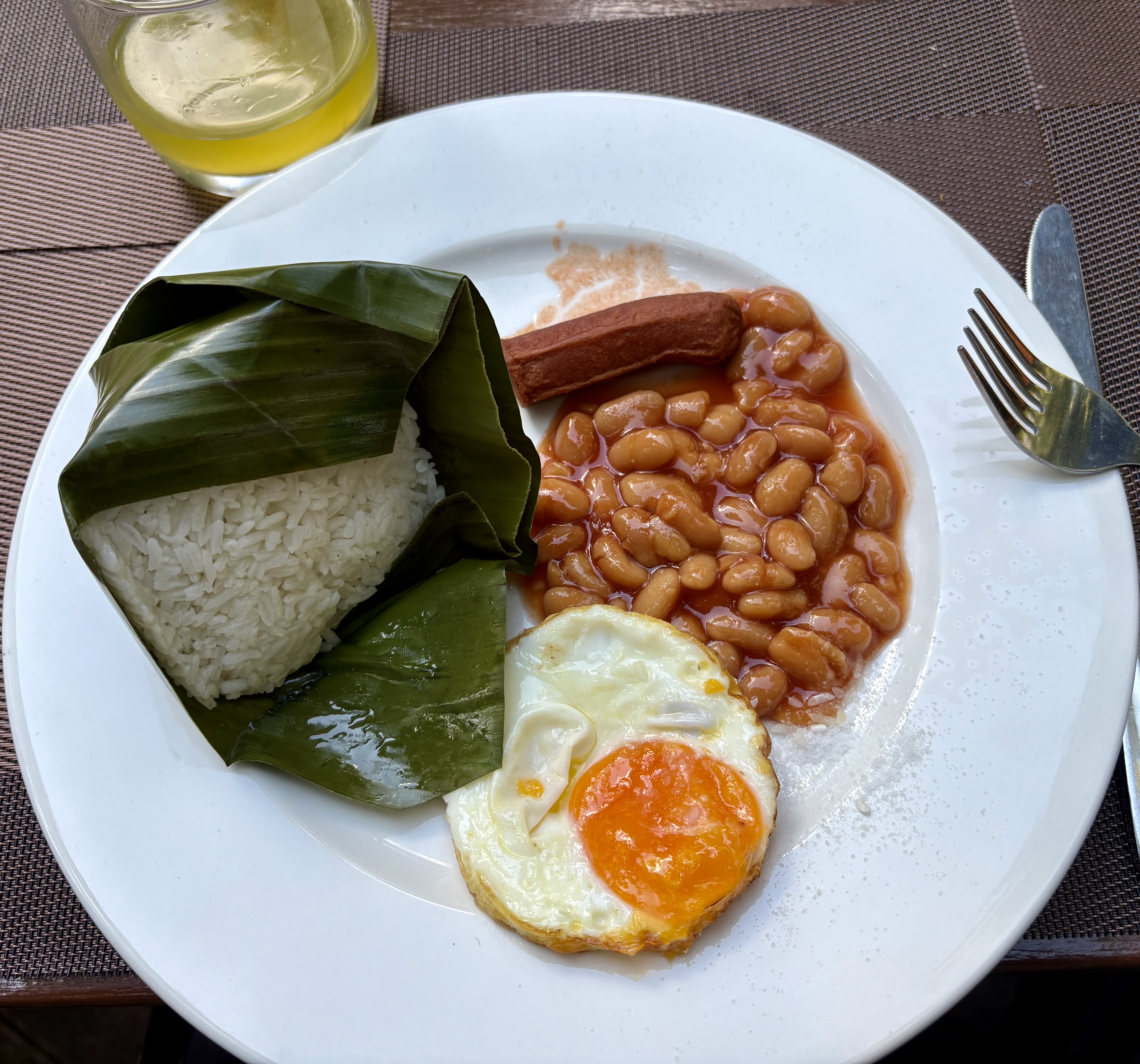
A broadwalk led to a well organised breakfast area in the forest, a short distance from the Lodge. A sumptuous cooked breakfast of eggs, sausages, beans and rice was served.
Lunch With A Malay Family
After a restful morning reading and watching Pacific Swifts (Apus pacificus), we crossed the Kinabatagan River to the Malay Village on the opposite bank to have lunch with a Malay family in their home.
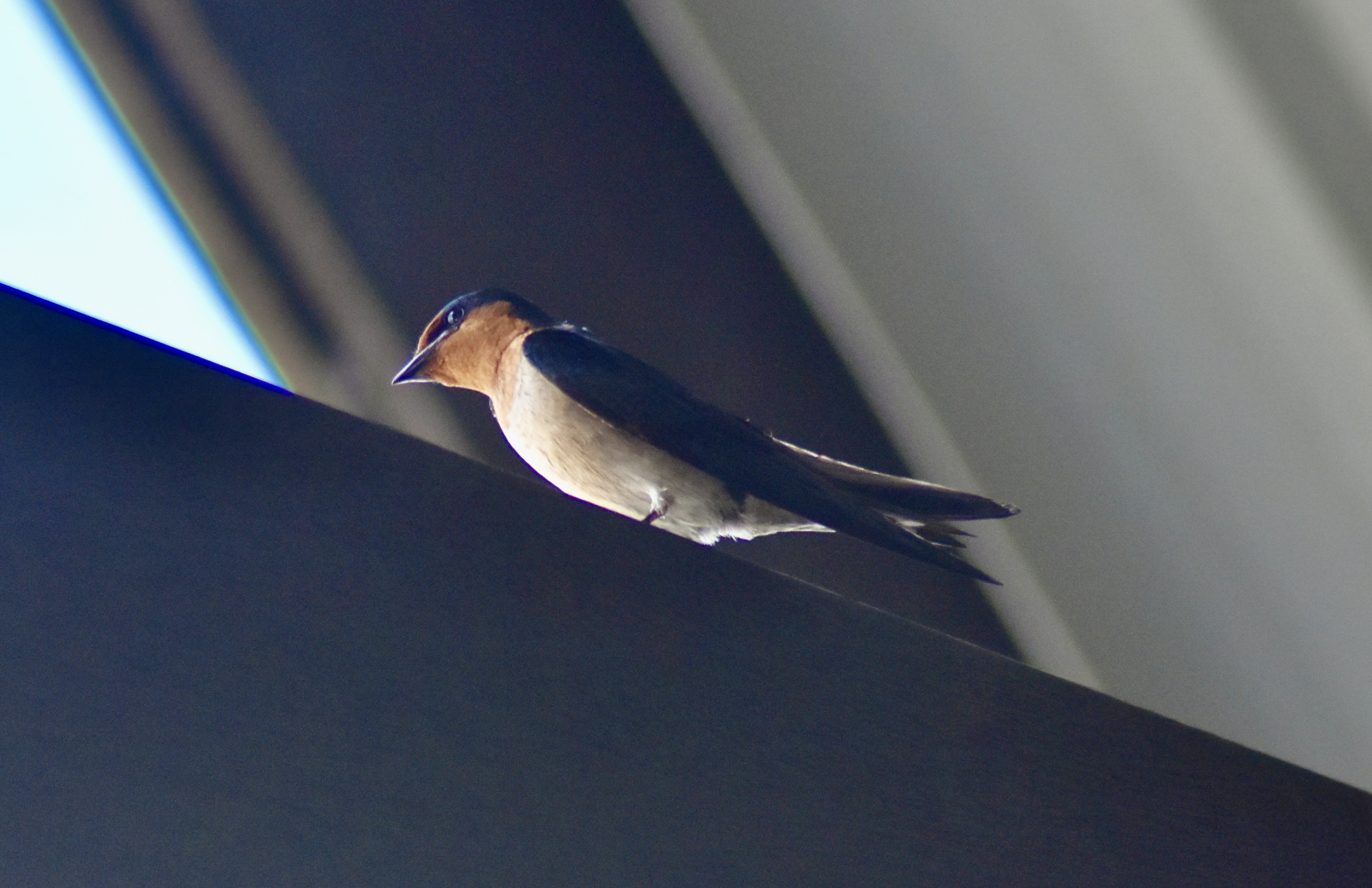
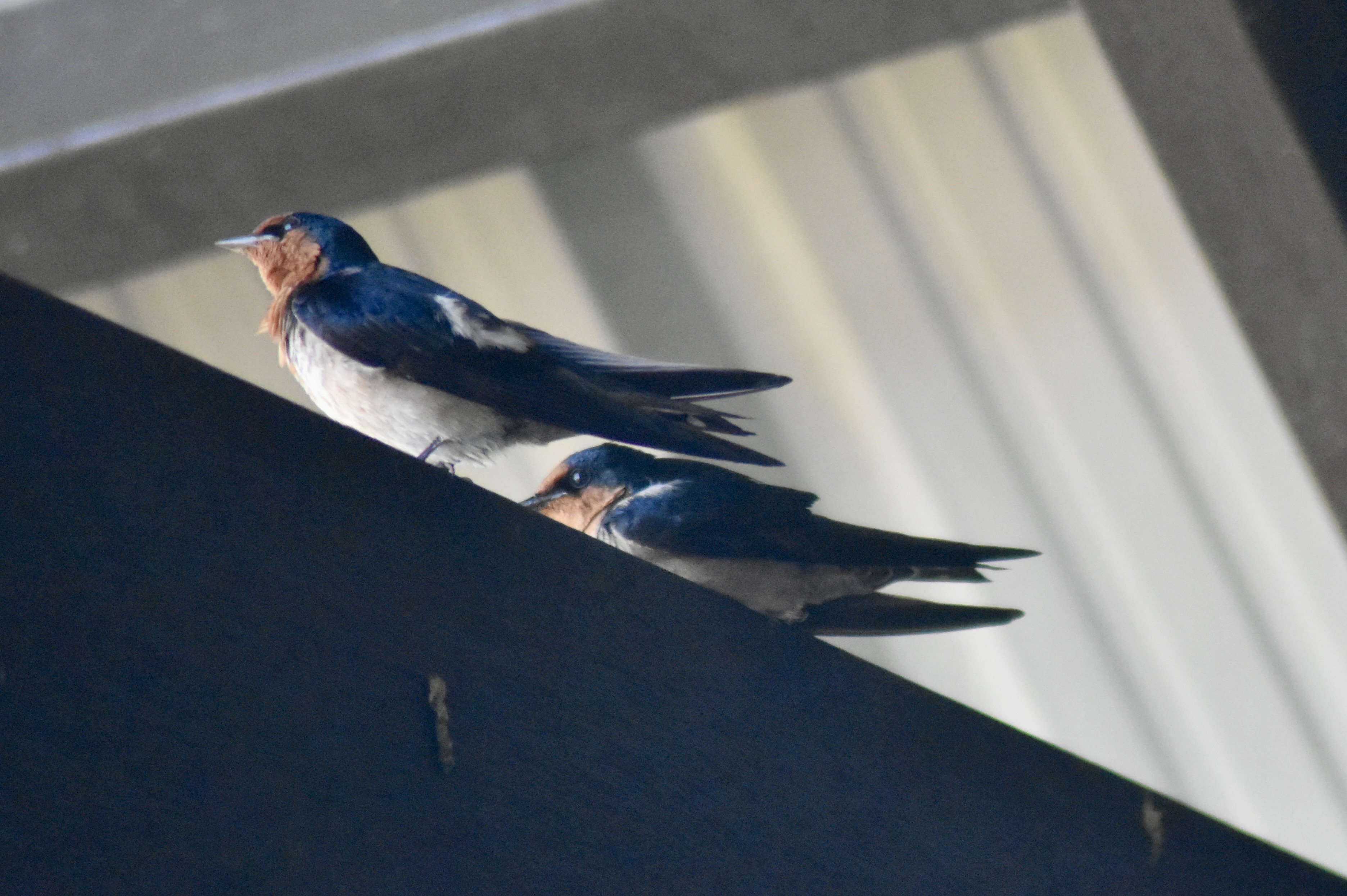
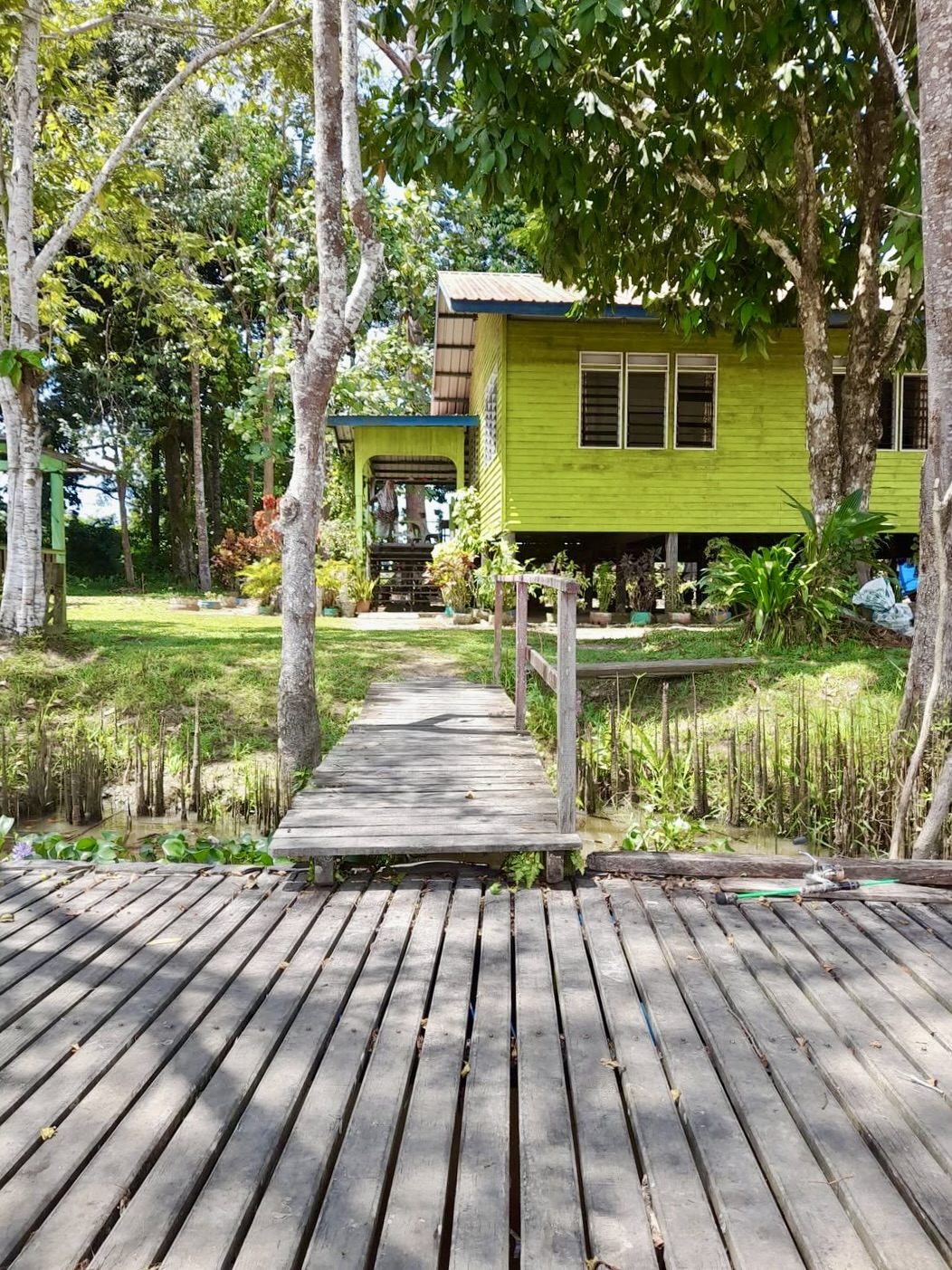
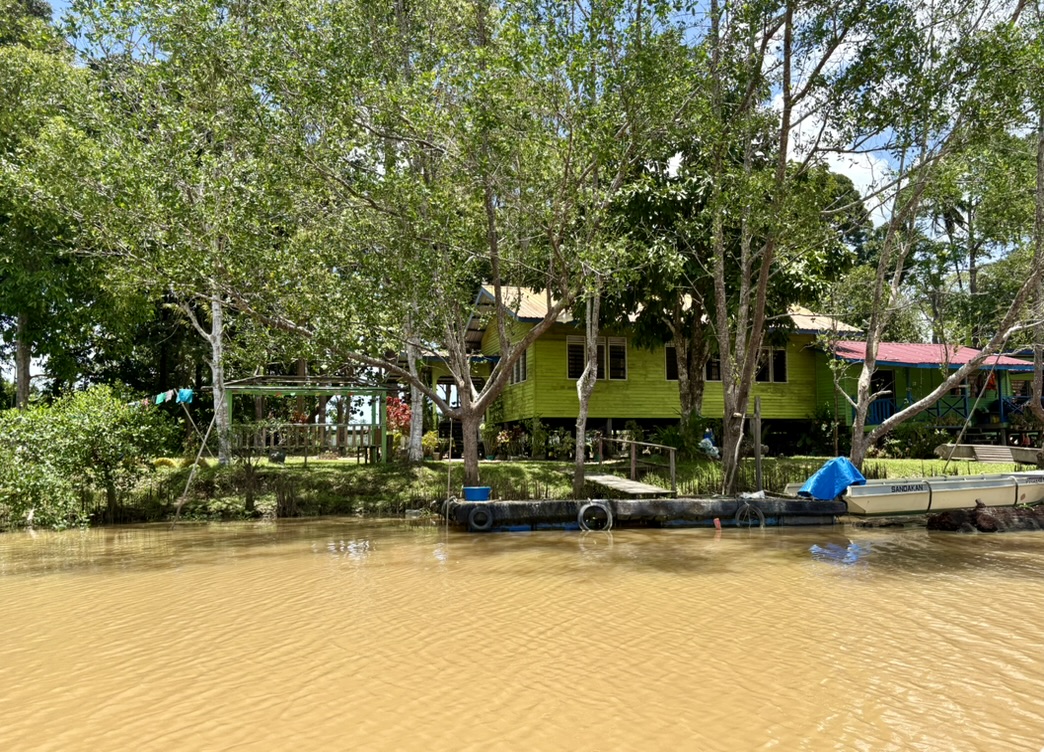
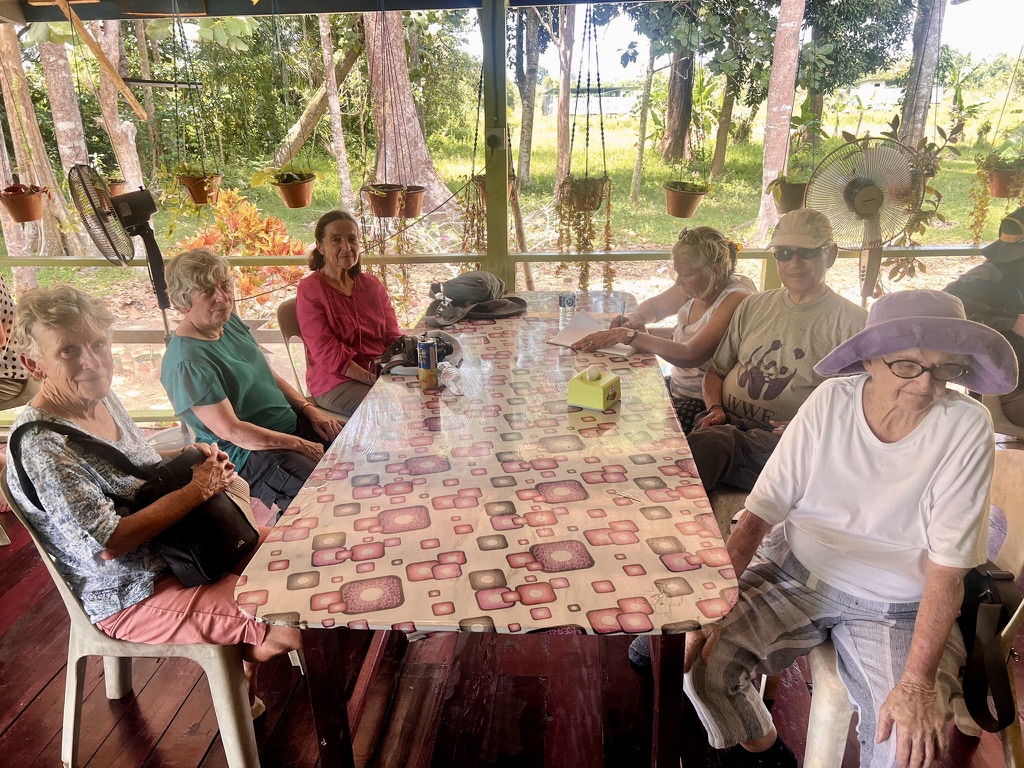
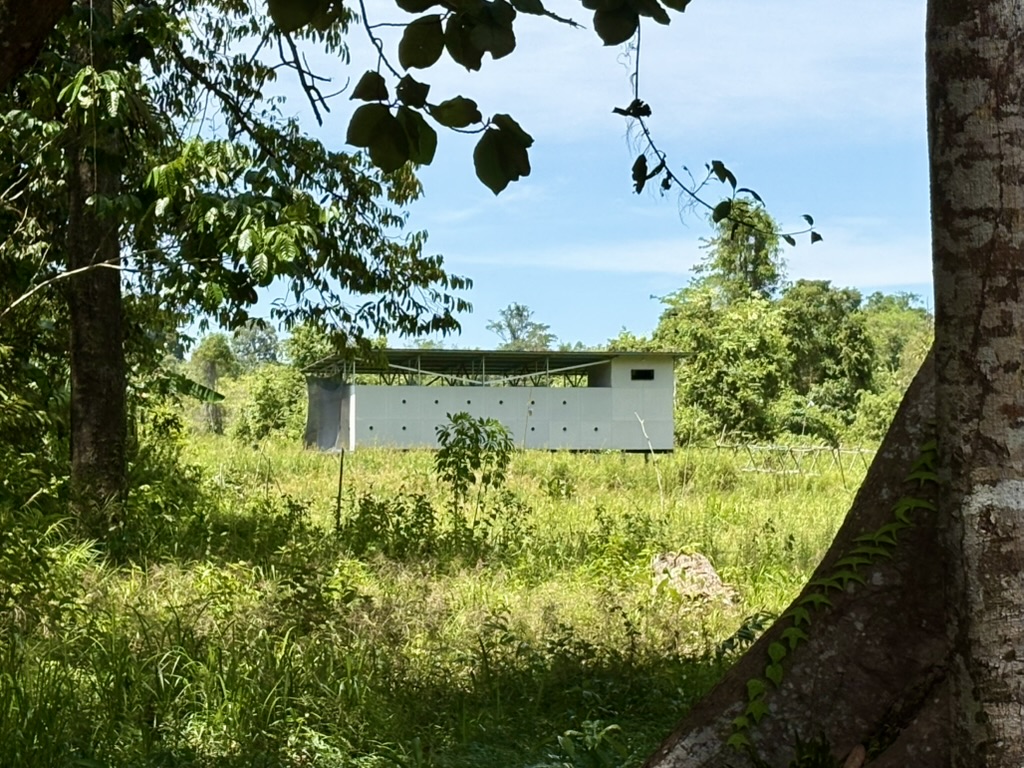
The Malay village had many concrete, windowless “birdhouses” for commercial swiftlet ranching to harvest edible birds’ nests for soup. The interior of the birdhouses is engineered to mimic natural caves with high humidity, darkness, and a cool temperature. Farmers play continuous audio recordings of swiftlet calls to attract the birds to the buildings. Nests are constructed by swiftlets using their protein-rich saliva, which hardens upon exposure to air. Once the swiftlets have finished raising their chicks and abandoned the nests, farmers collect the structures, clean and sell them as a gelatinous product that is soaked, double-boiled with rock sugar, and consumed as a traditional delicacy reputed to boost the immune system and improve skin health.
Evening River Safari
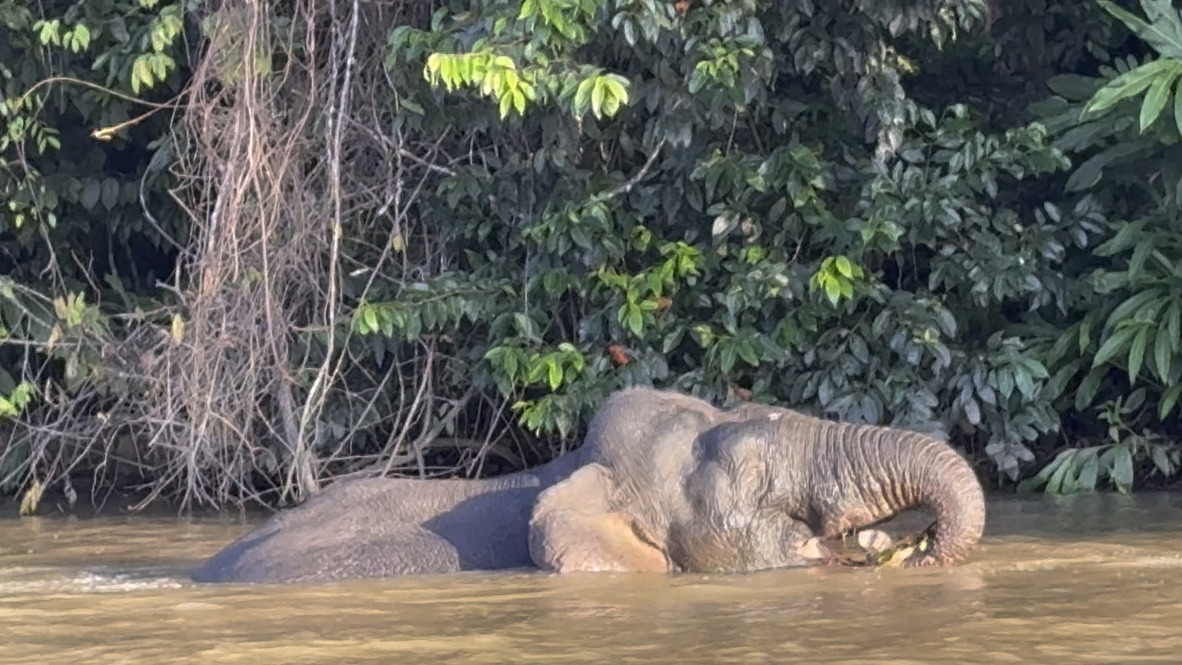
The highlight of the evening river safari was the close encounter with a Borneo Pygmy Elephant in the water.
The Borneo Pygmy Elephant had separated from their close relatives like the Asian elephants around 300,000 years ago, and in their evolution process, they became smaller and endured significant body changes.
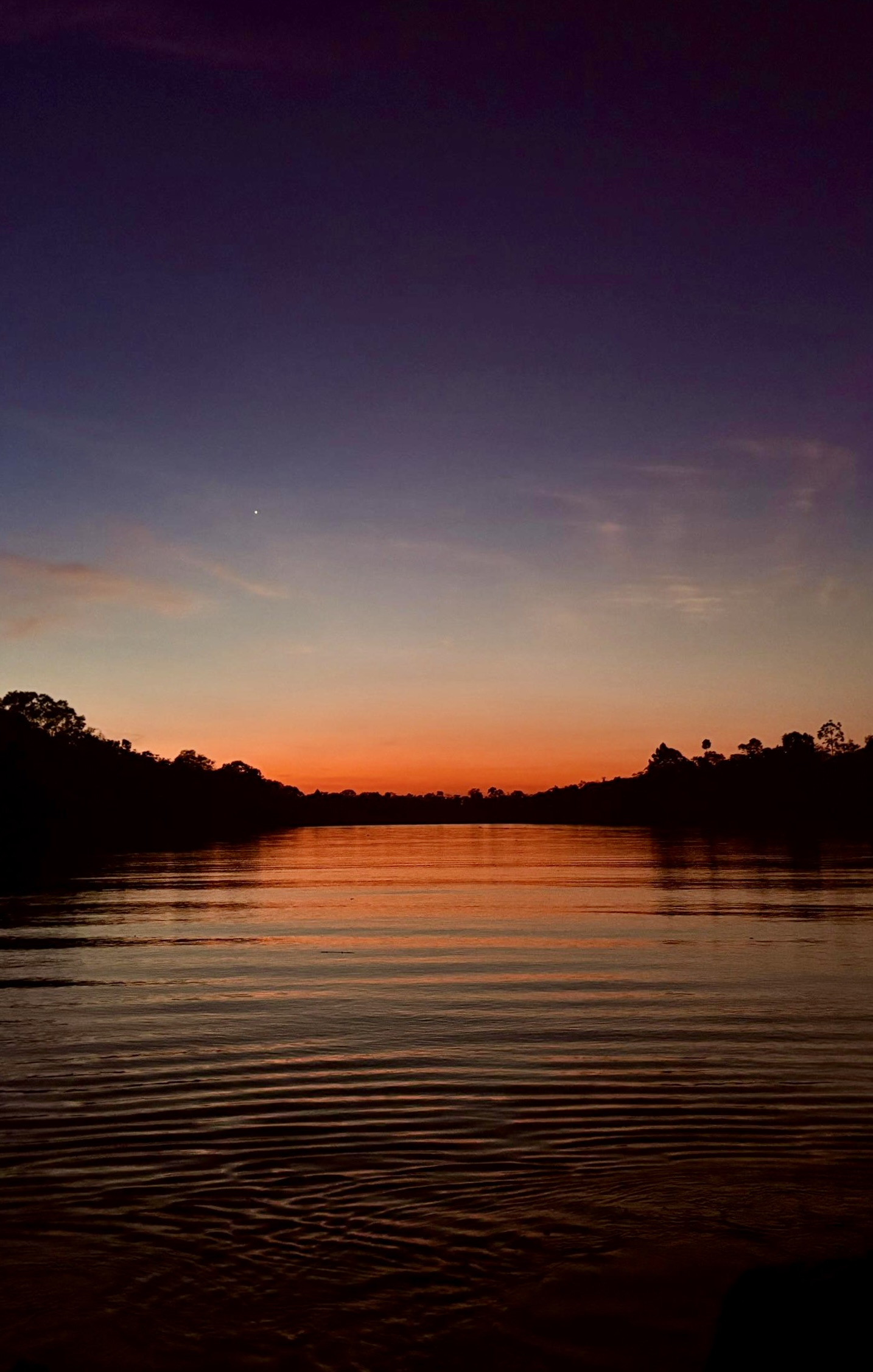
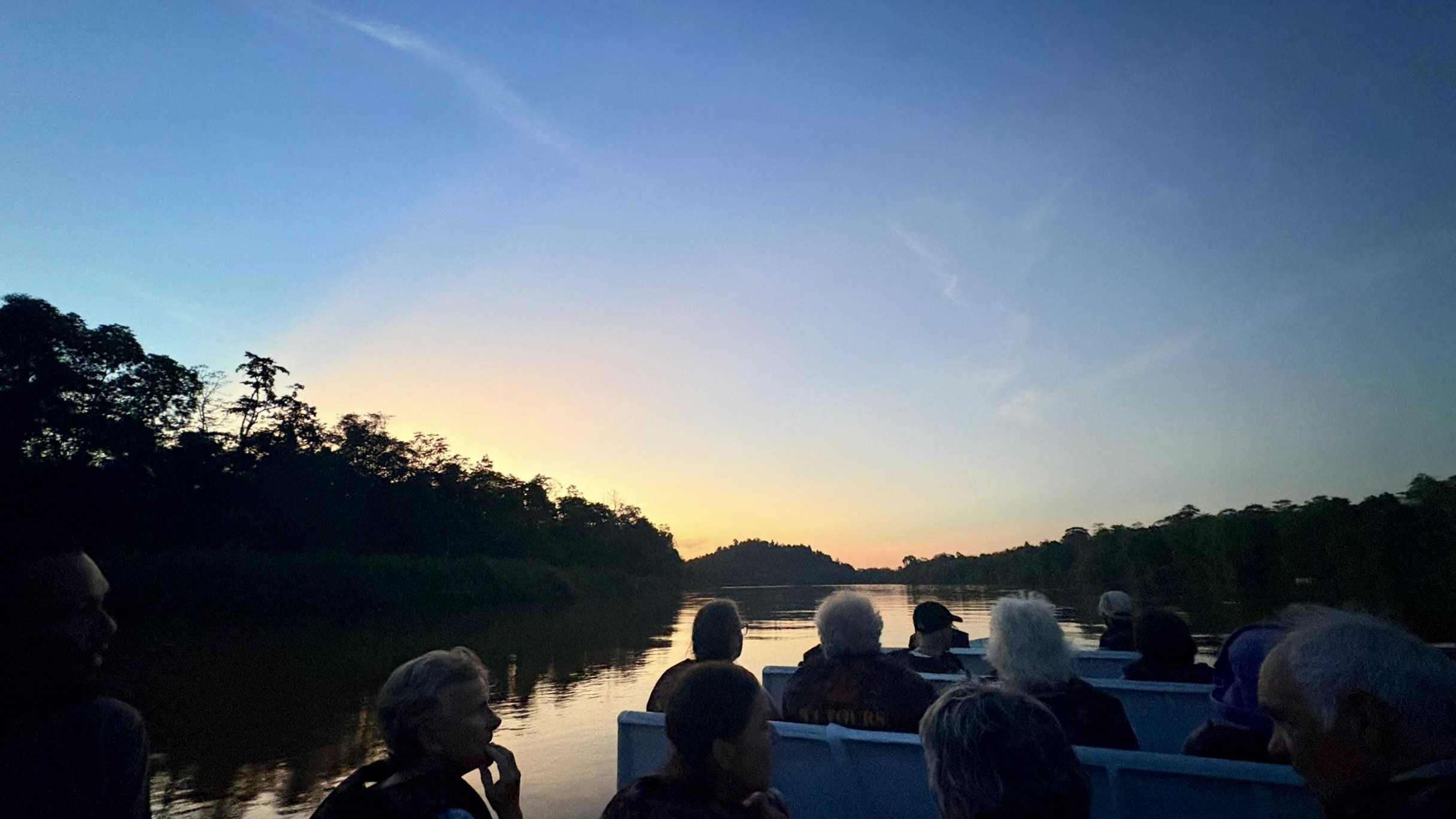
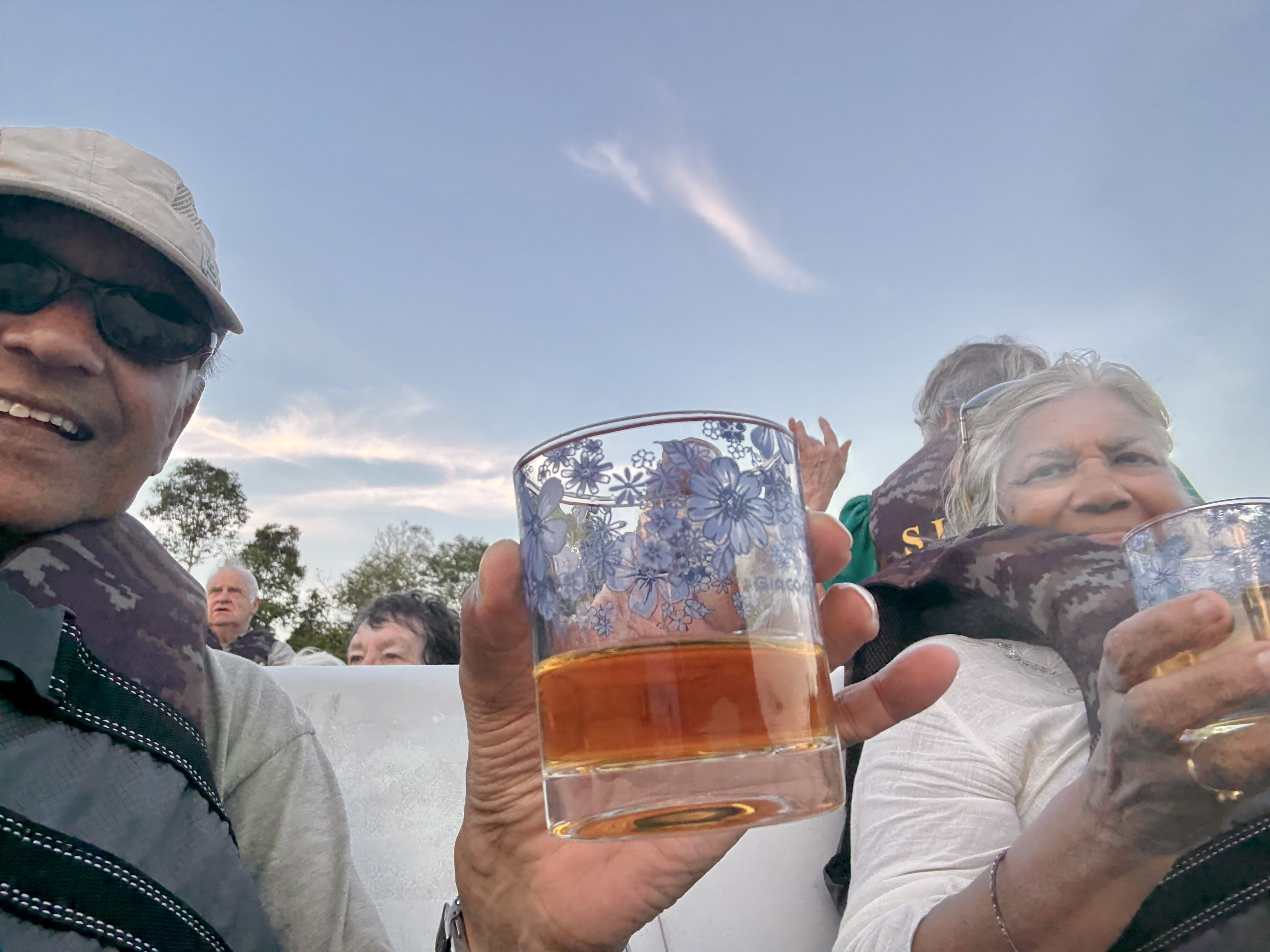
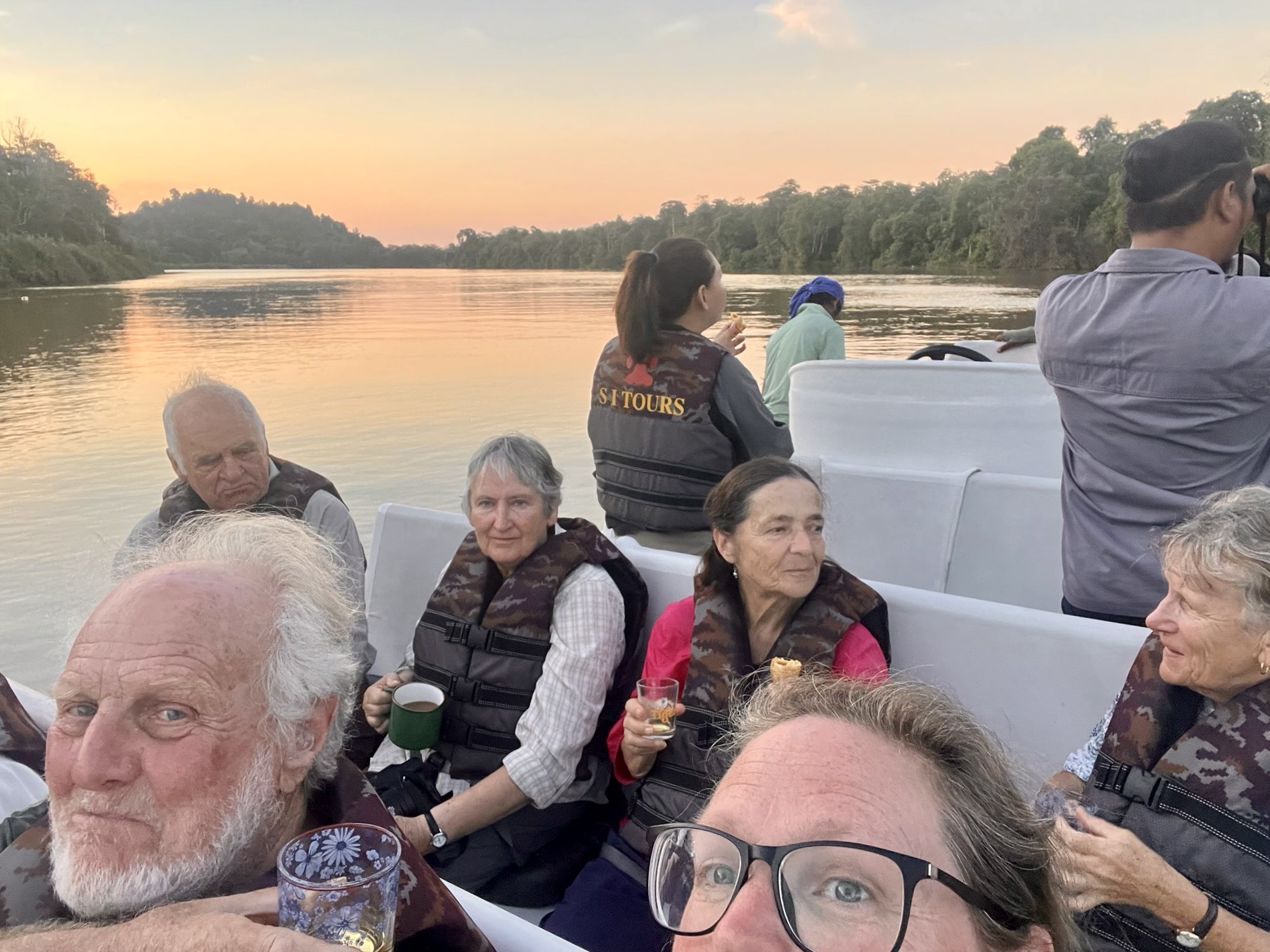
We sipped Single Malt Scotch Whisky watching the sunset and clouds of displaying Fireflies before returning to the Lodge for dinner.
Dinner At The Lodge
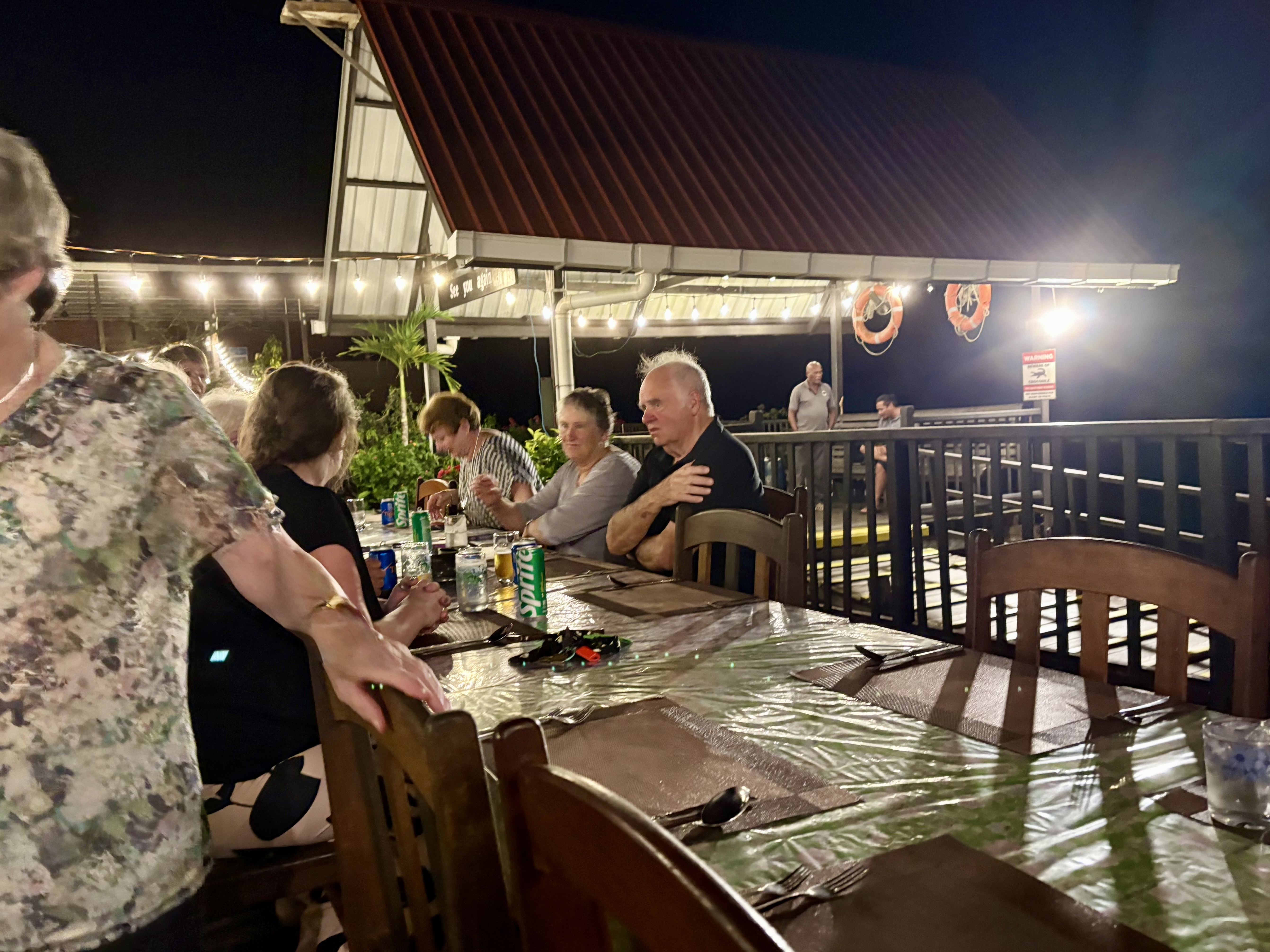
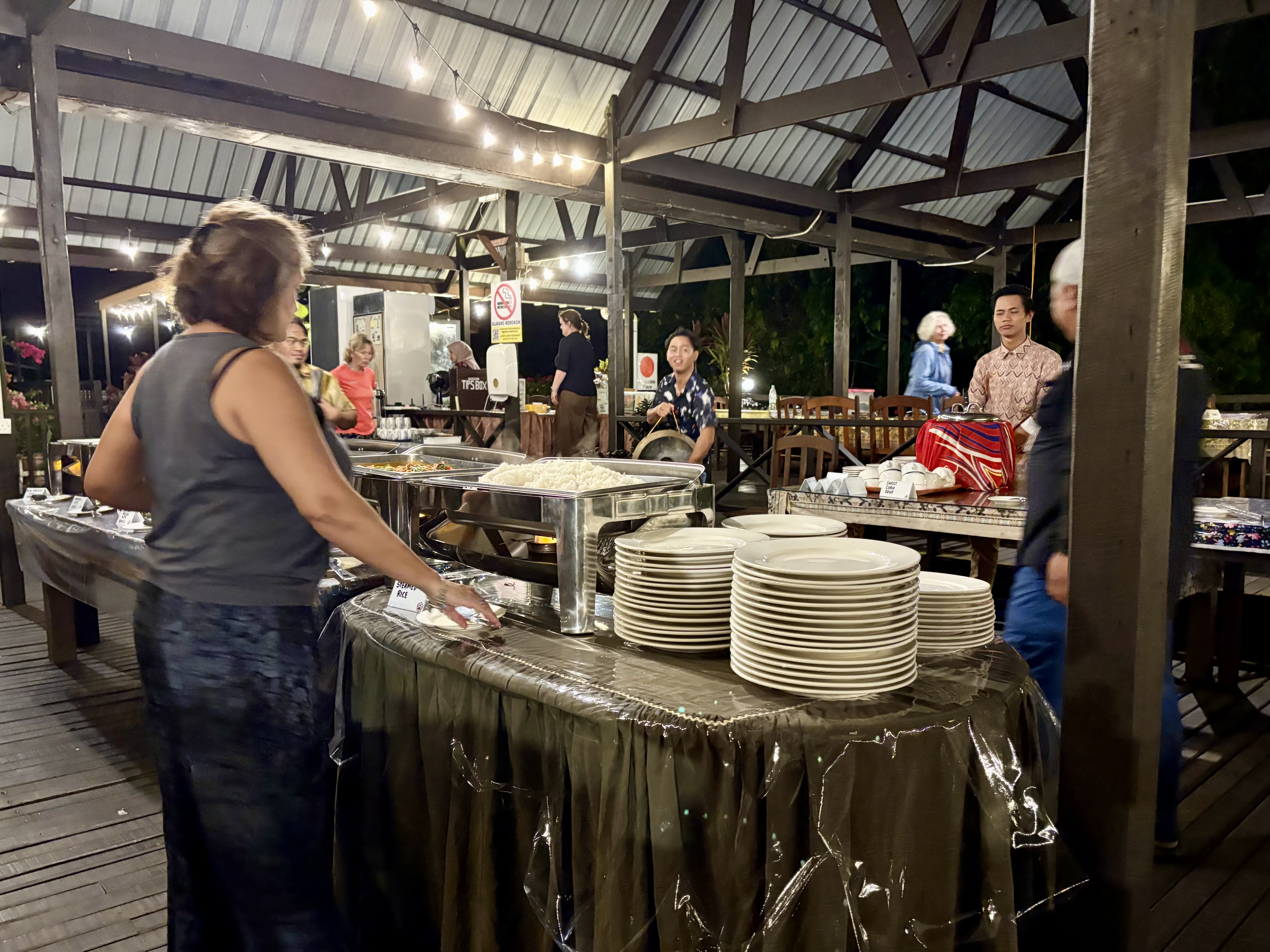
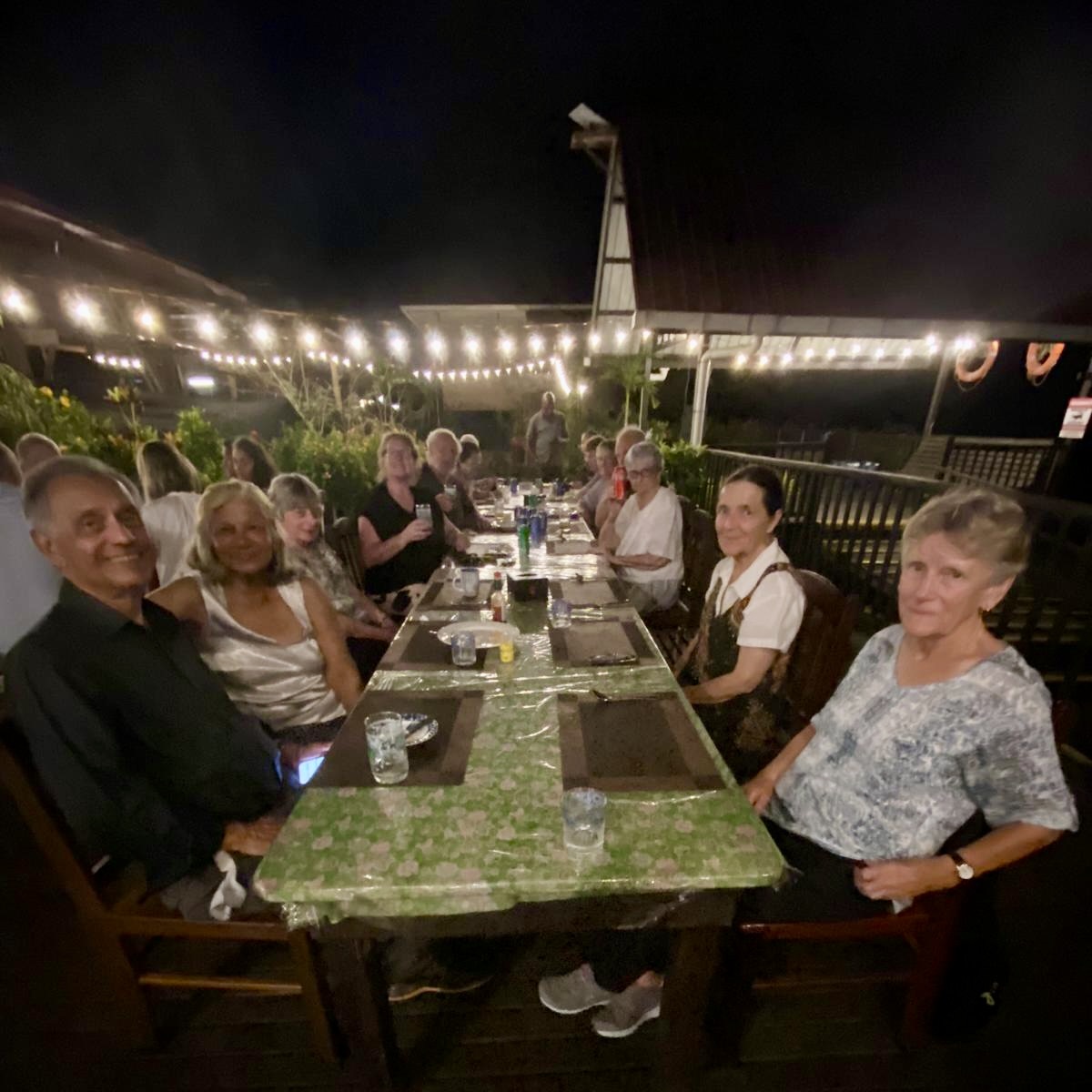
There was a different kind of music that evening…

