
We drove to Meknes from Rabat after breakfast. The drive, initially through oak forests, took two hours and thirty minutes.

Mekenes is one of the most fertile areas of Morocco and is the principal wine region of the country. Mild temperatures, sunshine, moderate rainfall and sandy clay-limestone soils create ideal conditions for growing grapes. The region has been producing wine since the Roman Empire. Chardonnay, Sauvignon Blanc, Muscat, Cabernet Sauvignon, Merlot, Syrah, and Grenache are cultivated. Volubilia, Guerrouane and Beni M’Tir are wines of designation of origin from the area. Roslane Castle and Villa Volubilia are two of the leading wineries.
Sadly, we didn’t see any vineyards or wineries.
Founded in the 11th century by the Almoravids as a military settlement, Meknes became a capital under Sultan Moulay Ismaïl (1672–1727), the founder of the Alawite dynasty. The sultan turned it into an impressive city in Spanish-Moorish style, surrounded by high walls with great doors, where the harmonious blending of the Islamic and European styles of the 17th century Maghreb are still evident today.
In Meknes, we explored the old town with a local guide.
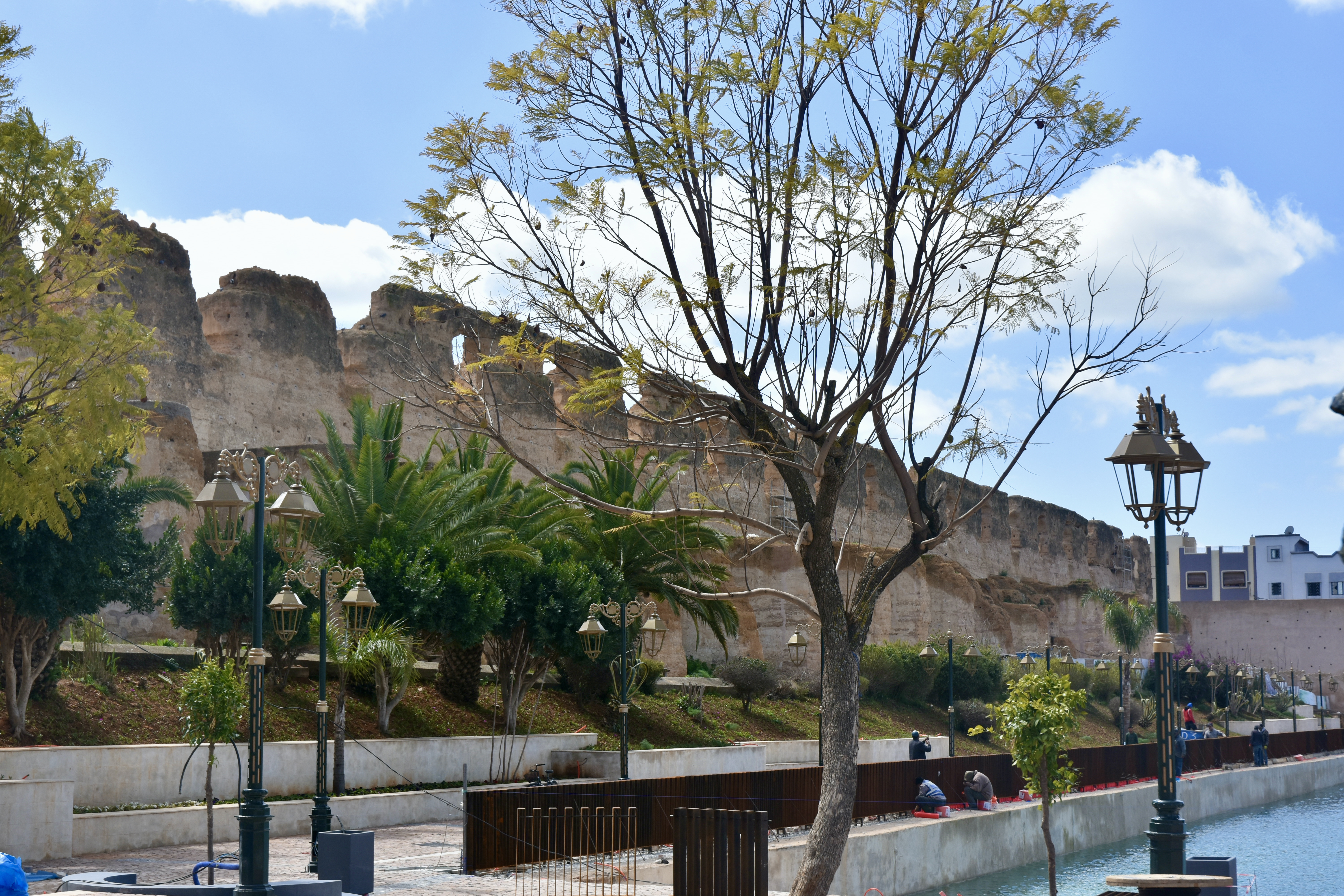
We visited a busy local market before walking to El Hedim Square, a scaled-down version of Djemaa El Fna in Marrakech and the monumental Bab El Mansour Gate, which was built in 1732.

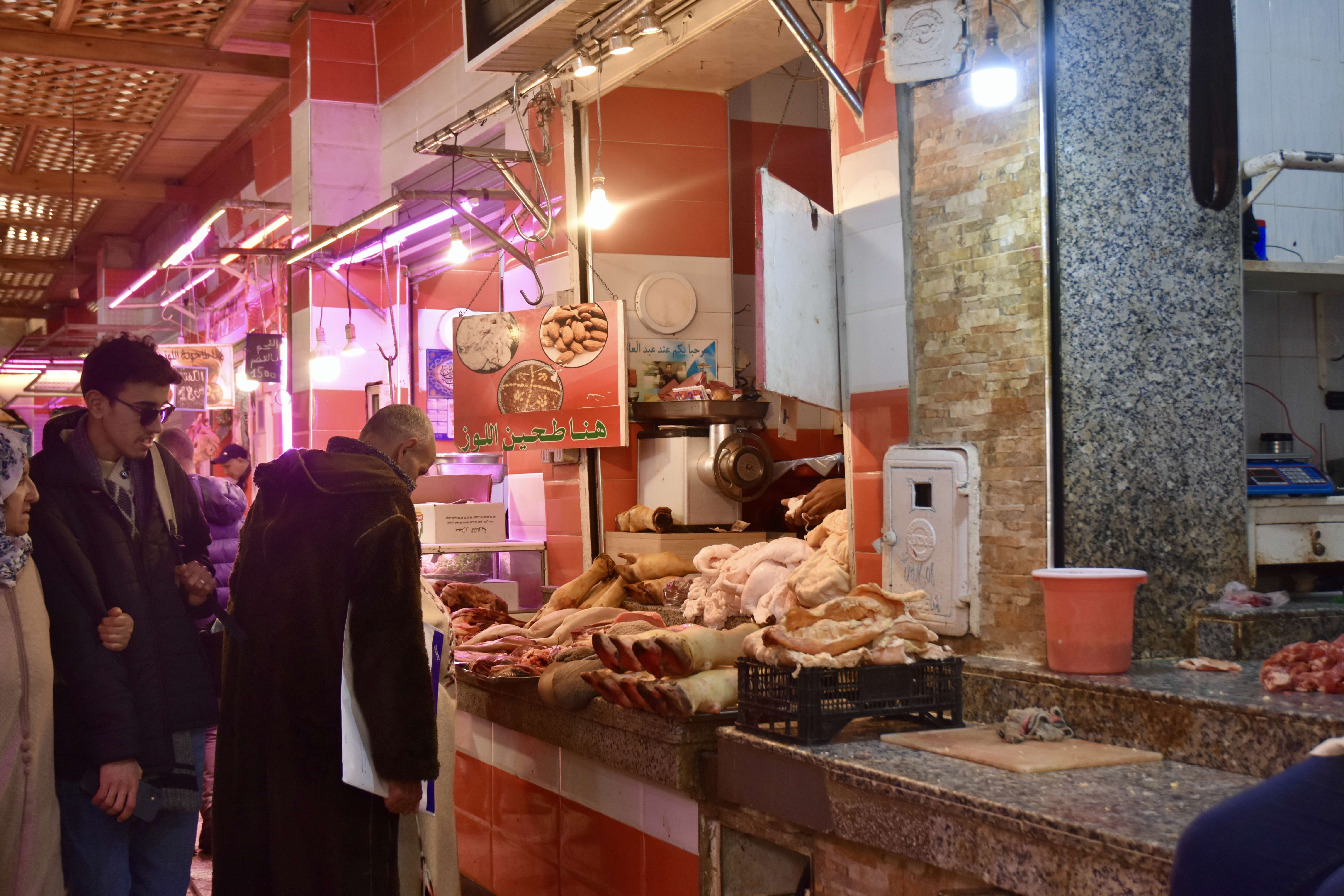
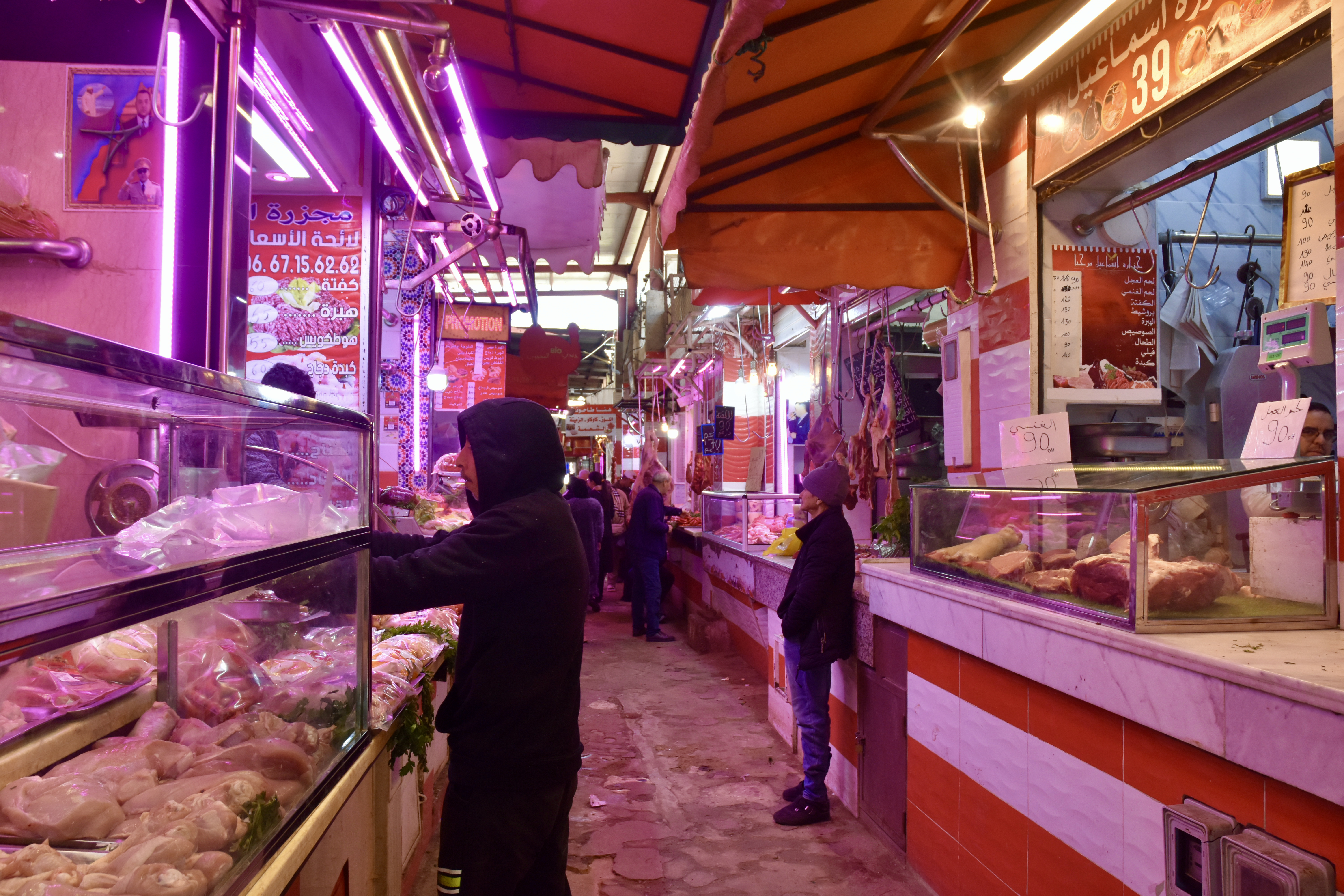


Bab El Mansour Gate, located on the south side of Place el-Hedim (el-Hedim Square) in the old city, was originally the main ceremonial entrance to the Kasbah (royal citadel) of Sultan Moulay Isma’il, built in the late 17th and early 18th centuries. Today it is one of the most famous and admired landmarks in the city.


The Mausoleum of Moulay Isma’il is an historic Islamic funerary complex in Meknes, containing the tomb of Sultan Moulay Isma’il who ruled Morocco from 1672 until his death in 1727, and is located inside his former Kasbah (citadel). It is a major historic and religious site in the city.

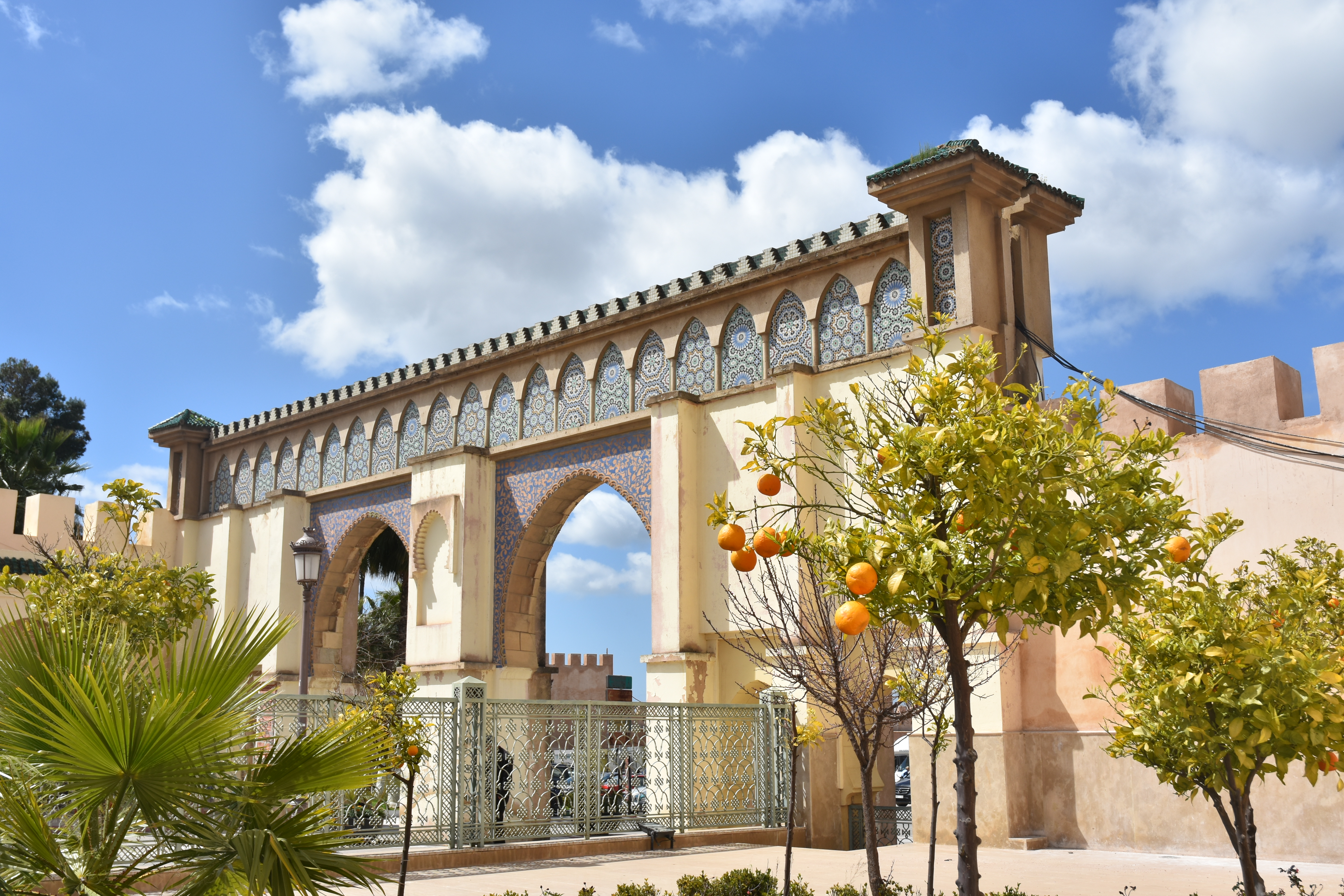
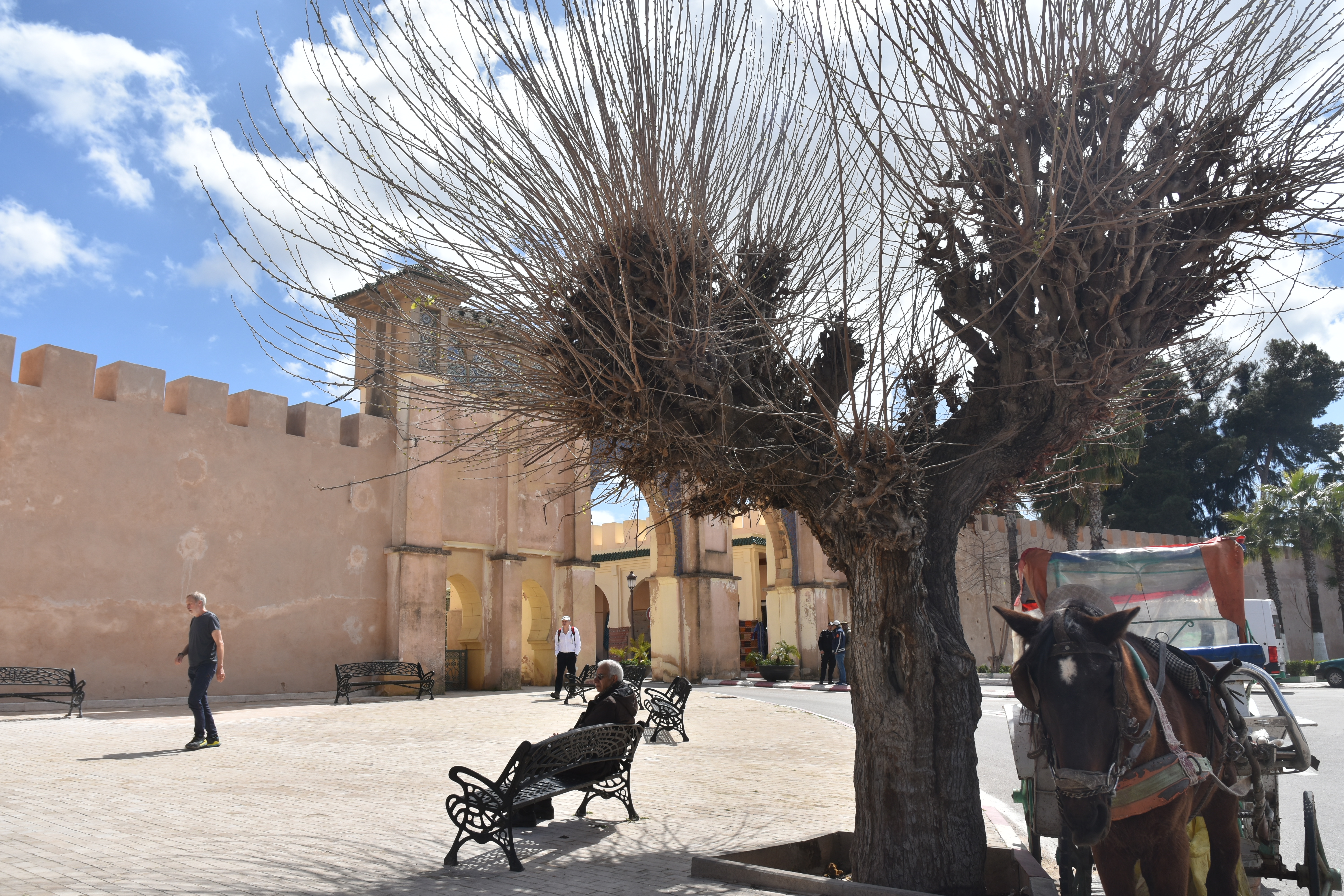
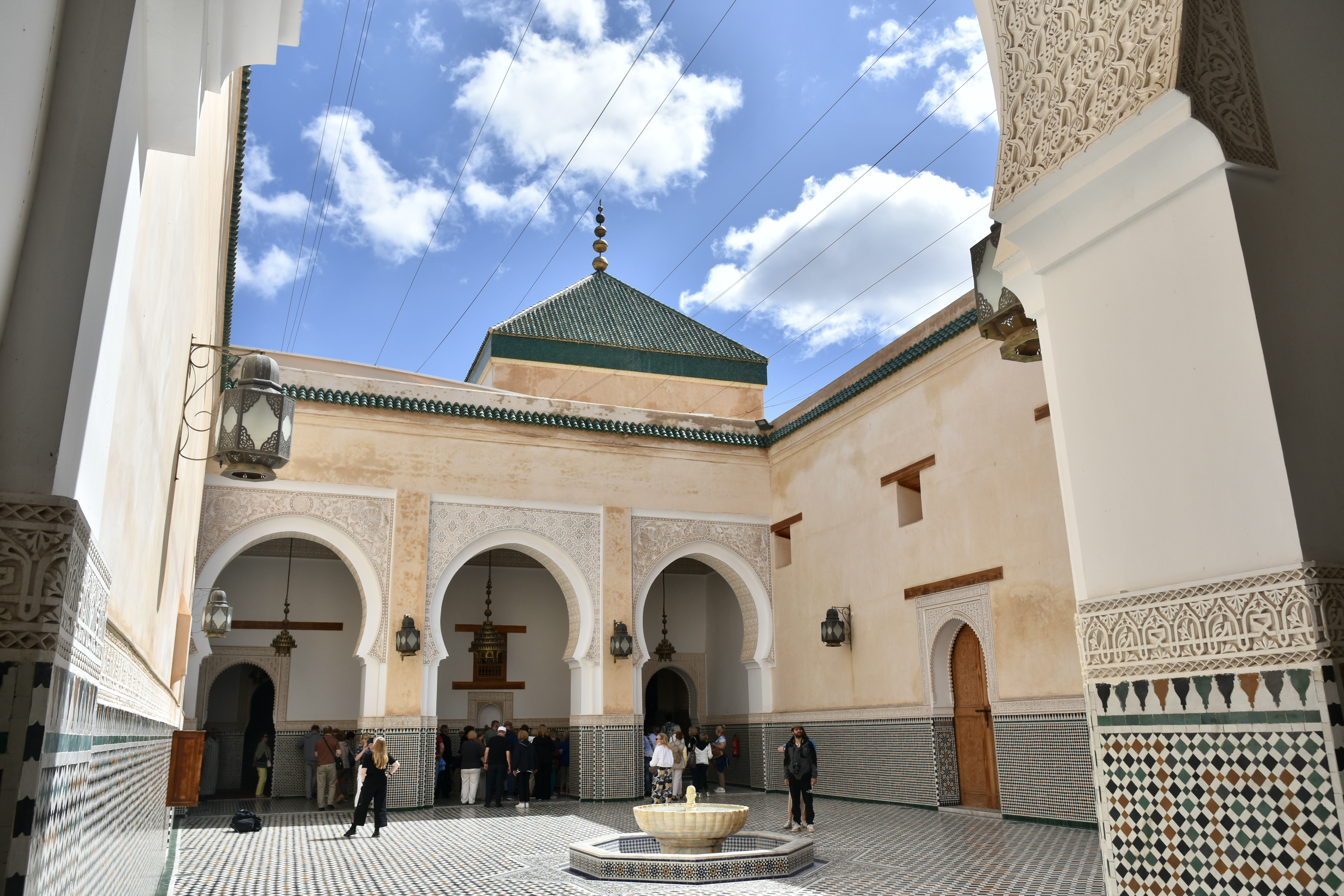


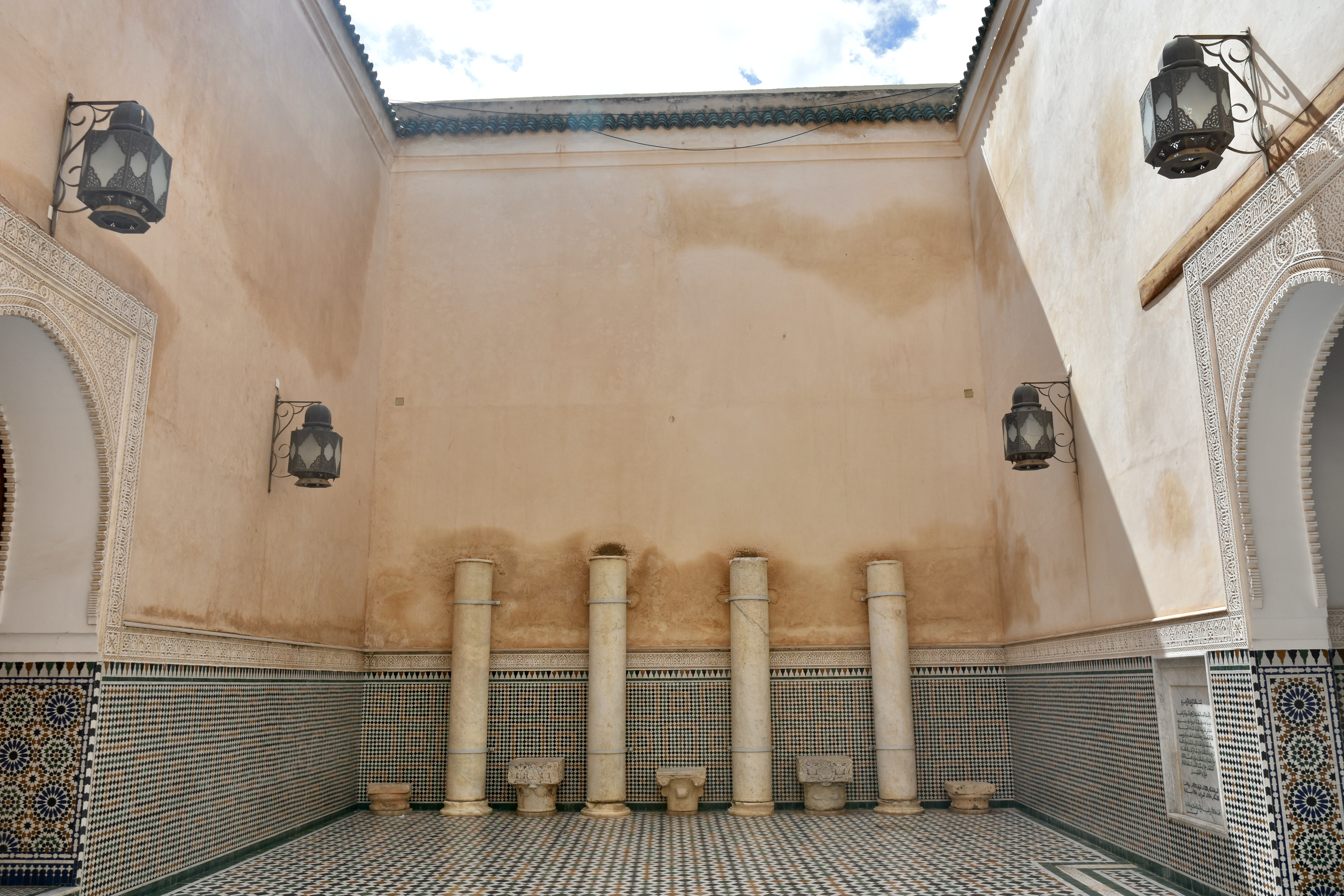


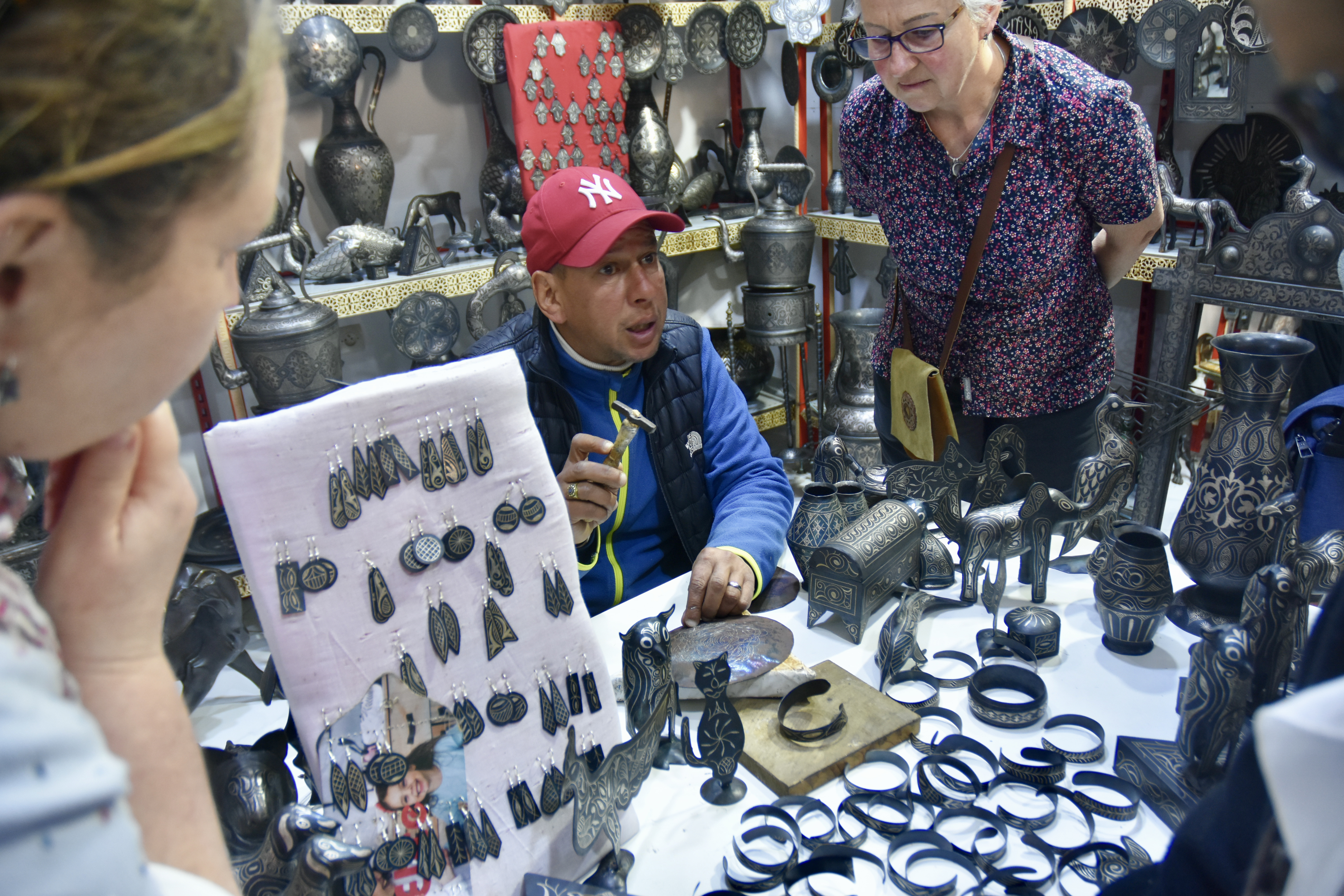
Outside the complex, there are many workshops where craftsmen make jewellery and storks nest on the crumbling city walls.
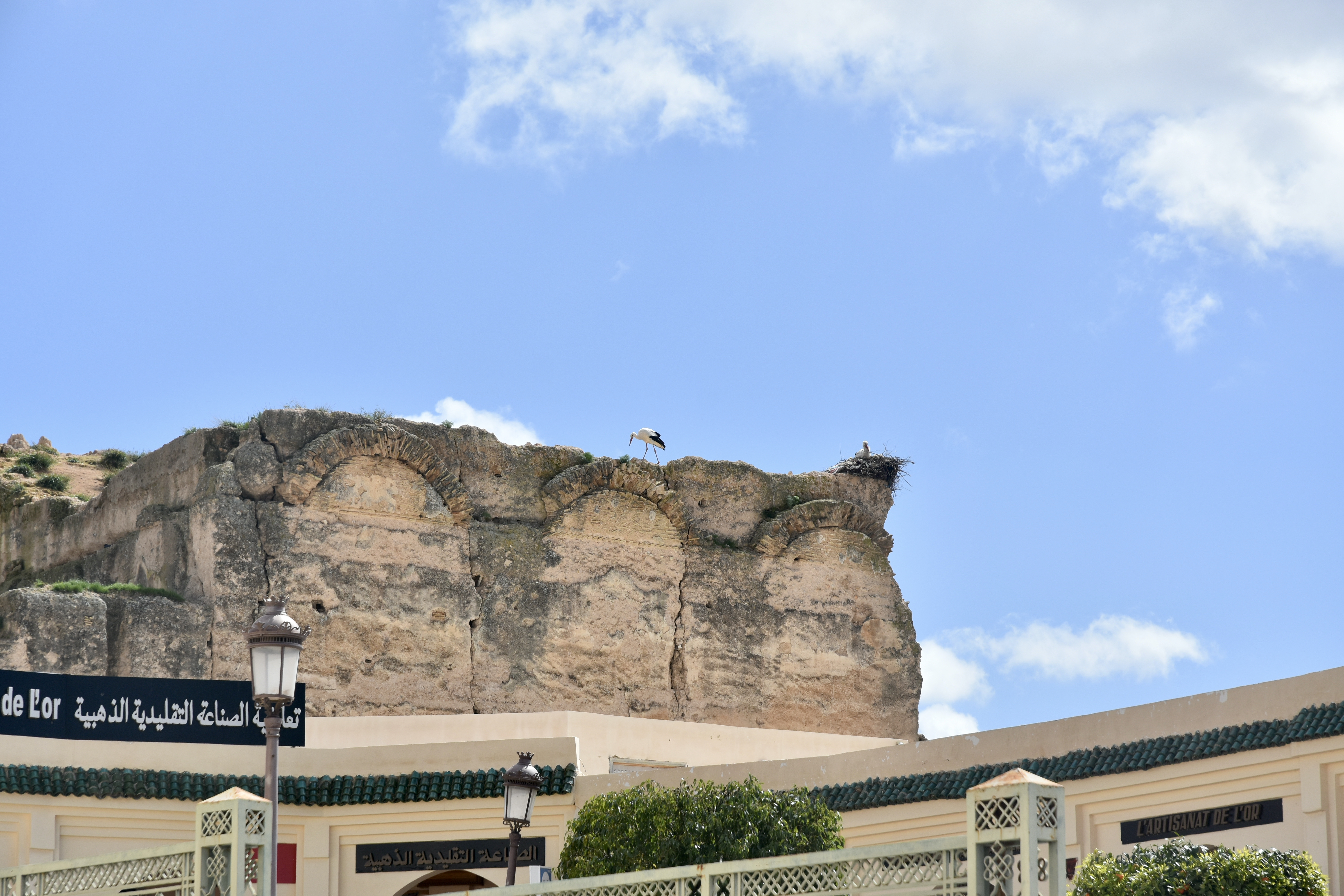
Bab el-Khemis (gate of Thursday’) is the old city gate in the west of the old town (medina) of Meknes. It was built in 1686 or 1687 during the reign of Alaouite Sultan Moulay Ismail who ruled between 1672 and 1727. The literal meaning of the name is the Thursday door or gate in Arabic, in reference to the weekly market or souk, held on a Thursday, which is accessible using the gate.

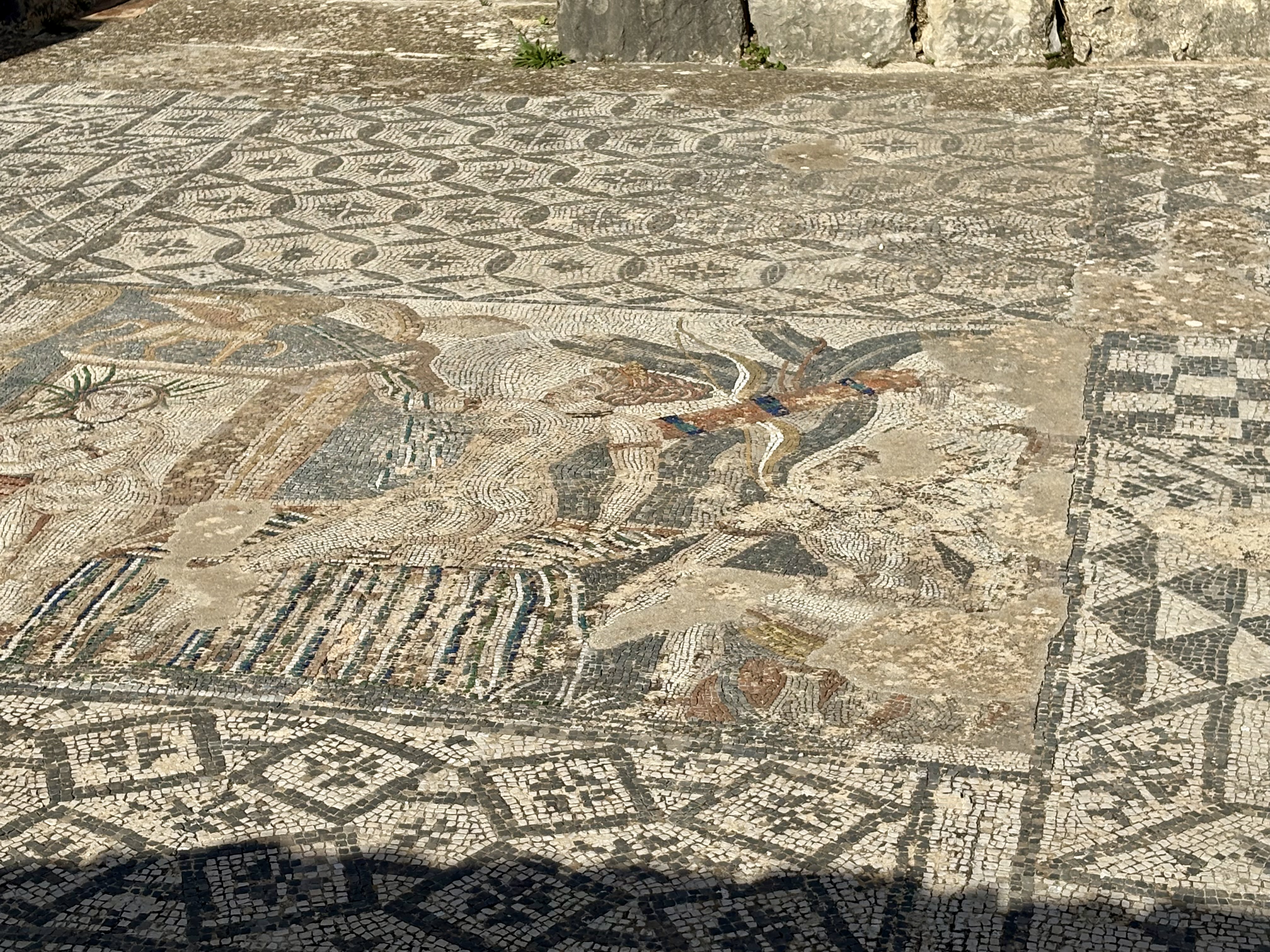
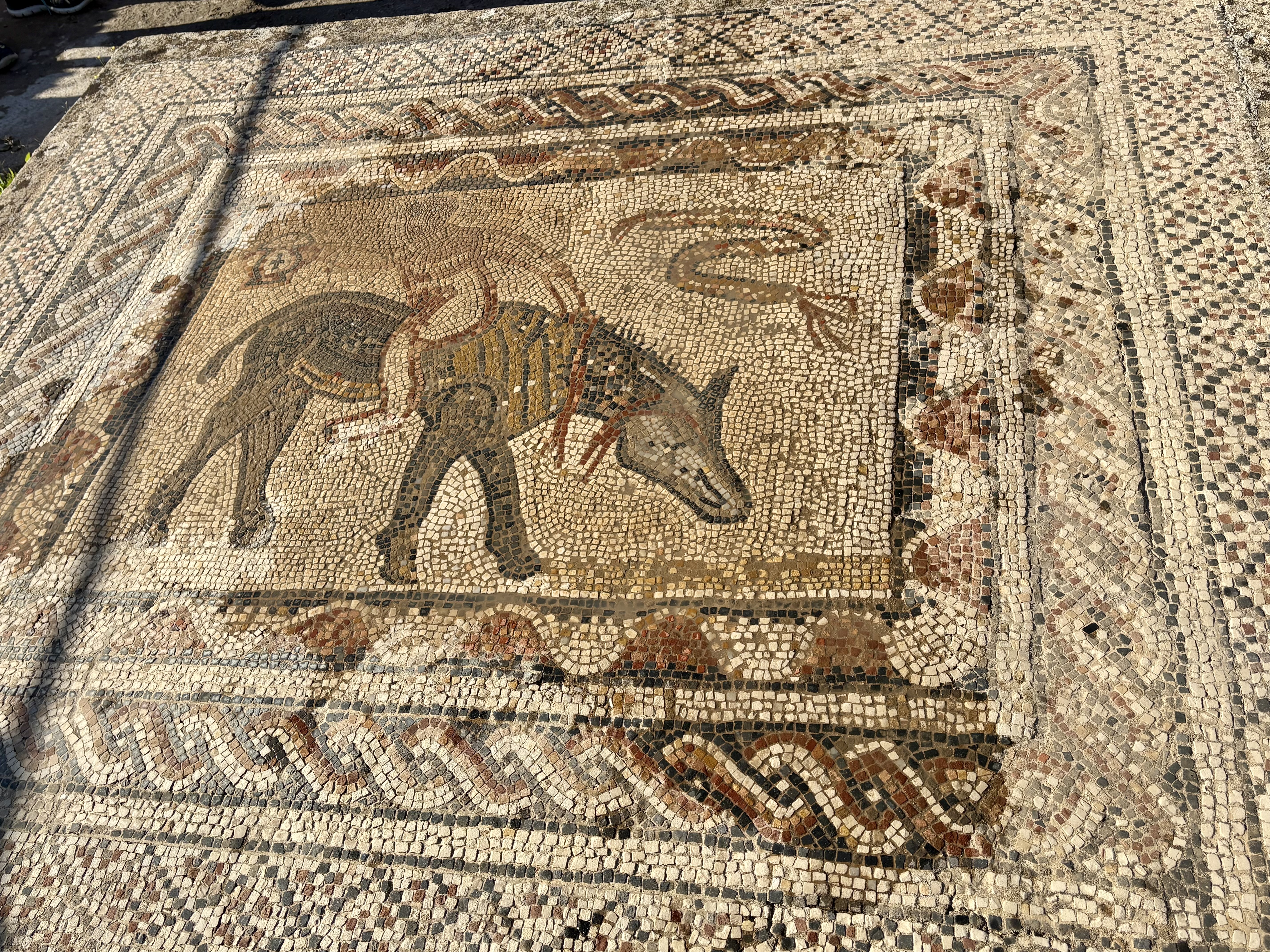
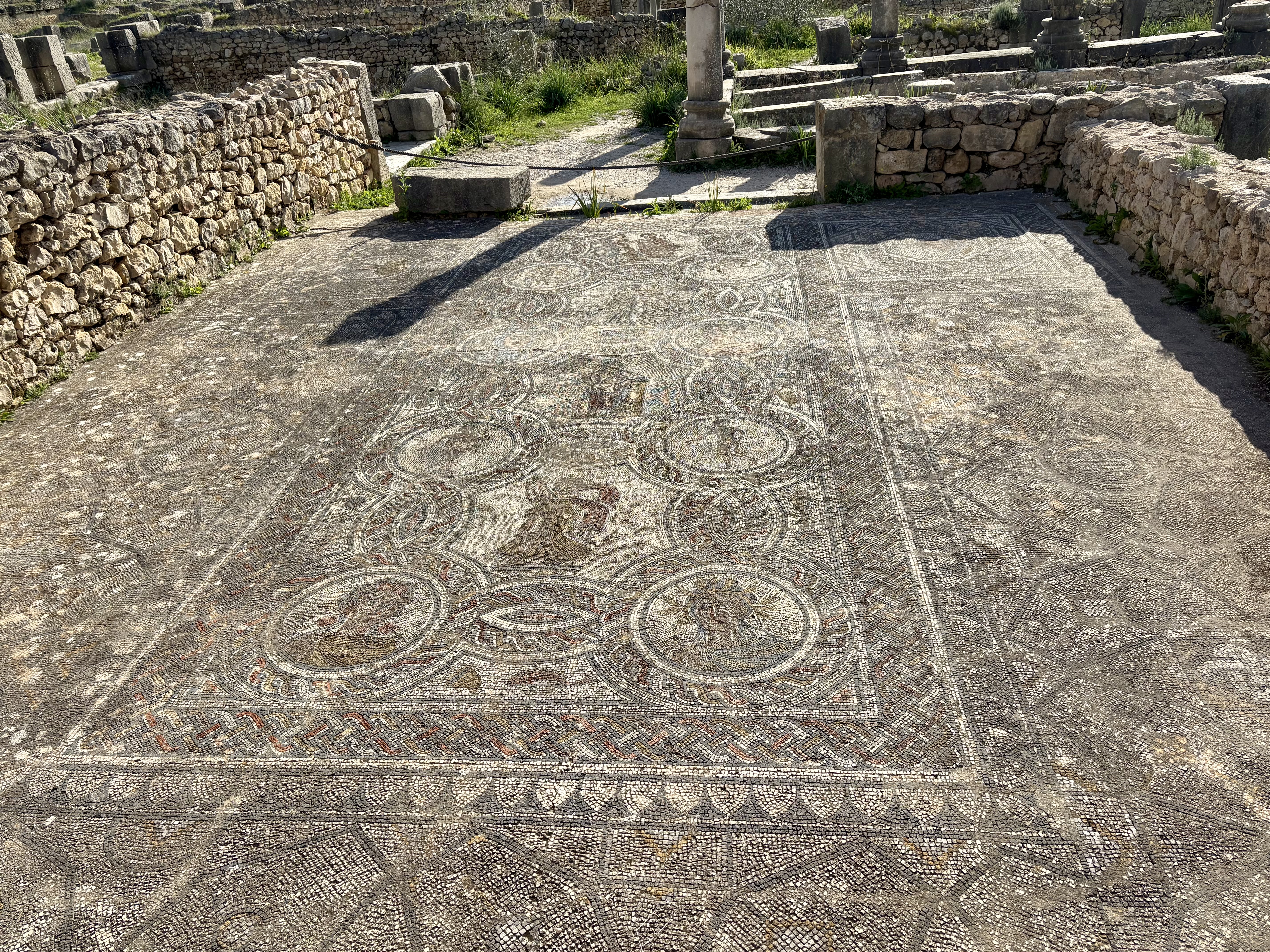
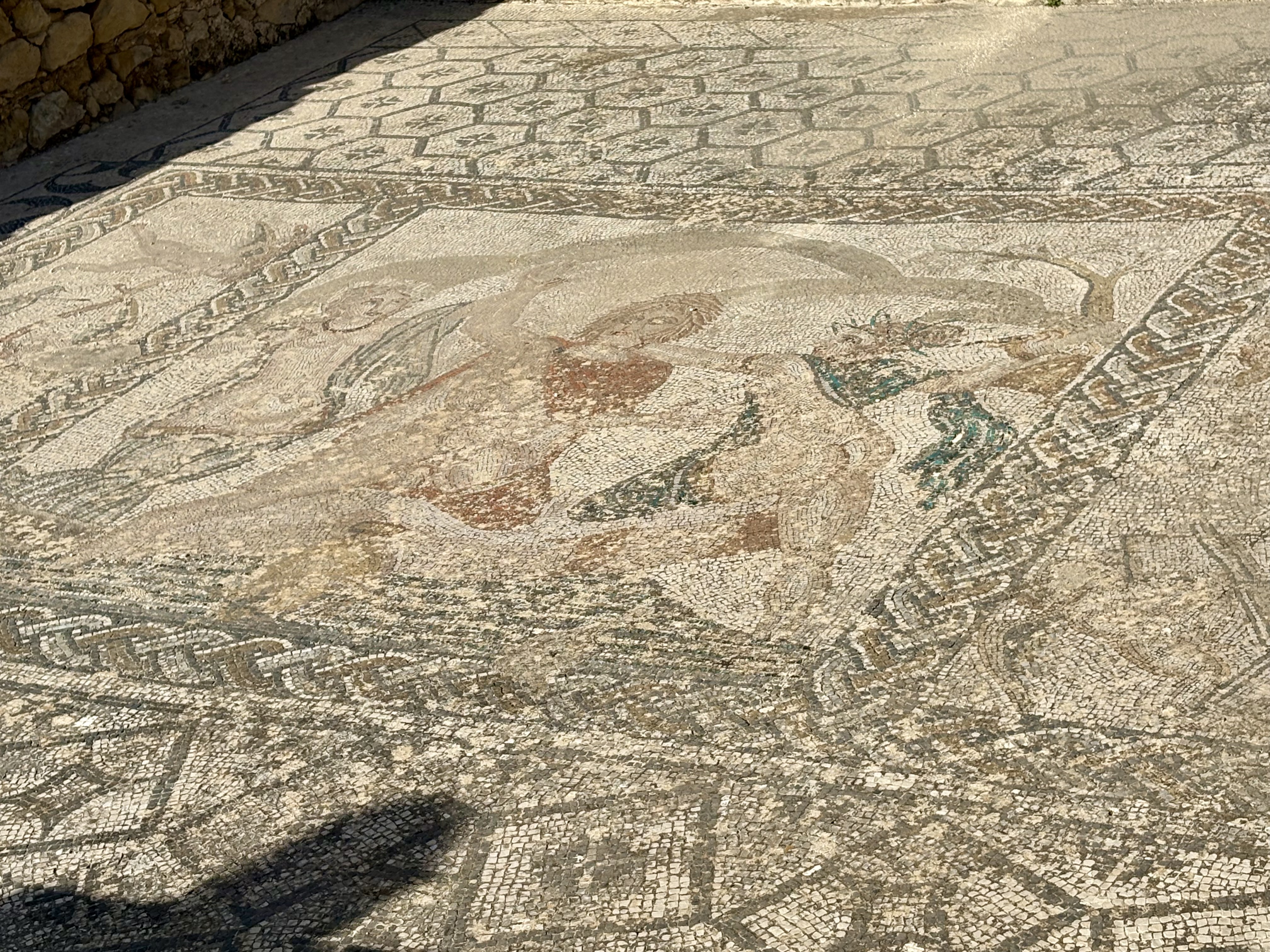
In the afternoon, we took a 45-minute drive to the largest and best-kept Roman ruins in Morocco – Volubilis, once a large Roman town and now a UNESCO World Heritage site. Under the Romans, it was an affluent city. This can be seen in the beautiful second-century forum, the basilica and the capitol. With a local guide, we wandered through the streets, discovering remains of townhouses with mosaic floors and saw baths, oil presses, aqueducts and shops, all of which reveal the daily lives of the inhabitants.
In a supermarket in Meknes, we bought supplies for a picnic lunch on the way to Volubilis.


“Volubilis was built in a fertile agricultural area, and it developed from the 3rd century BC onward as a Berber, then proto Carthaginian, settlement before being the capital of the kingdom of Mauretania. It grew rapidly under Roman rule from the 1st century AD onward and expanded to cover about 42 hectares (100 acres) with a 2.6 km (1.6 mi) circuit of walls.”
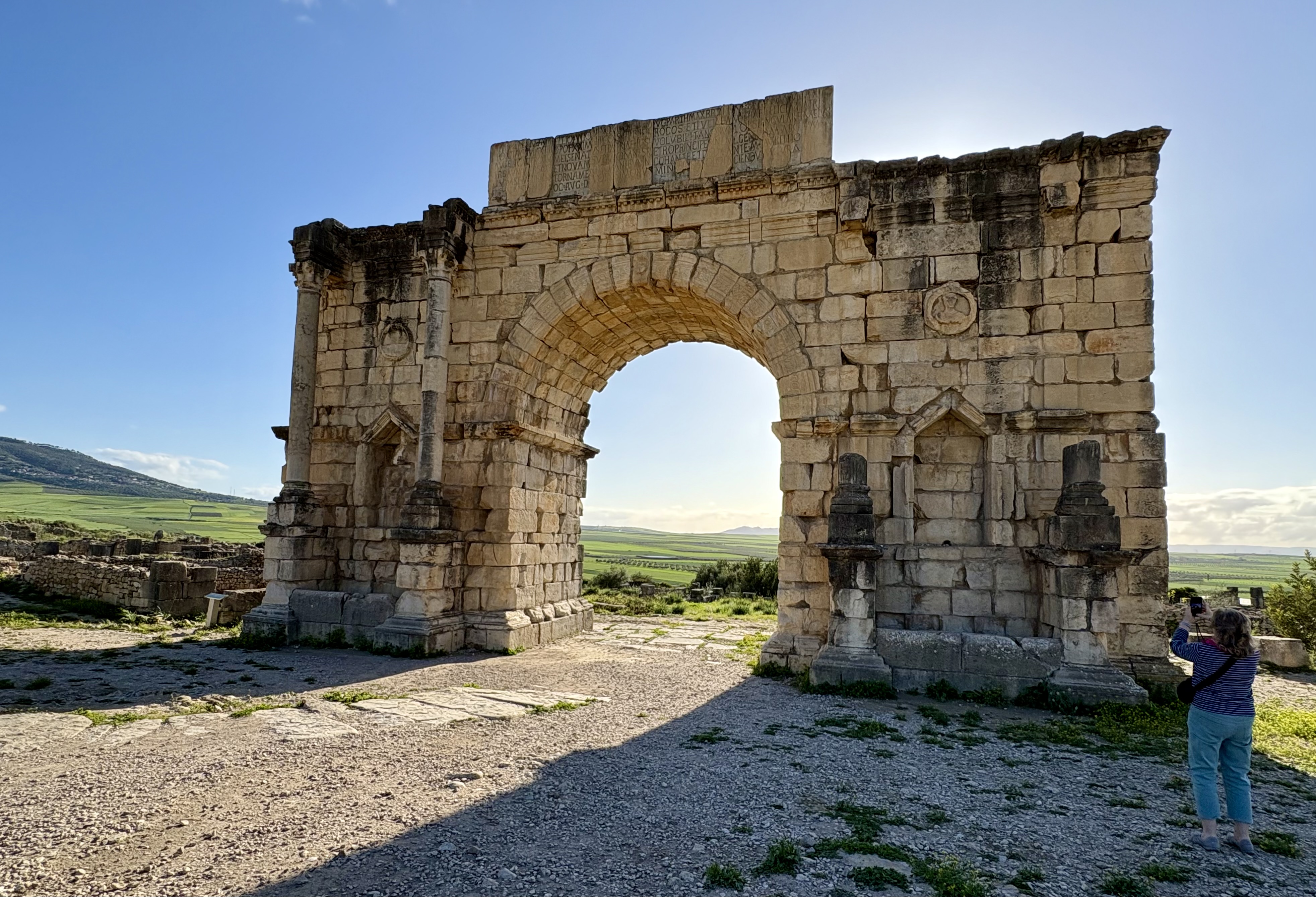

“The Arch of Caracalla is one of Volubilis’ most distinctive sights, situated at the end of the city’s main street, the Decumanus Maximus. It was built in 217 by the city’s governor, Marcus Aurelius Sebastenus, to honour the emperor Caracalla and his mother Julia Domna. Caracalla was himself a North African and had recently extended Roman citizenship to the inhabitants of Rome’s provinces. However, by the time the arch was finished both Caracalla and Julia had been murdered.
The arch is constructed from local stone and was originally topped by a bronze chariot pulled by six horses. Statues of nymphs poured water into carved marble basins at the foot of the arch. Caracalla and Julia Domna were represented on medallion busts, though these have been defaced. The monument was reconstructed by the French between 1930 and 1934.”
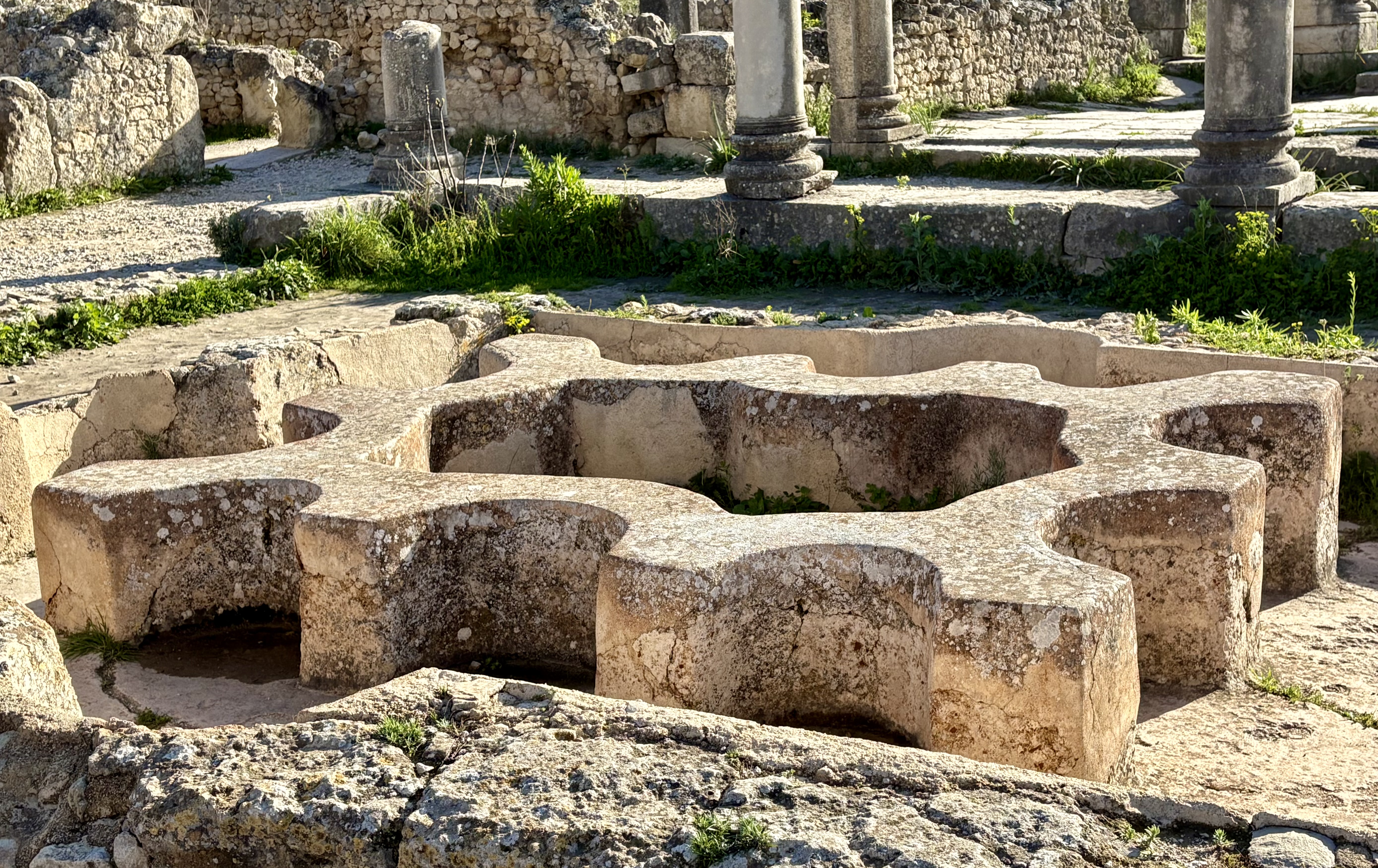
“Volubilis possessed at least three sets of public baths. Some mosaics can still be seen in the Baths of Gallienus, redecorated by that emperor in the 260s to become the city’s most lavish baths. The nearby north baths were the largest in the city, covering an area of about 1,500 m2 (16,000 sq ft). They were possibly built in the time of Hadrian.”
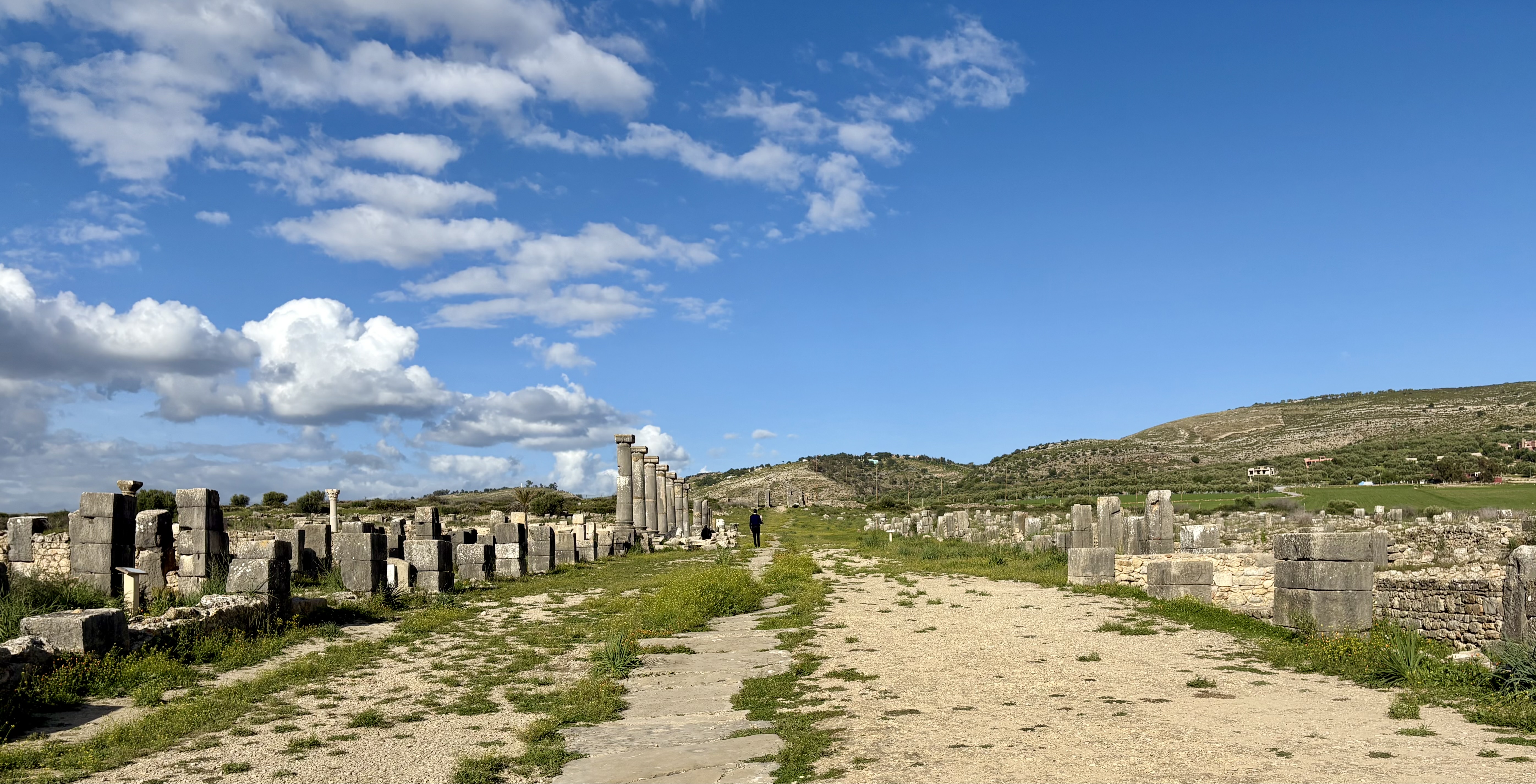
In Roman urban planning, a decumanus was an east–west-oriented road in a Roman city.

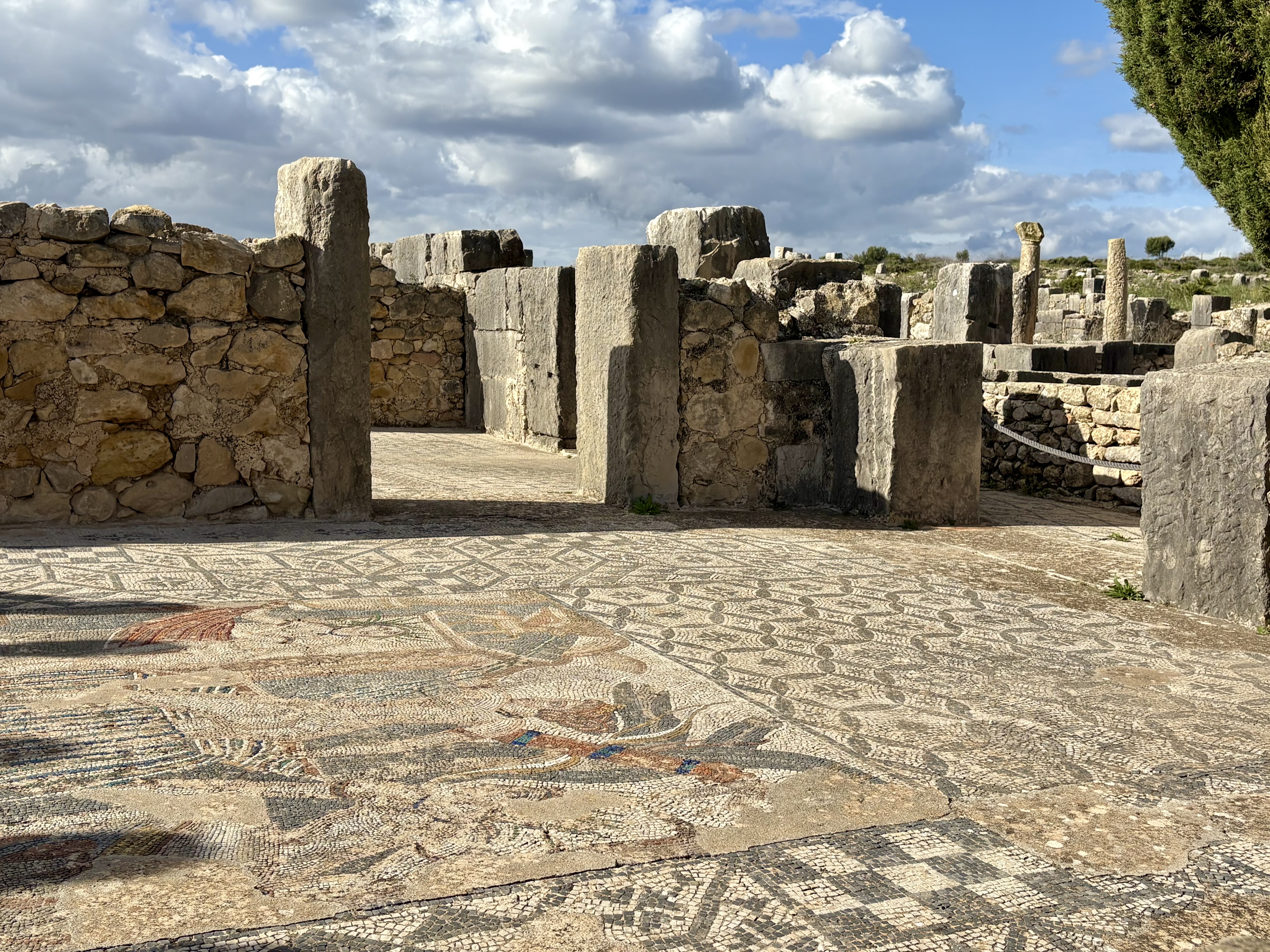

“The basilica was used for the administration of justice and the governance of the city. Completed during the reign of Macrinus in the early 3rd century, it is one of the finest Roman basilicas in Africa and is probably modelled on the one at Leptis Magna in Libya. The building is 42.2 m (138 ft) long by 22.3 m (73 ft) wide and originally had two storeys. Its interior is dominated by two rows of columns framing the apses at each end of the building where the magistrates sat. The outer wall of the basilica, which is faced with columns, overlooks the forum where markets were held. Small temples and public offices also lined the 1,300 m2 (14,000 sq ft) forum, which would have been full of statues of emperors and local dignitaries, of which only the pedestals now remain. Not much is known about the public buildings which existed in Volubilis prior to the start of the 3rd century, as the buildings currently visible were built on the foundations of earlier structures.”
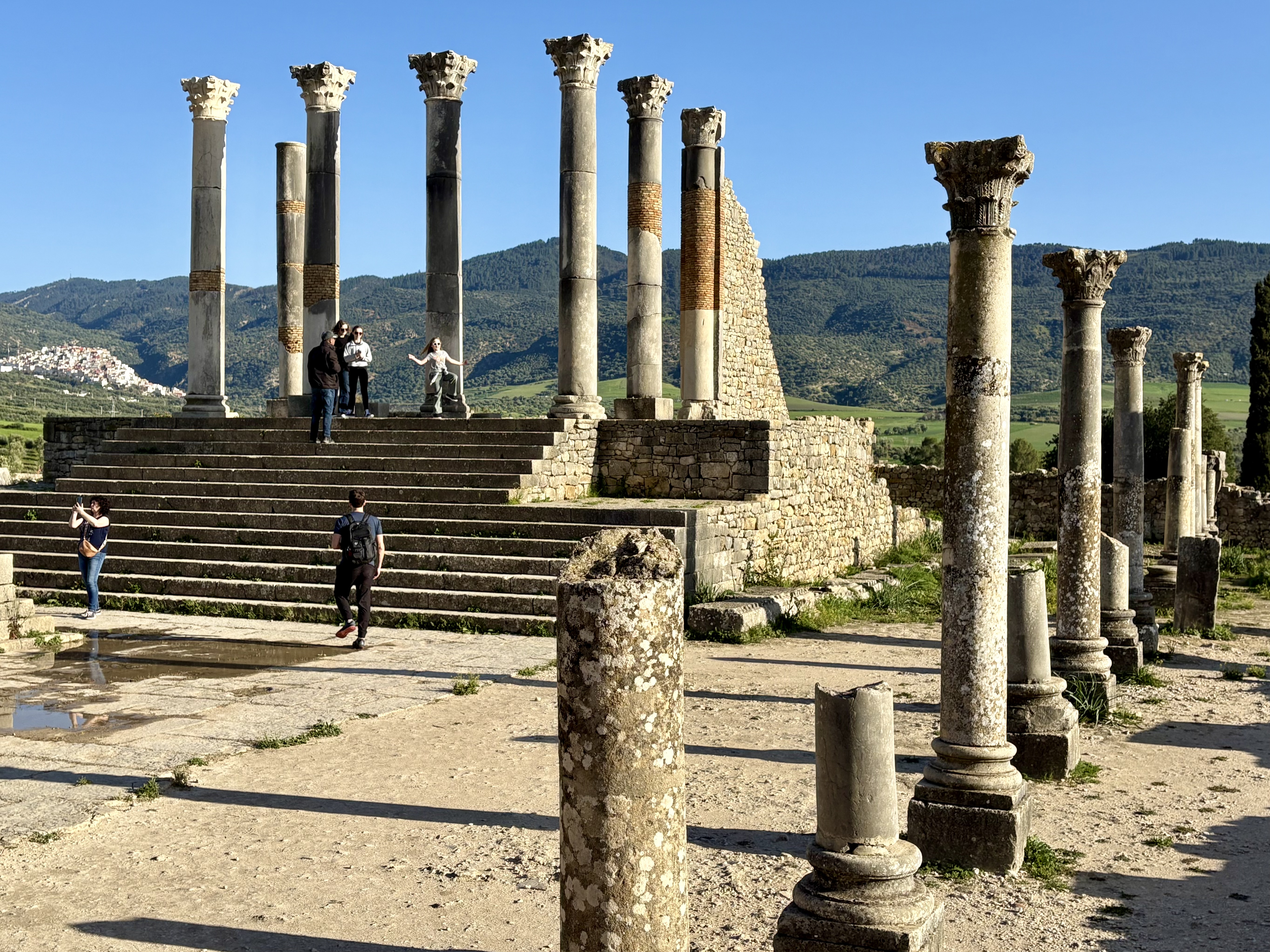

The Capitoline Temple stands behind the basilica within what would originally have been an arcaded courtyard. An altar stands in the courtyard in front of 13 steps leading up to the Corinthian-columned temple. The building was dedicated to the three chief divinities of the Roman state, Jupiter, Juno and Minerva. Civic assemblies were held in front of the temple to beseech the aid of the gods or to thank them for successes in major civic undertakings such as wars.
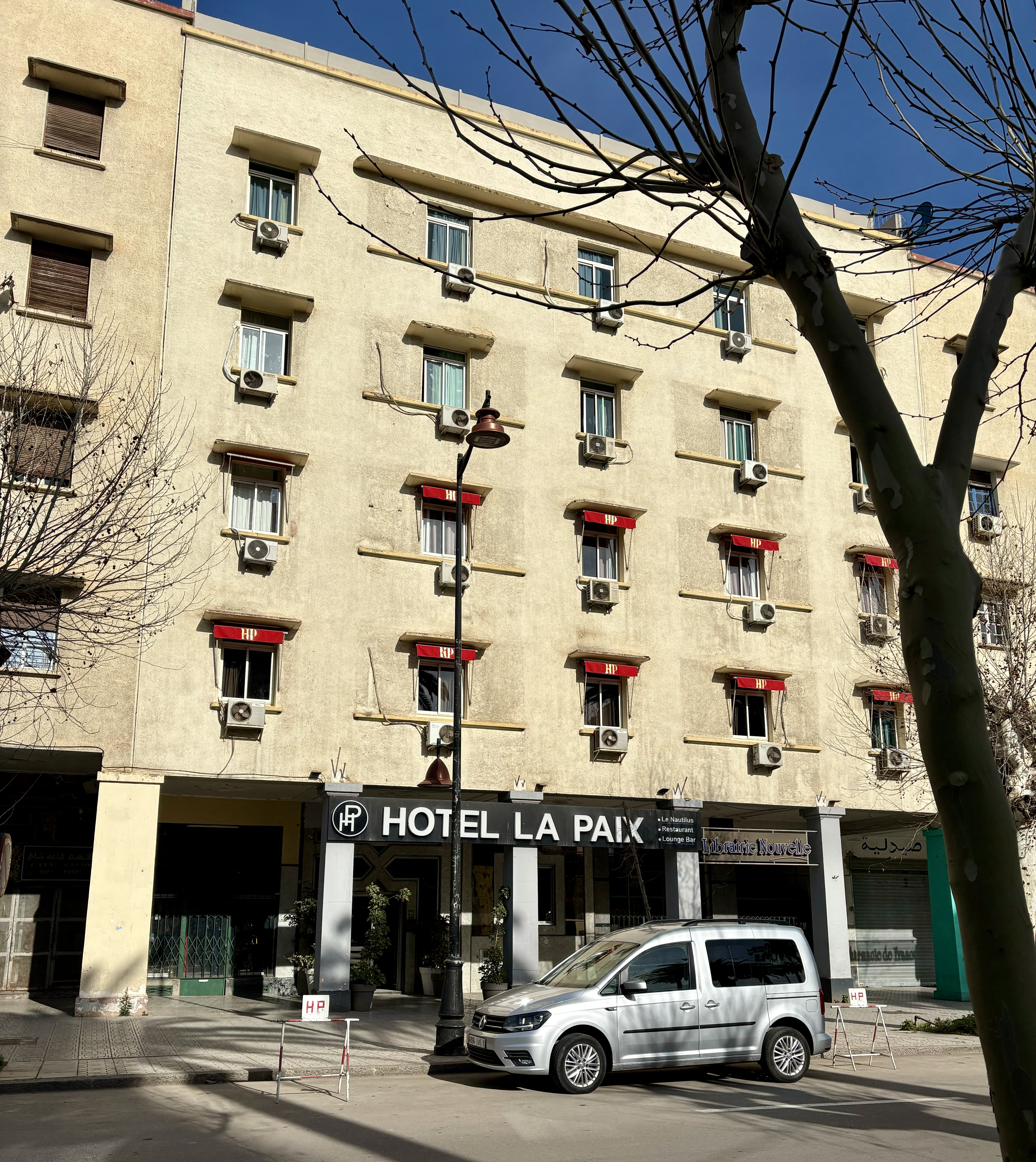
After Volubilis, the drive to the ancient city of Fez took two hours. Our base there for two nights was the 3-star Hotel La Paix.

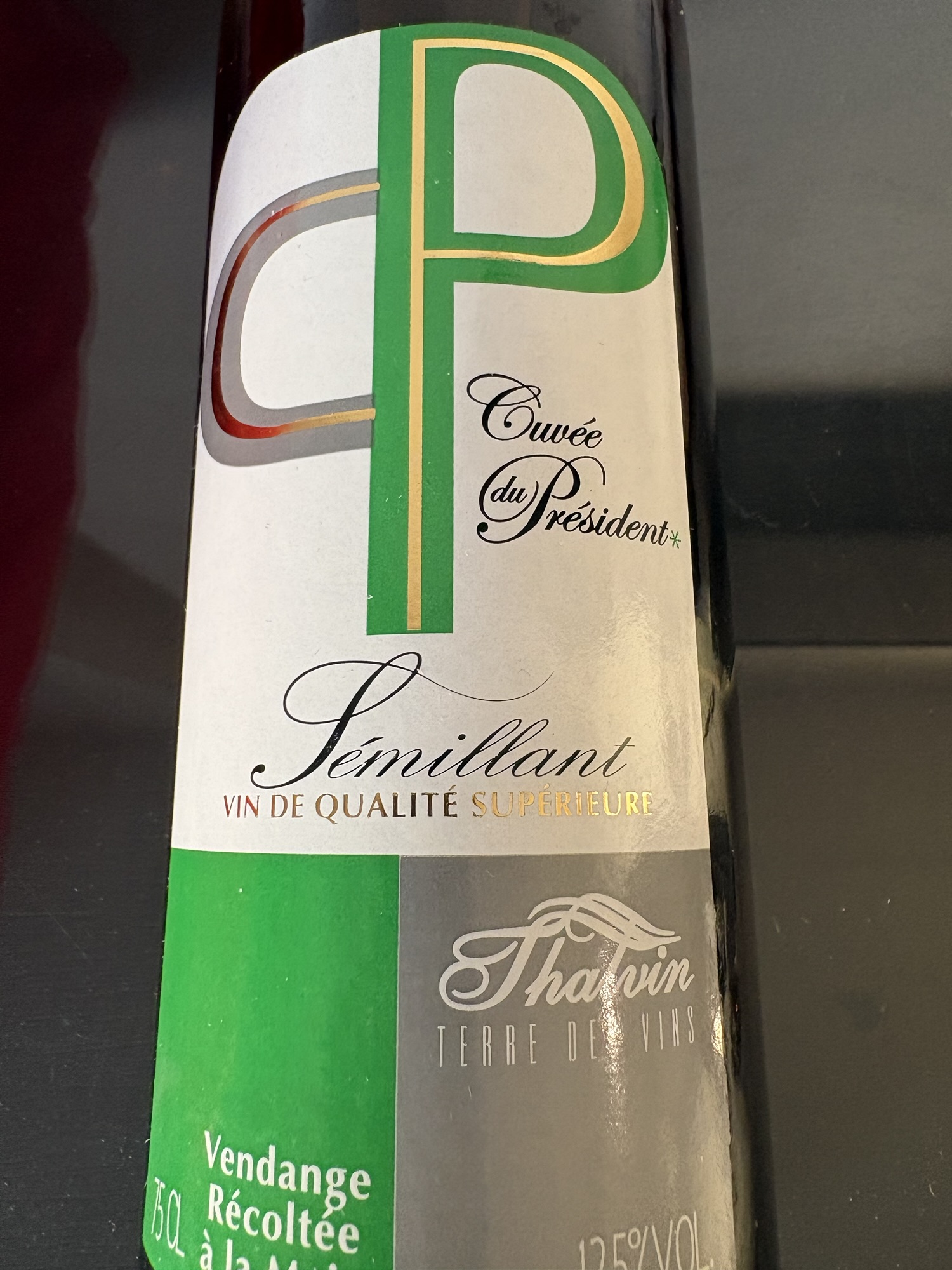
That evening, we were able to enjoy surprisingly good Moroccan wine – a Sémillon and a red blend in the hotel.


Published 25 May 2025
 Bandi's Blog