
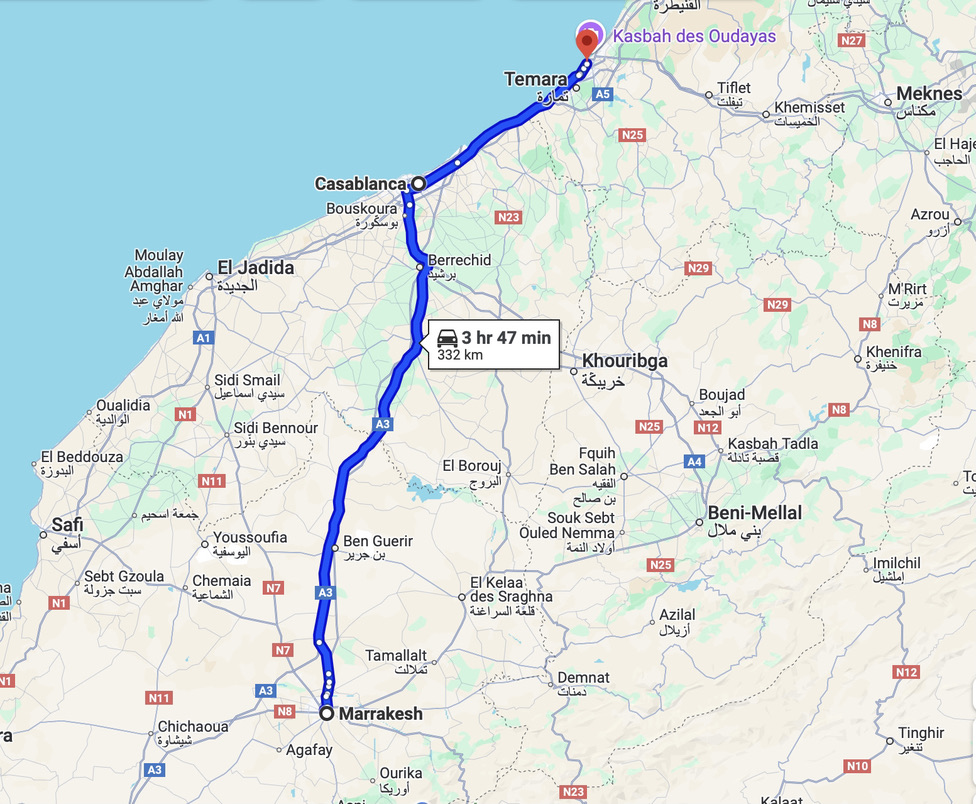
We left Marrakesh after breakfast and drove 245 kms. on the A3 to Casablanca and then to Rabat.
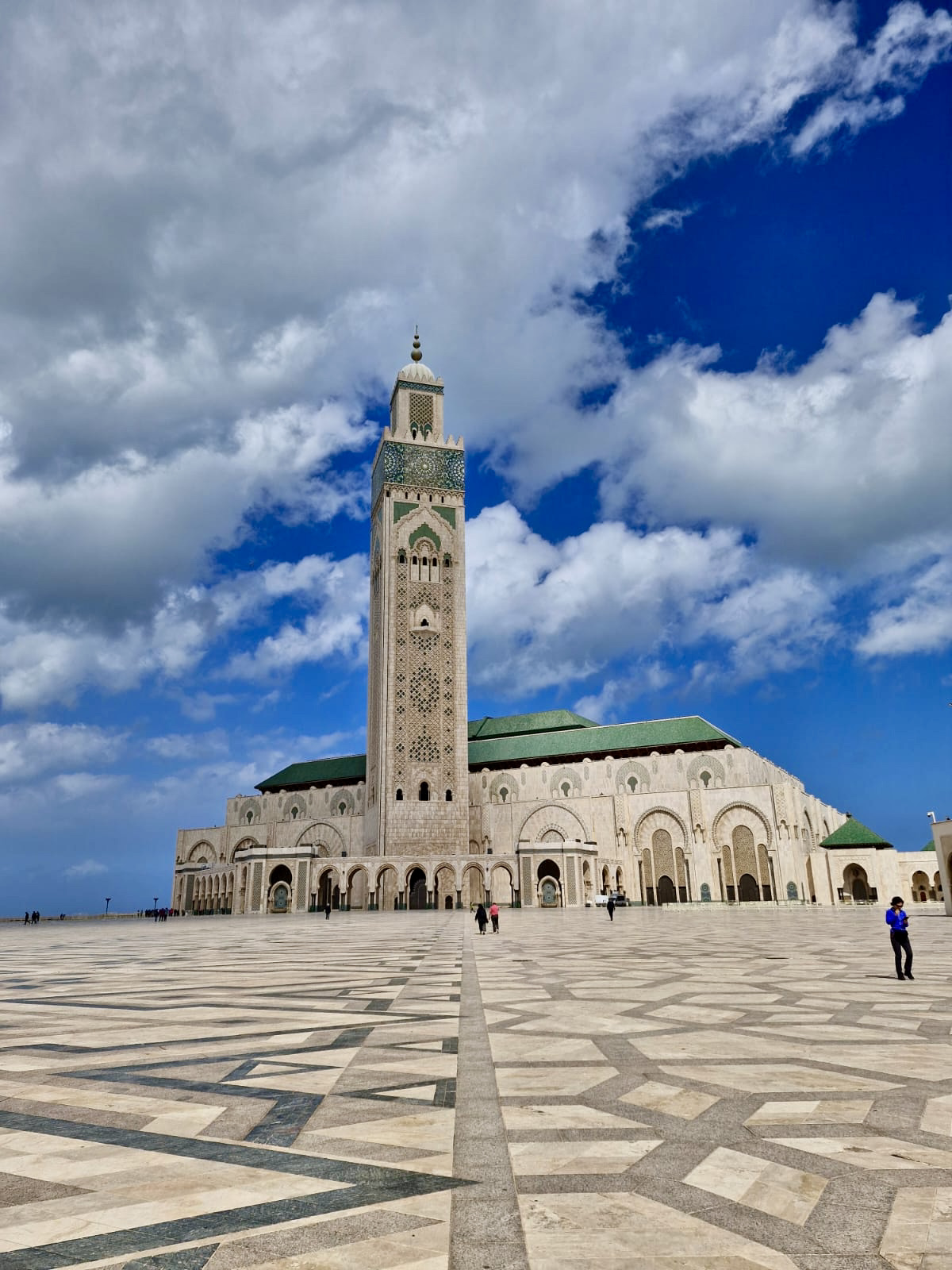
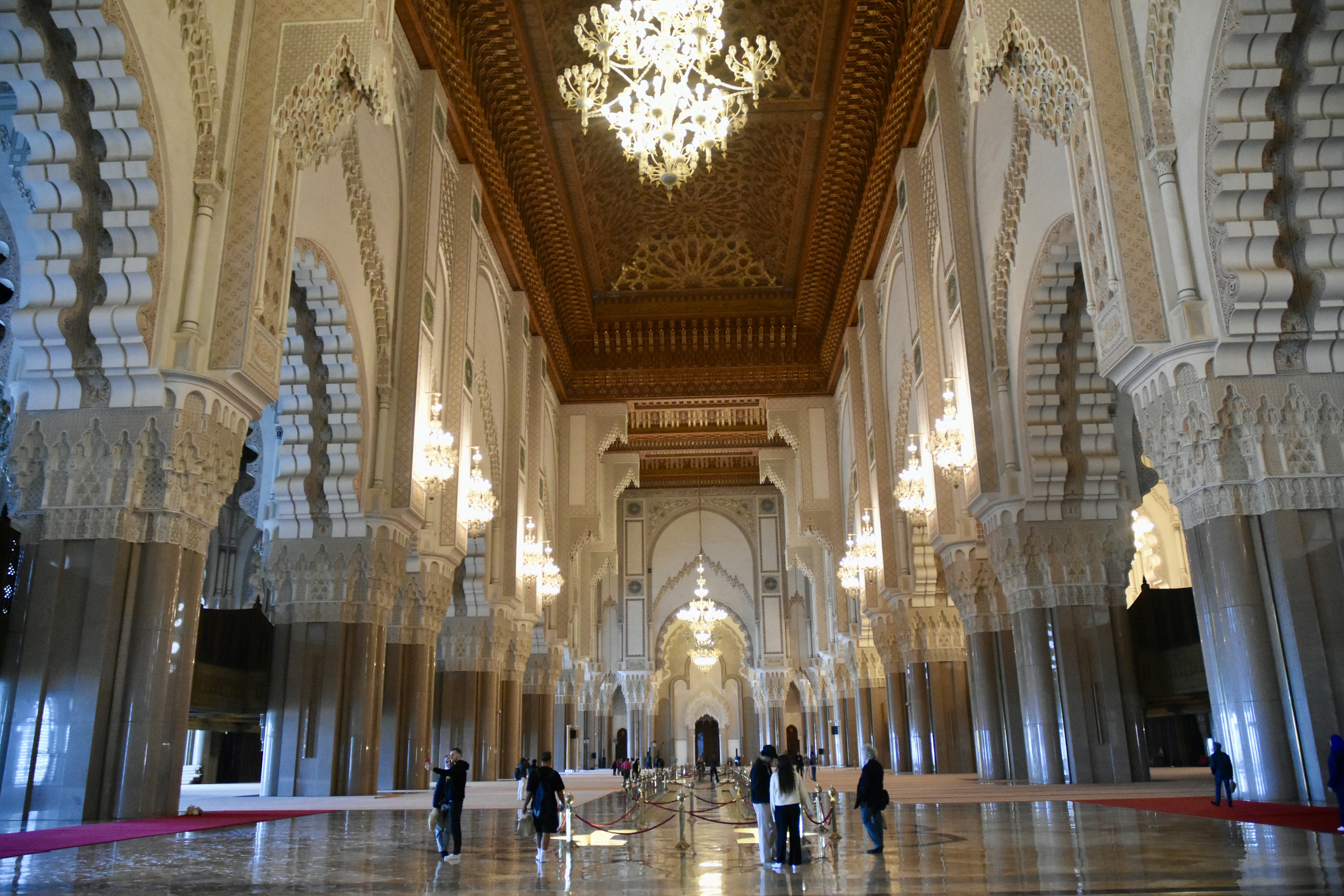
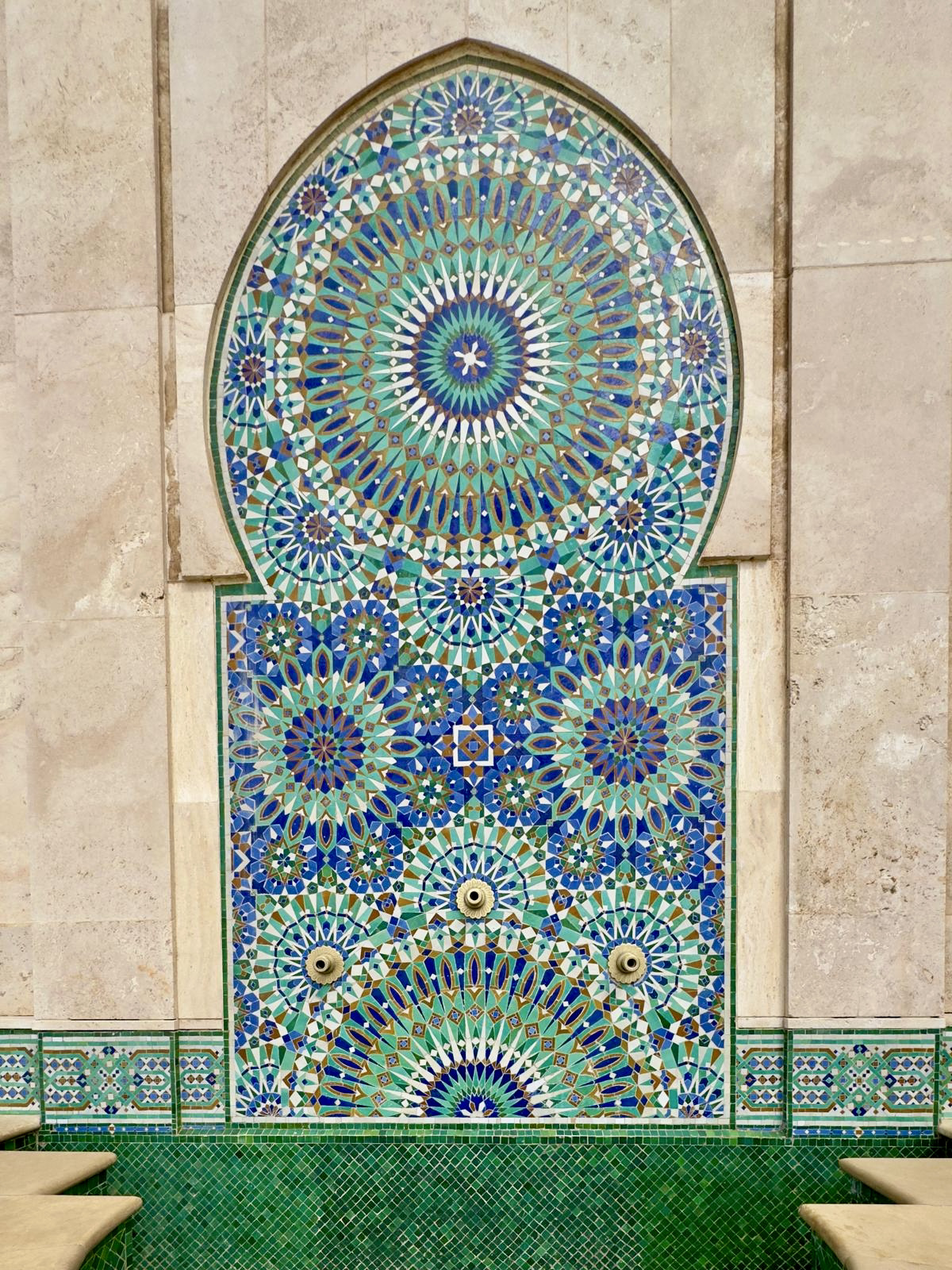
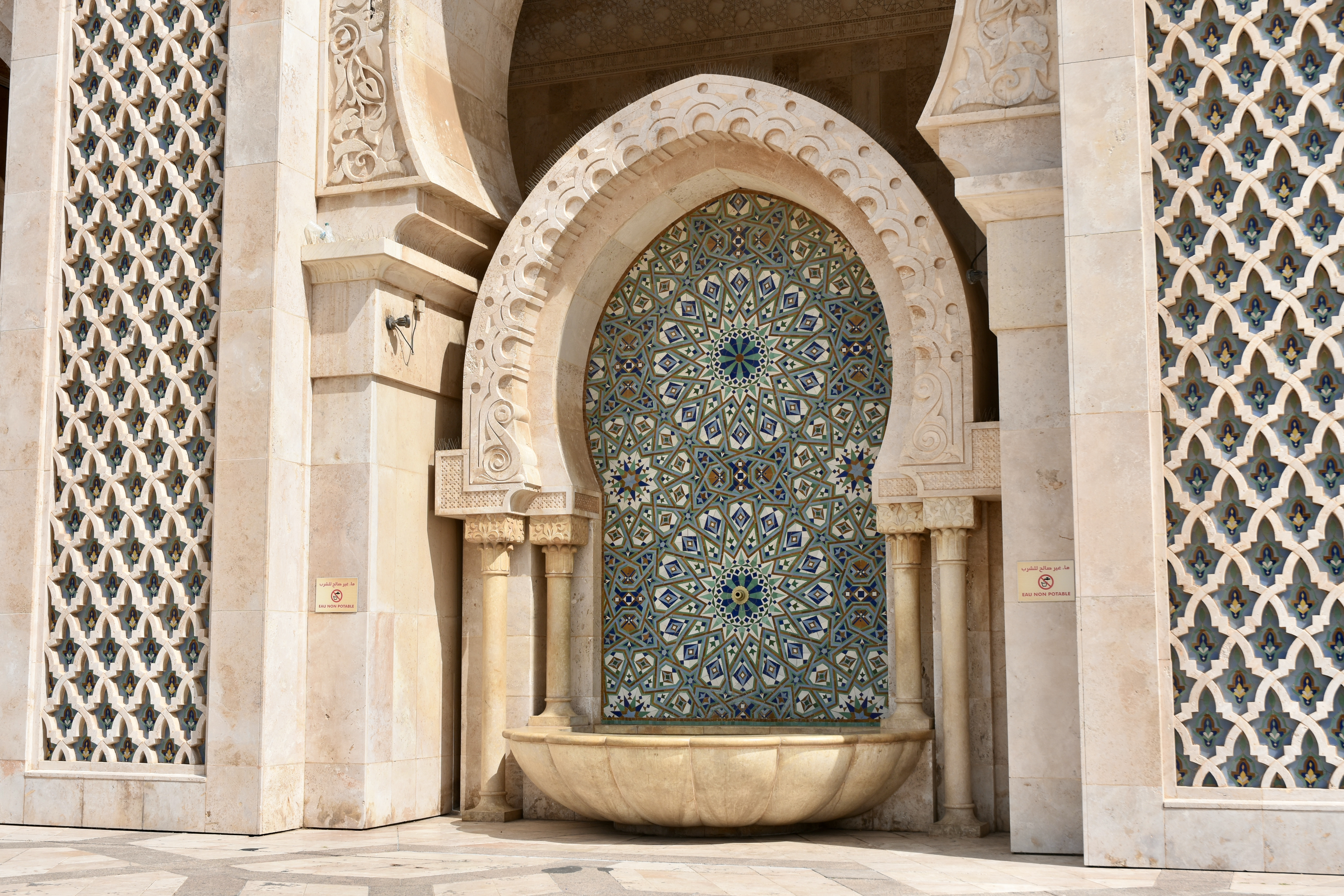
We visited the Hassan II Mosque and its ablutions hall in Casablanca with an excellent English-speaking local guide. The mosque is one of the largest in the world and sits on an outcrop jutting over the ocean. It has a 210m-tall minaret which has a laser beam fitted at the top. It is electronically operated in the evening, is oriented towards Mecca and has a range of 30 kilometres (19 mi). The mosque has a sliding ceiling to enable the sea breeze to cool the building. The mosque complex, designed by French architect Michel Pinseau, took six years to build and was completed in 1993. It’s a showcase of the finest Moroccan artisanship. A team of more than 6000 master craftspeople was assembled to work on the mosque, delicately carving intricate patterns and designs in fragrant cedar wood from the Middle Atlas and pink granite from Agadir. The gates were made from brass and titanium. Intricate marble flooring and inlay, gilded cedar ceilings and exquisite zellige (geometric mosaic tilework) abound. 105,000 worshippers can gather together for prayer: 25,000 inside the mosque hall and another 80,000 on the mosque’s outside ground. Believers pray on a floor that can be heated when necessary. It’s one of two Moroccan mosques open to non-Muslims; multilanguage guided tours lasting about 45 minutes are conducted outside prayer times for modestly clad visitors. Women don’t require a headscarf.
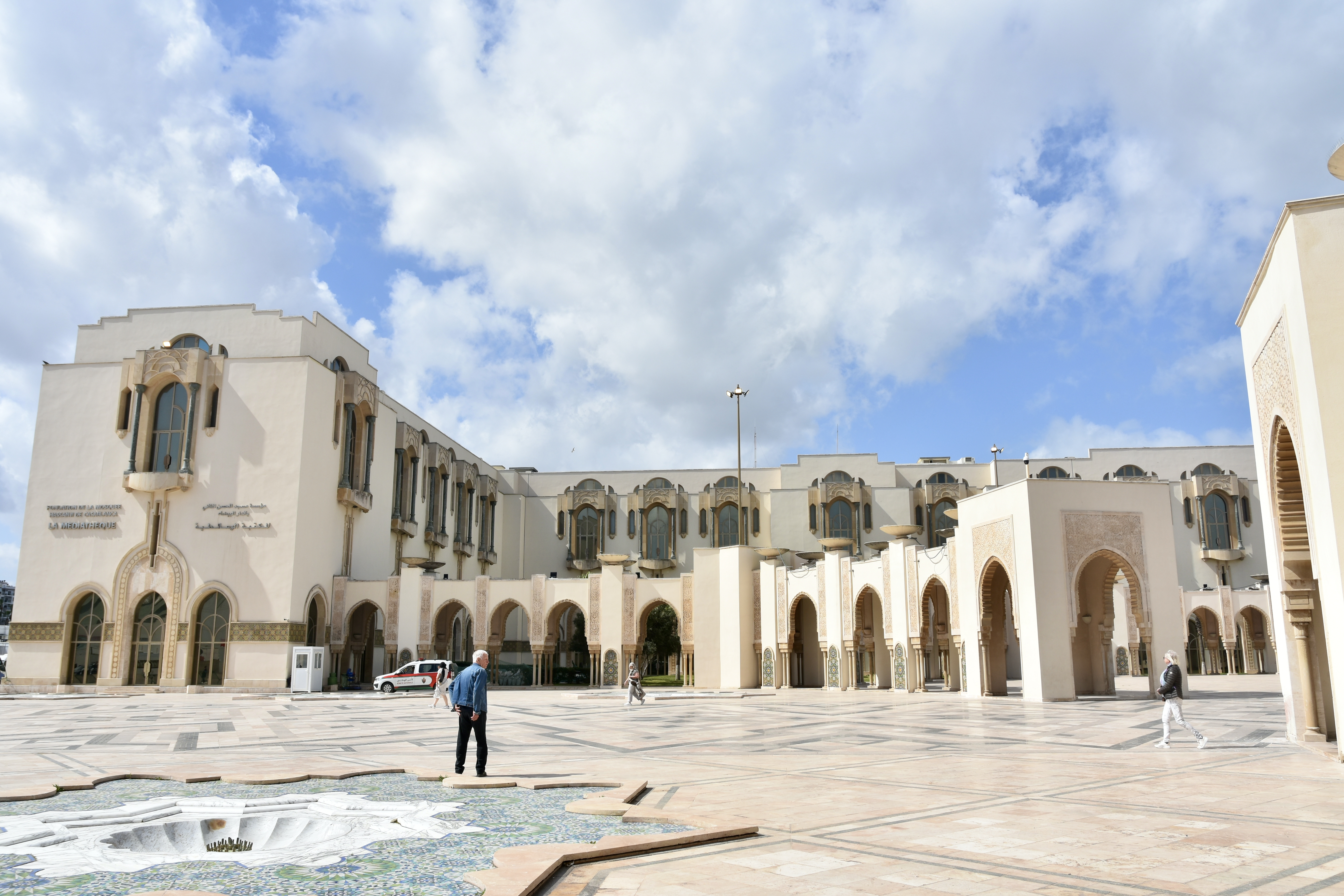
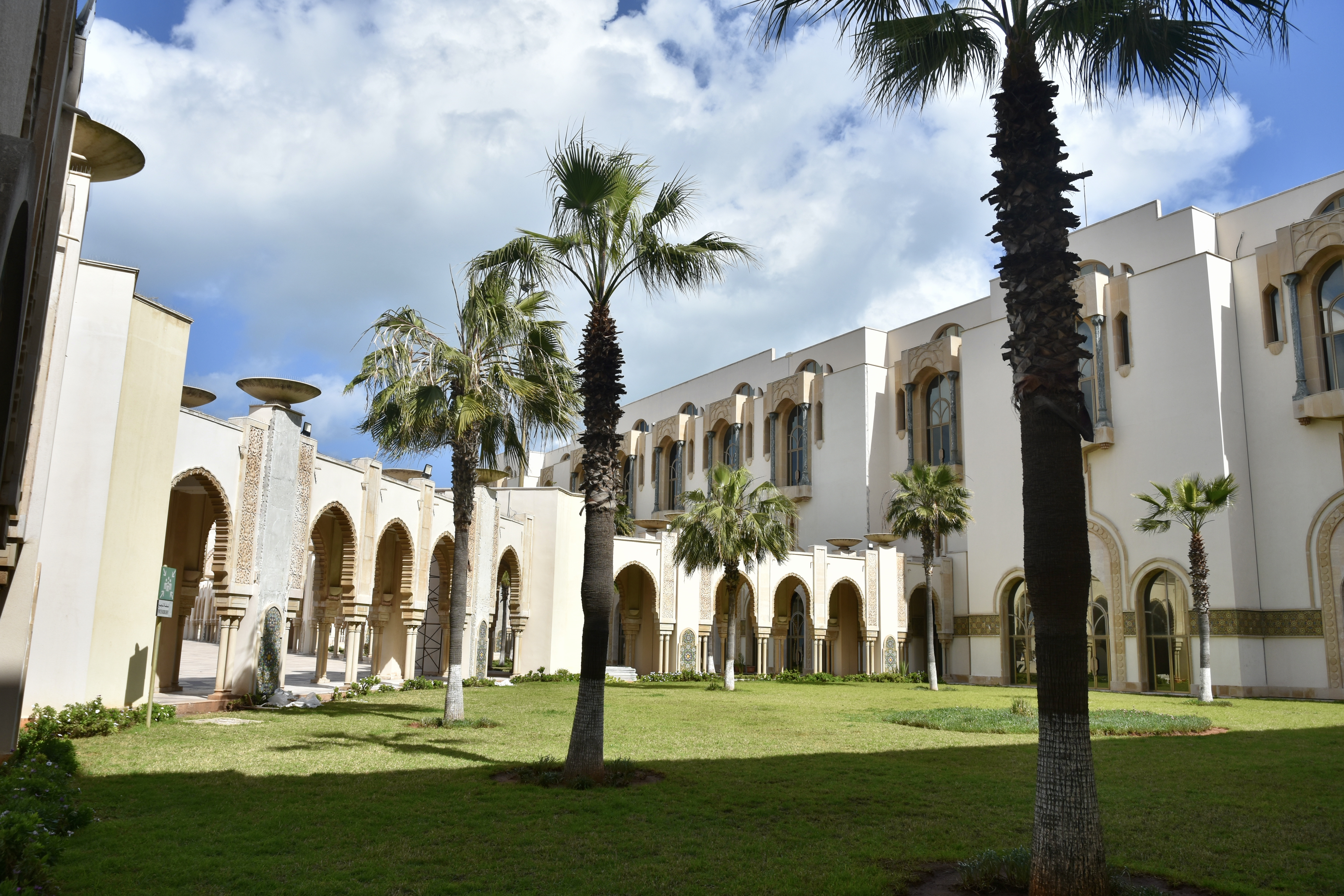

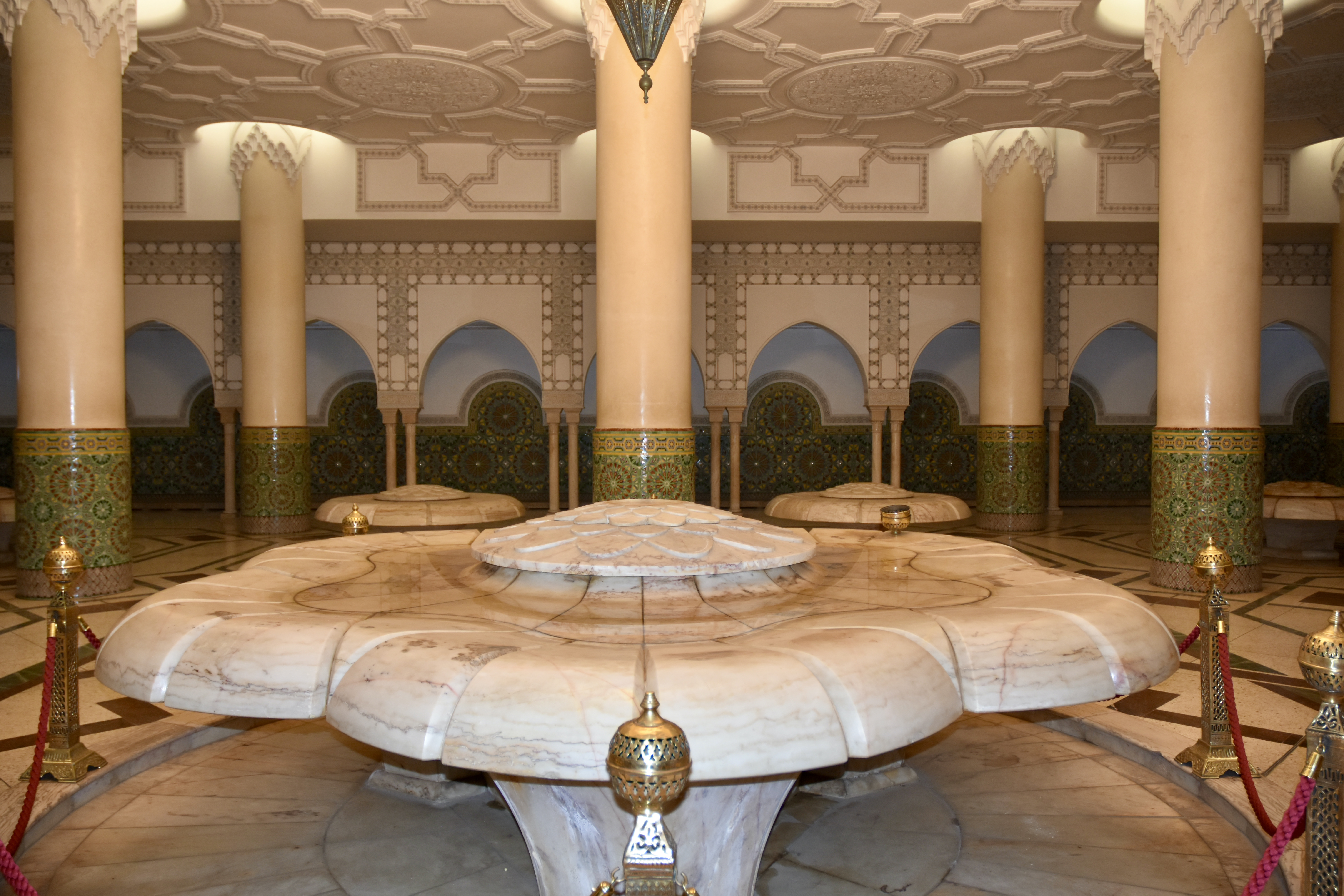
The small museum next to the mosque has attractive ceilings, carvings and paintings.



We had lunch at a restaurant in Casablanca before driving to Rabat.

We drove on to Rabat, the capital of Morocco. The drive took about two hours. Although mostly modern, Rabat has an excellent old town, where one can see distinctive buildings with Moorish and Andalusian designs. The Jewish Quarter or Mellah is the second oldest of its kind in the country.

We toured the Kasbah of the Udayas, (citadel) built in the 12th century in Rabat, located on a hill at the mouth of the Bou Regreg river opposite the city of Salé, and adjacent to the Medina quarter. It is listed as a UNESCO World Heritage Site. The origins of Kasbahs in Morocco can be traced back to the Berbers, who built these fortified structures to protect their communities from external threats. The earliest Kasbahs date back to the 7th century, though many of the existing structures were built during the medieval period. The Oudaya is an Arab tribe in Morocco of Maqil origin. They are situated around Fez and Meknes, Marrakesh and in Rabat.


The Kasbah of the Udayas is a charming medieval fortress district that was the first settlement in Rabat. It’s full of Morocco’s trademark blue-and white houses with their colorful flower pots and hand-painted gates.


We visited the Mausoleum of Mohammed V in the late afternoon. It contains the tombs of the Moroccan king Mohammed V and his two sons, late King Hassan II and Prince Abdallah. The mausoleum is located across from the Hassan Tower – the minaret of an incomplete mosque, and stands on an elevated platform. Inside, the mausoleum chamber is covered by a dome of mahogany with coloured glass, while the walls are covered in zellij tiling. The cenotaph of Mohammed V is carved in white onyx. A reader of the Quran is often present in the mausoleum chamber, having an assigned seat.
To the west, across from the mausoleum is another structure on an elevated platform: a rectangular open-air pavilion with rows of arches which was designed as a museum for the Alaouite dynasty. The space between these two structures is filled by a mosque which was also built as part of the complex. The mosque is situated at a lower level in order to not obstruct the view of the other two structures.

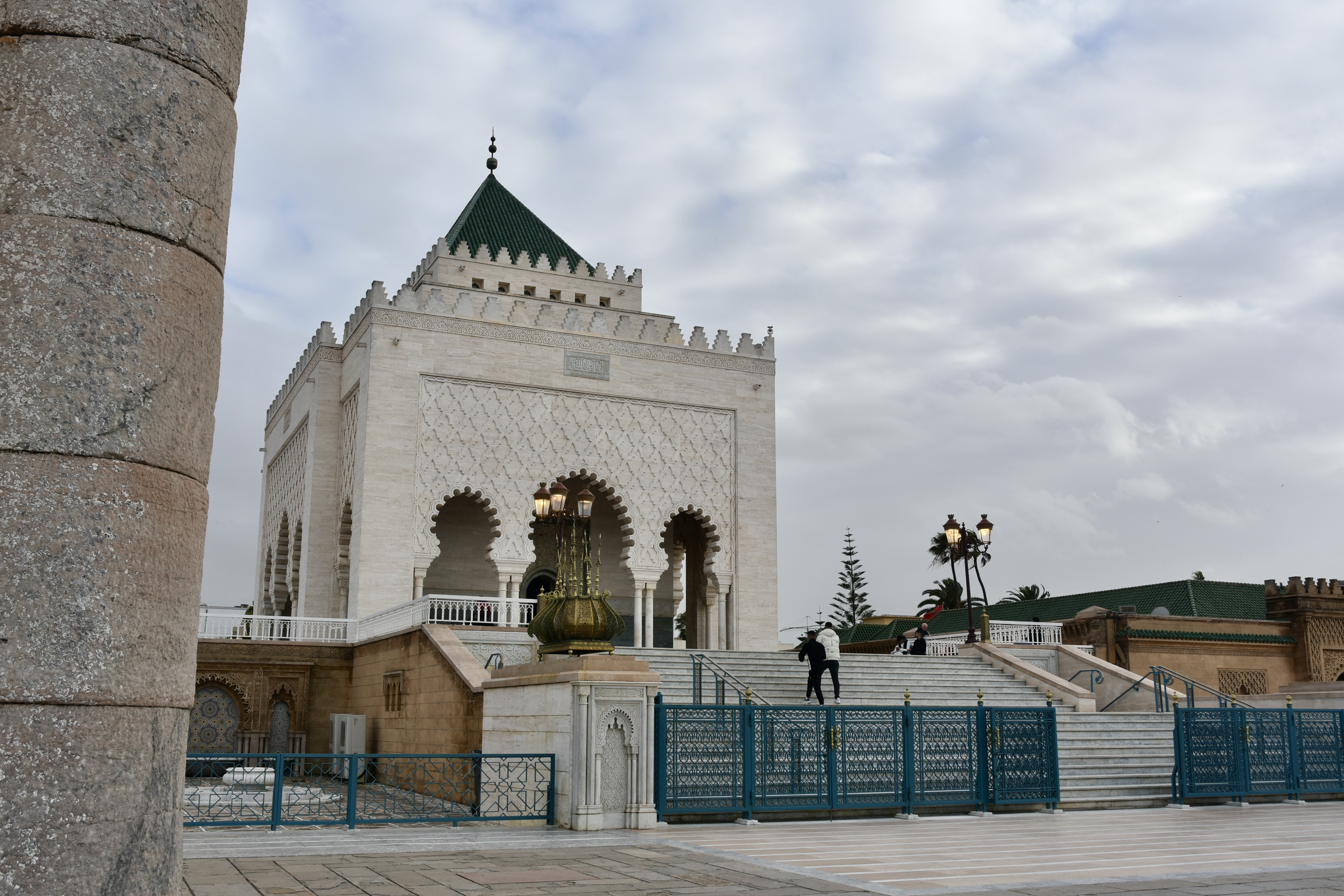
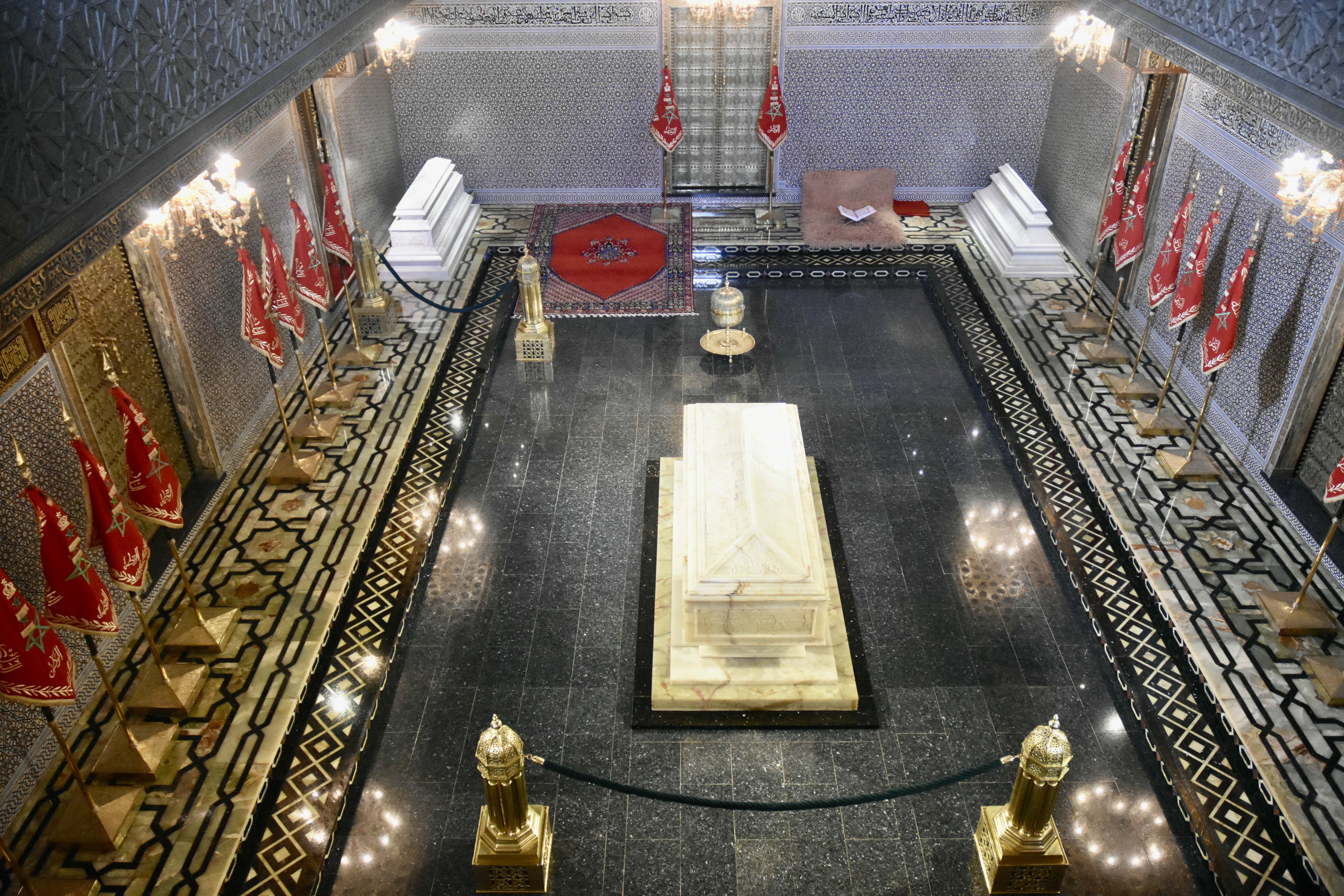


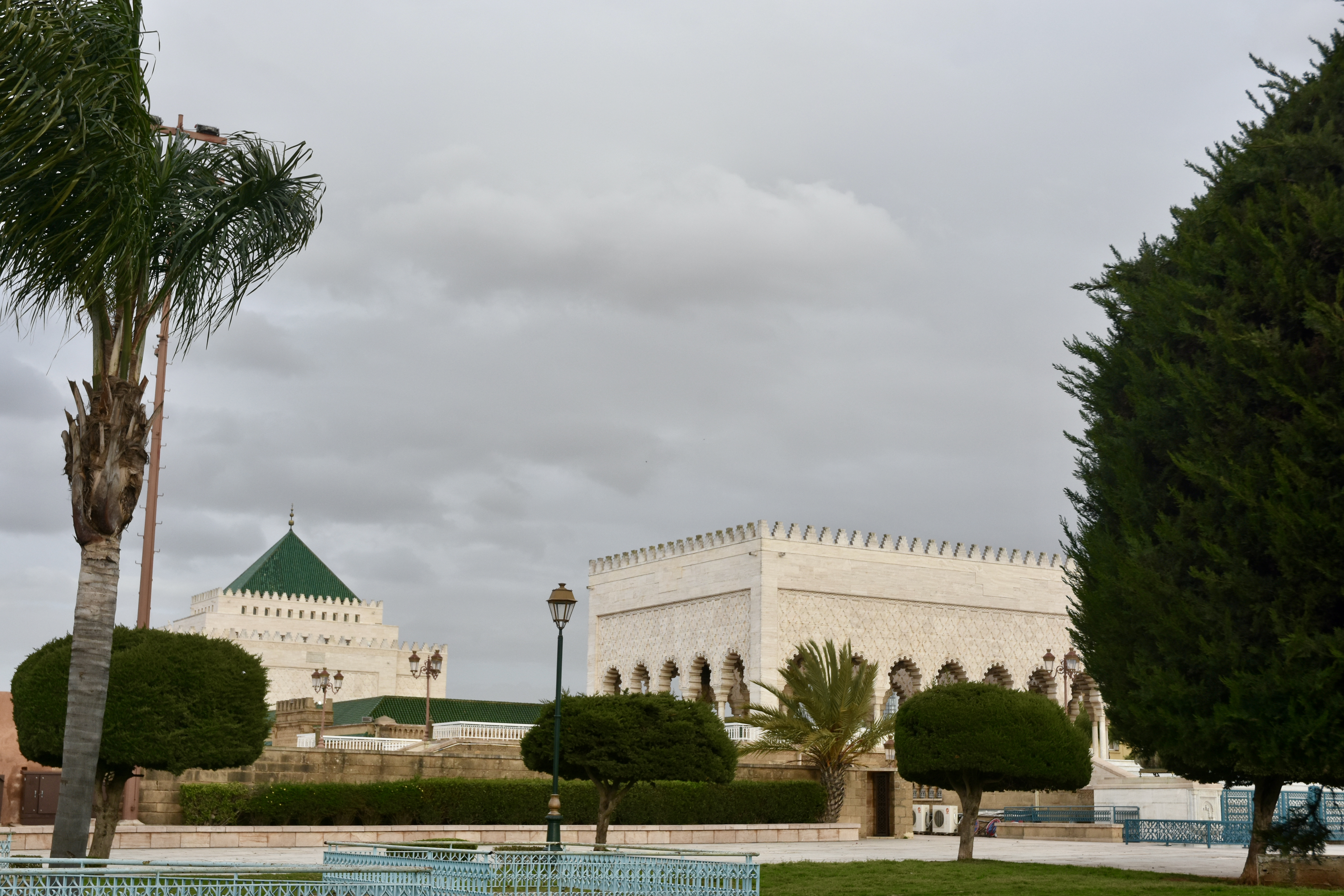
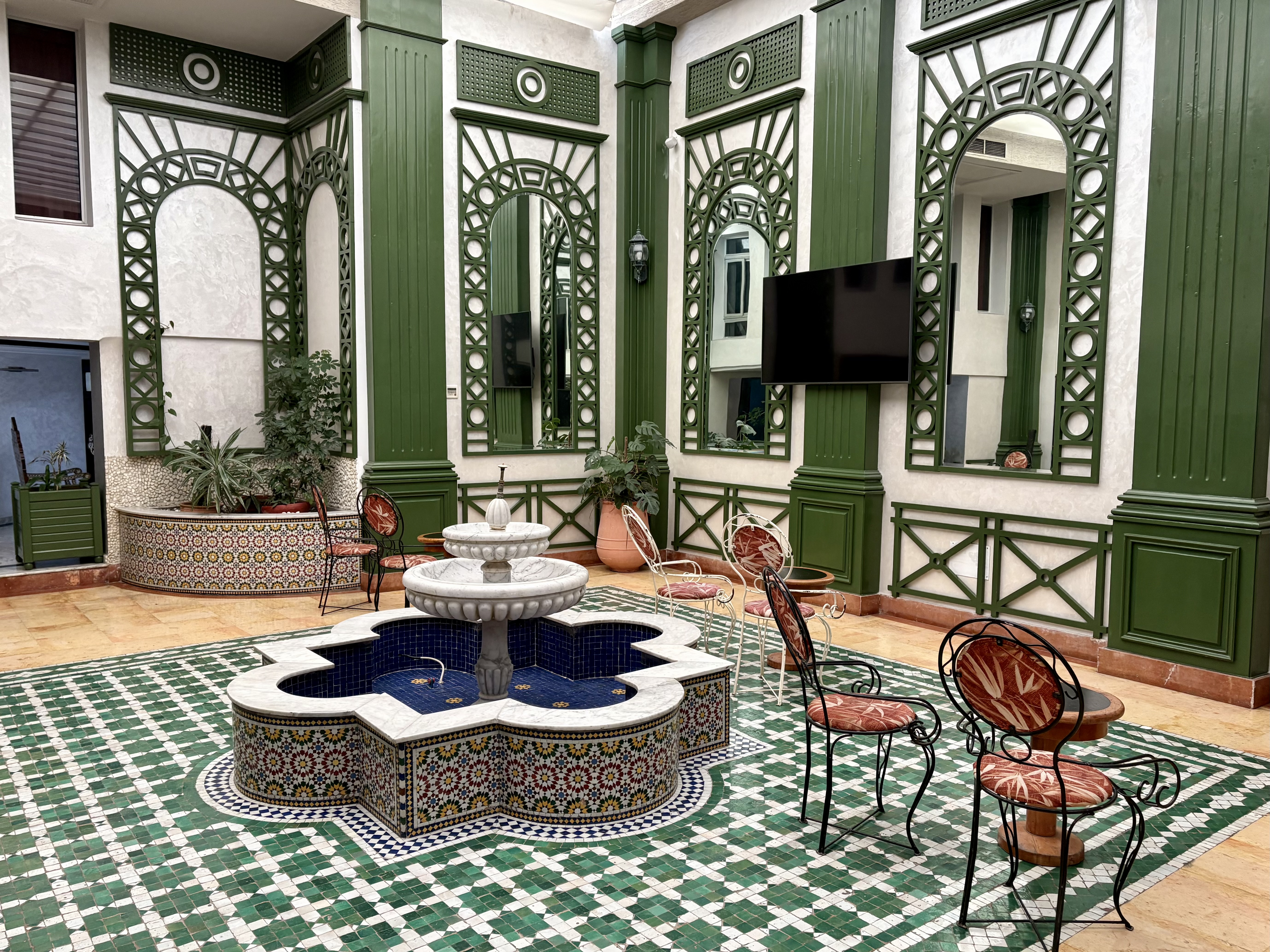
We stayed at the Rabat Hotel Bouregreg that night, a 3-star hotel located near the centre of Rabat and close to attractions such as the Andalusian Garden, Hassan Tower and Moulay Ismail’s Palace. Also within easy reach was the Oudaia Gate and the Mosque and Mausoleum of Mohammed V.
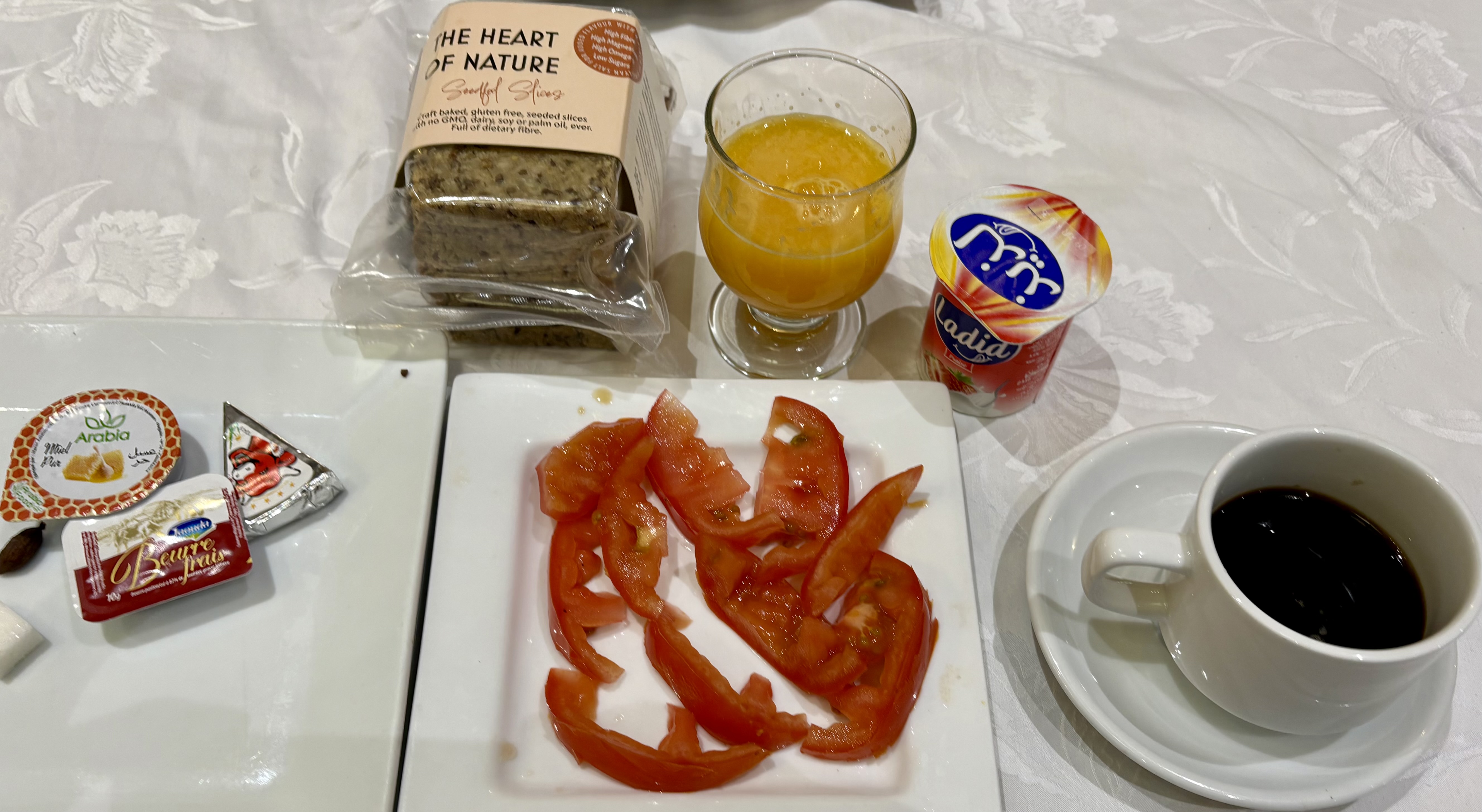
Rabat Hotel Bouregreg was disappointing. The bed was uncomfortable and the duvet was without a cover. Breakfast was basic. Thankfully, it was only a single night’s stay there.

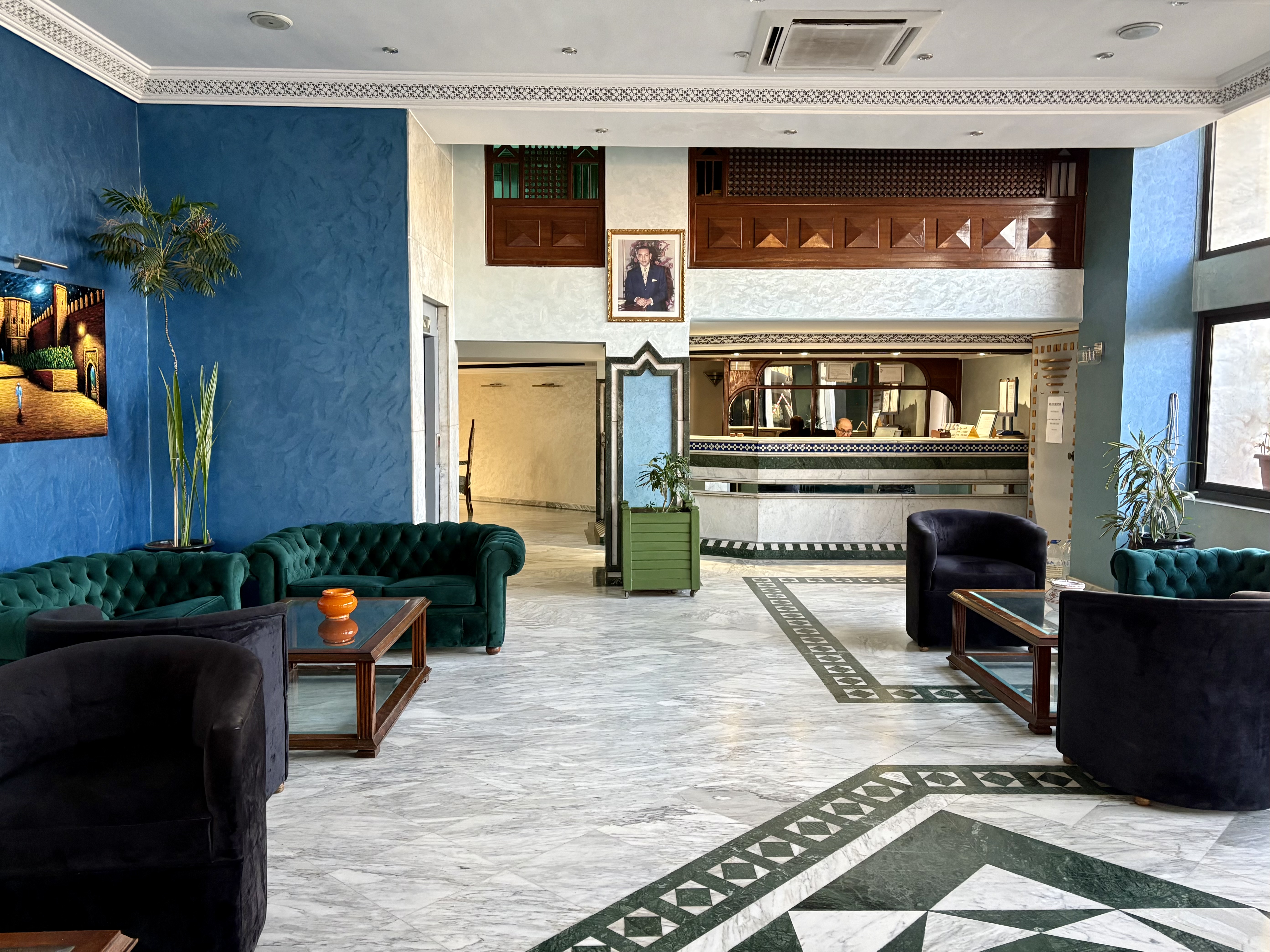

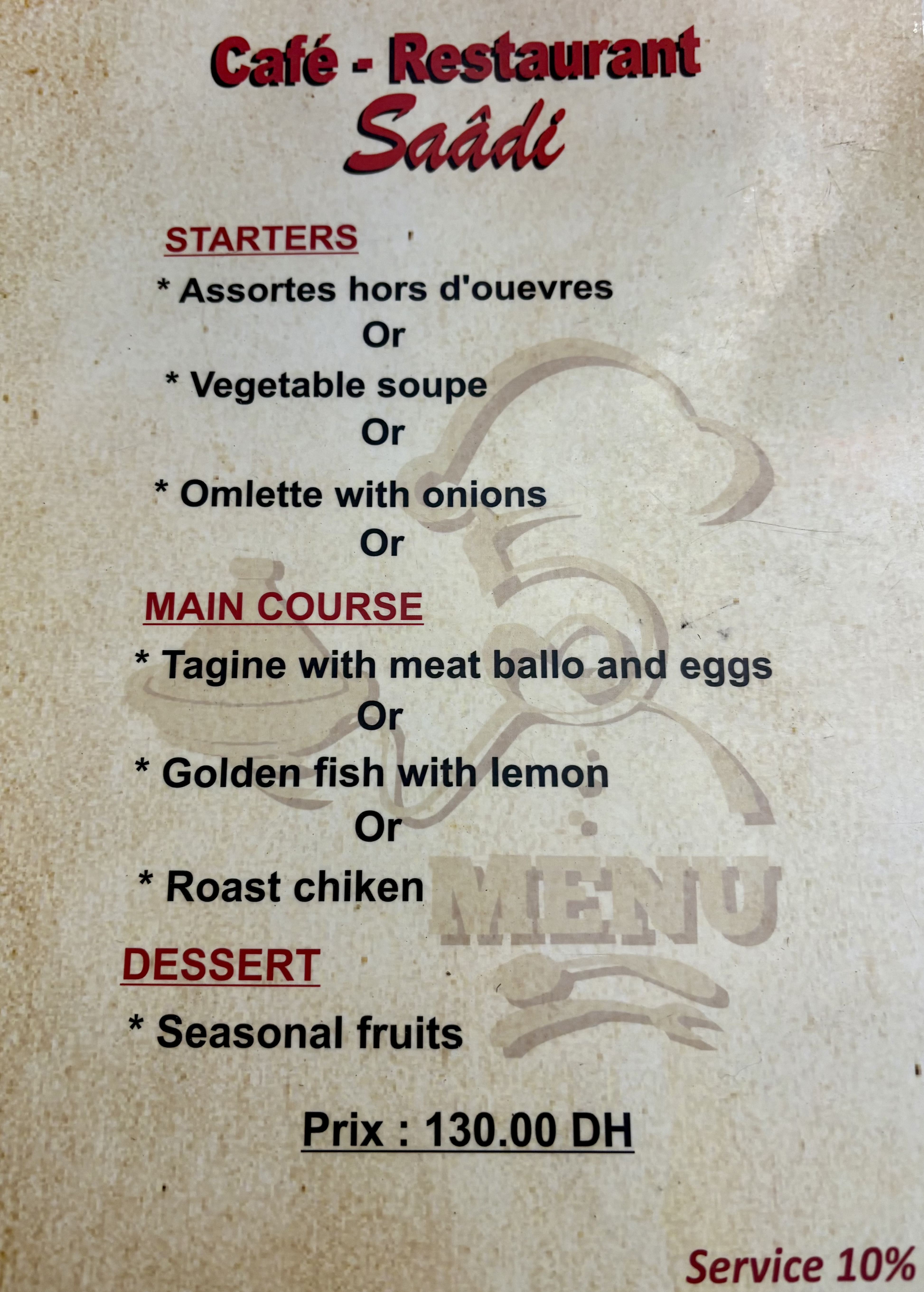
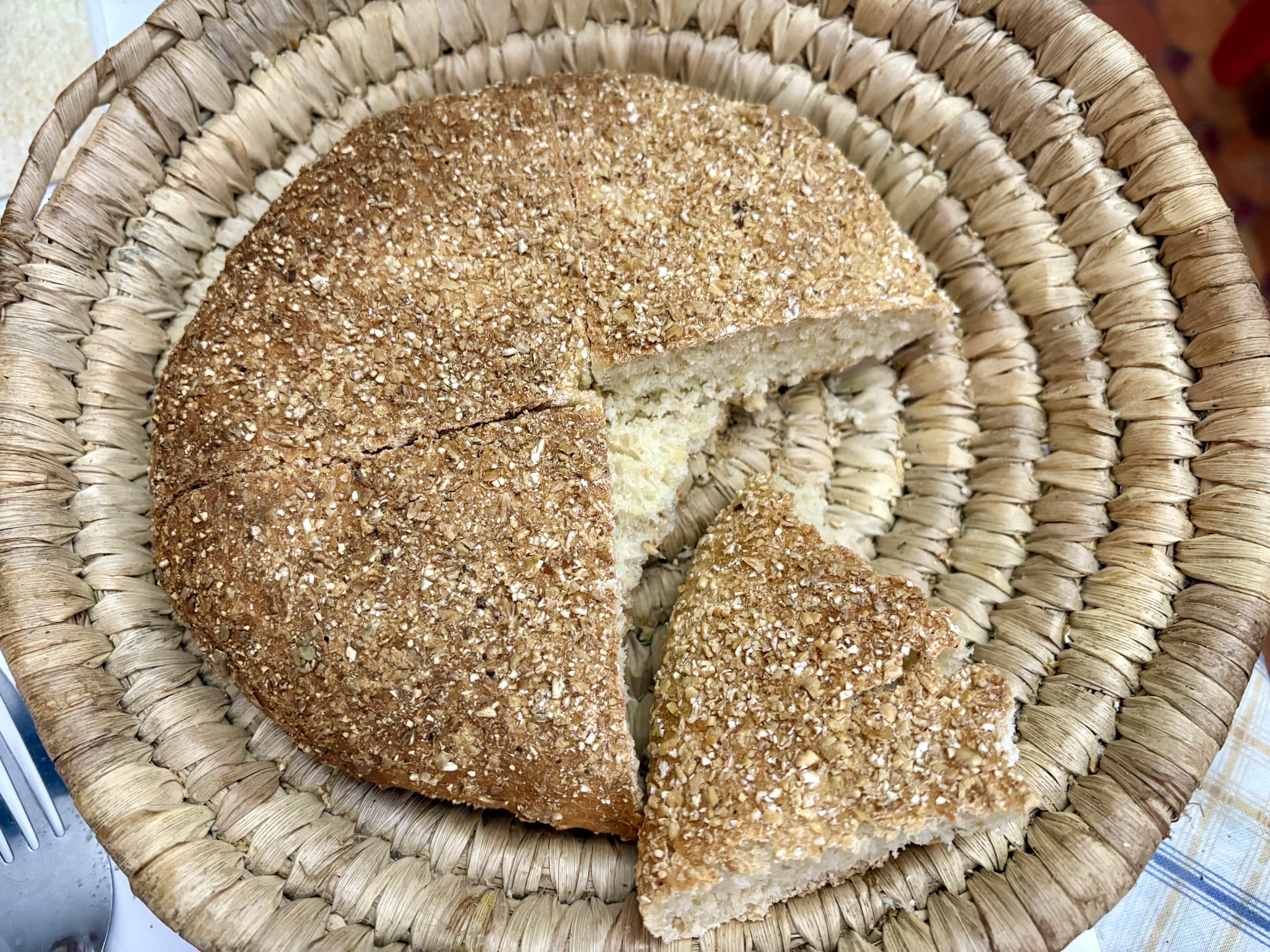
The restaurant chosen by the tour leader for dinner that night was the basic and very forgettable Saadi – a short walk from the hotel. We were the only customers.


Published 9 May 2025
 Bandi's Blog